
Window Security Film for Renters: Limits, Fit, and Removal
Window security film may help hold broken glass together, but it does not turn an apartment window into an impenetrable barrier. Even major manufacturers warn that film does not stop bullets or intruders. Performance depends on the film, glass, frame, edge attachment, installation quality, and the specific event.
A renter should begin with permission and glass identification, not a dramatic product video. This guide explains what to verify, which claims to question, and when a removable privacy product may be a better match than a security-film installation.
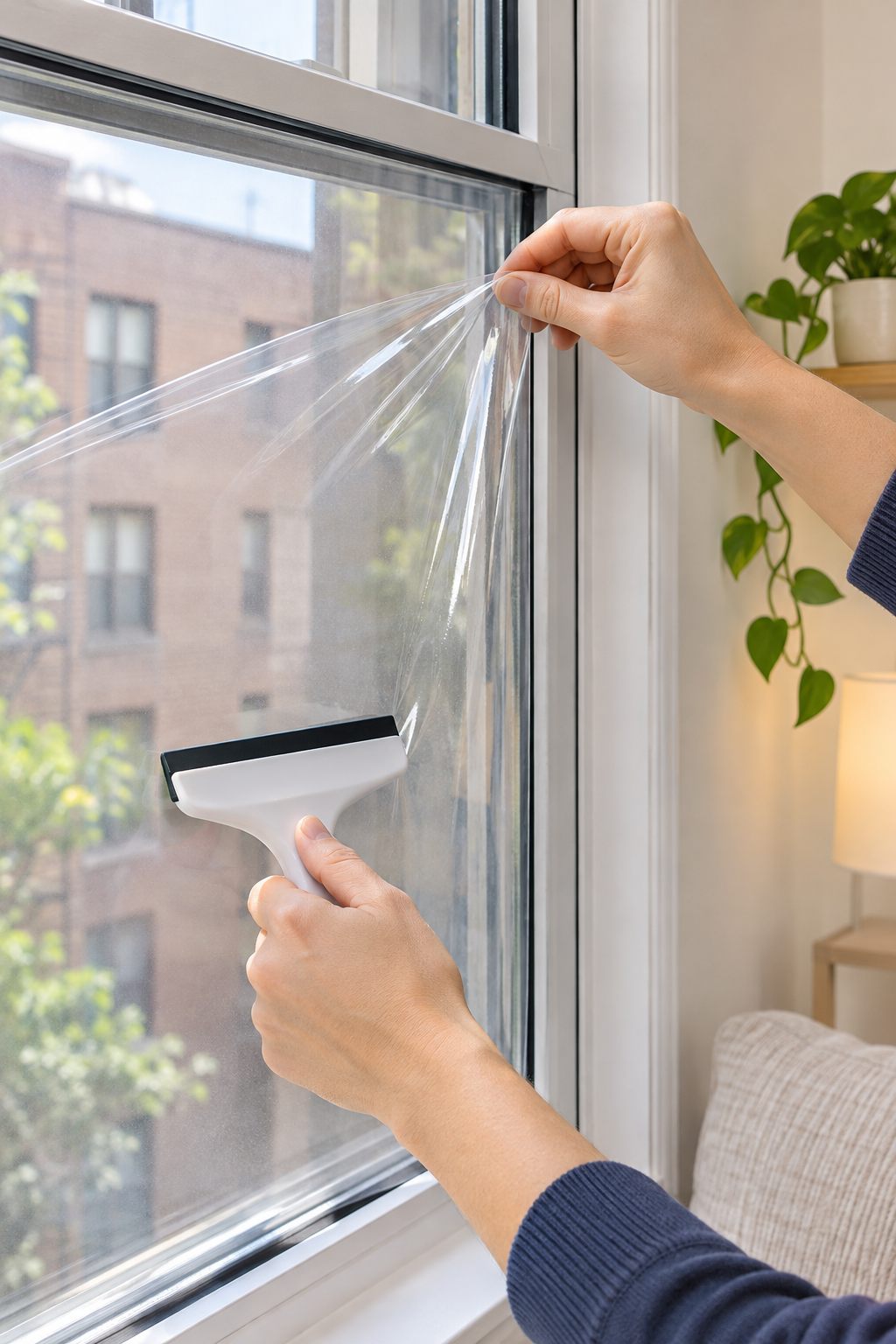
Understand what the system includes
Security film is a transparent or tinted layer applied to glass. Some systems also use a perimeter attachment that connects the filmed glass to the frame. Film-only and film-plus-attachment systems should not be treated as equivalent.
The word “security” covers different goals: holding fragments after accidental breakage, delaying forced entry, changing privacy, reducing ultraviolet exposure, or addressing severe weather. One product is not automatically tested for all of these uses.
- Film thickness alone does not establish complete system performance.
- Glass type and condition affect compatibility and installation.
- Frame attachment can be a separate component with its own cure time and appearance.
- Professional installation may be required for a warranty or tested system.
Compare the main window-film decisions
A cautious buying decision starts by matching the purpose to documented product evidence.
| Question | What to verify | Why it matters | Renter action |
|---|---|---|---|
| What is the goal? | Fragment retention, privacy, solar control, or tested security performance | Different films and systems address different outcomes | Write one primary goal before comparing products |
| What glass is installed? | Single pane, insulated glass, tempered, laminated, tinted, coated, damaged, or unknown | Compatibility and thermal stress guidance can differ | Ask the property contact or qualified installer |
| Is edge attachment included? | Film-only installation or film connected to frame | A tested system may depend on more than the film sheet | Read the complete system specification |
| Can it be altered? | Lease terms, building rules, warranty, removal, and restoration | Film may be difficult to remove cleanly and could affect glass warranties | Get written approval before installation |
Avoid listings that show impact footage without naming the exact film, glass construction, frame, attachment, test method, and installation conditions used.
Define the threat without exaggerating it
If the concern is ordinary privacy, a removable privacy film may fit better than a security product. If the concern is a ground-floor window, first review locks, lighting, visibility, alerts, and lease-approved monitoring through the renter security system checklist. Film is one layer, not a complete plan.
For accidental breakage, ask whether the manufacturer documents fragment retention for the exact film and glass. For forced-entry delay, look for a named test and complete system requirements. Do not convert “helps hold glass” into “prevents entry.”
Identify the glass and frame
Do not install on cracked, chipped, loose, or visibly failed glazing. Insulated windows, low-emissivity coatings, tints, and laminated constructions can have special restrictions. A property manager or qualified window-film professional may be needed to identify the assembly.
Measure visible glass and frame dimensions, but do not order only from those numbers. Installation may require edge clearance, sealant access, clean gaskets, and a stable frame. The usable film size can differ from the visible opening.
Get lease and building approval in writing
Film can change exterior appearance, reflected light, thermal behavior, warranty coverage, and move-out restoration. Condominiums and managed buildings may also regulate visible window changes even when the material is installed inside.
Document the proposed product, tint, installer, removal method, and responsible party. This follows the same recordkeeping logic as the renter maintenance request guide: keep the request, response, product information, and final condition together.
Read the claim language literally
The 3M residential security page states that its films add a level of safety and security while also warning that window films do not stop bullets or intruders. That is a useful model for reading all listings: note both the claimed function and the explicit limit.
Terms such as shatterproof, hurricane proof, burglar proof, bomb proof, or bulletproof require especially strong evidence. If the listing provides only a thickness and a dramatic demonstration, the claim is incomplete.
Protect exit access and visibility
Film should not make a required opening harder to operate or hide damage, failed seals, or locks that need maintenance. The U.S. Fire Administration advises keeping doors and windows unblocked and identifying two ways out of every room.
Keep keys, latches, and the opening path accessible. If a film or attachment system is difficult to remove in an emergency, ask how the window is intended to function as part of the building’s egress plan.
Plan installation and removal as separate projects
Dust, trapped debris, edge contamination, poor squeegee technique, and incorrect cure conditions can affect clarity and adhesion. Professional installation may be worth considering when the system relies on a frame attachment or carries a performance warranty.
Removal can require heat, scraping, adhesive cleanup, and glass inspection. Include that labor in the decision and photograph the original condition. Store the approval and product record with your emergency documents folder if the film is part of a broader safety plan.
Use a claim-and-fit checklist before purchase
Do not order until every line has a documentable answer.
- Write the single primary purpose for the film.
- Identify the glass and frame or arrange a qualified assessment.
- Read the exact product data, test references, attachment requirements, and warranty exclusions.
- Obtain written property approval and confirm who handles future removal.
- Confirm the window still opens, locks, and functions in the escape plan.
If the seller cannot explain what the product was tested to do, treat the claim as unverified and choose a simpler, reversible solution.
Common buying mistakes
- Treating film-only and film-plus-frame-attachment systems as the same.
- Assuming thickness proves forced-entry or storm performance.
- Installing on unknown coated, tinted, damaged, or insulated glass.
- Skipping written permission because the film is applied indoors.
- Calling the window shatterproof, burglar proof, or bulletproof without exact evidence.
Frequently asked questions
Does window security film prevent break-ins?
No product should be described that broadly without exact tested system evidence. Film may help retain fragments or delay access in certain assemblies, but manufacturers themselves warn that film does not stop intruders.
Can a renter install security film without permission?
Do not assume so. The film can affect appearance, removal, warranty, and the glass assembly. Obtain written approval for the exact product and installation.
Is thicker film always better?
No. Thickness is one specification. Glass type, adhesive, frame attachment, installation, test method, and intended hazard all affect the system.
Can security film replace window locks or an alarm?
No. Locks, maintenance, visibility, lighting, monitoring, and emergency egress remain separate parts of a renter safety plan.
Sources and fact-checking
This guide was checked against the following current sources. Product dimensions, load limits, materials, mounting instructions, warranties, and return terms still need to be verified on the exact listing before purchase.
- 3M United States — Home Window Safety and Security — states intended uses and expressly warns that window film does not stop bullets or intruders
- U.S. Fire Administration — Home Fire Escape Plans — supports keeping windows and doors unblocked and preserving usable escape routes


댓글 0
첫 댓글을 남겨보세요.