
Portable Blackout Curtains: A Renter Buying Checklist
Portable blackout curtains are useful when you need temporary light control, but the fabric alone does not decide whether the room gets dark. Mounting method, edge coverage, window shape, and daily removal matter just as much as the panel. A product can use opaque fabric and still leave bright gaps at the top, sides, or suction points.
For renters, the lowest-commitment choices are direct-to-glass suction panels, removable hook-and-loop systems approved for the surface, or a lightweight curtain on a properly fitted tension rod. This checklist helps you choose by the window you have rather than by an unsupported “100% blackout” promise.
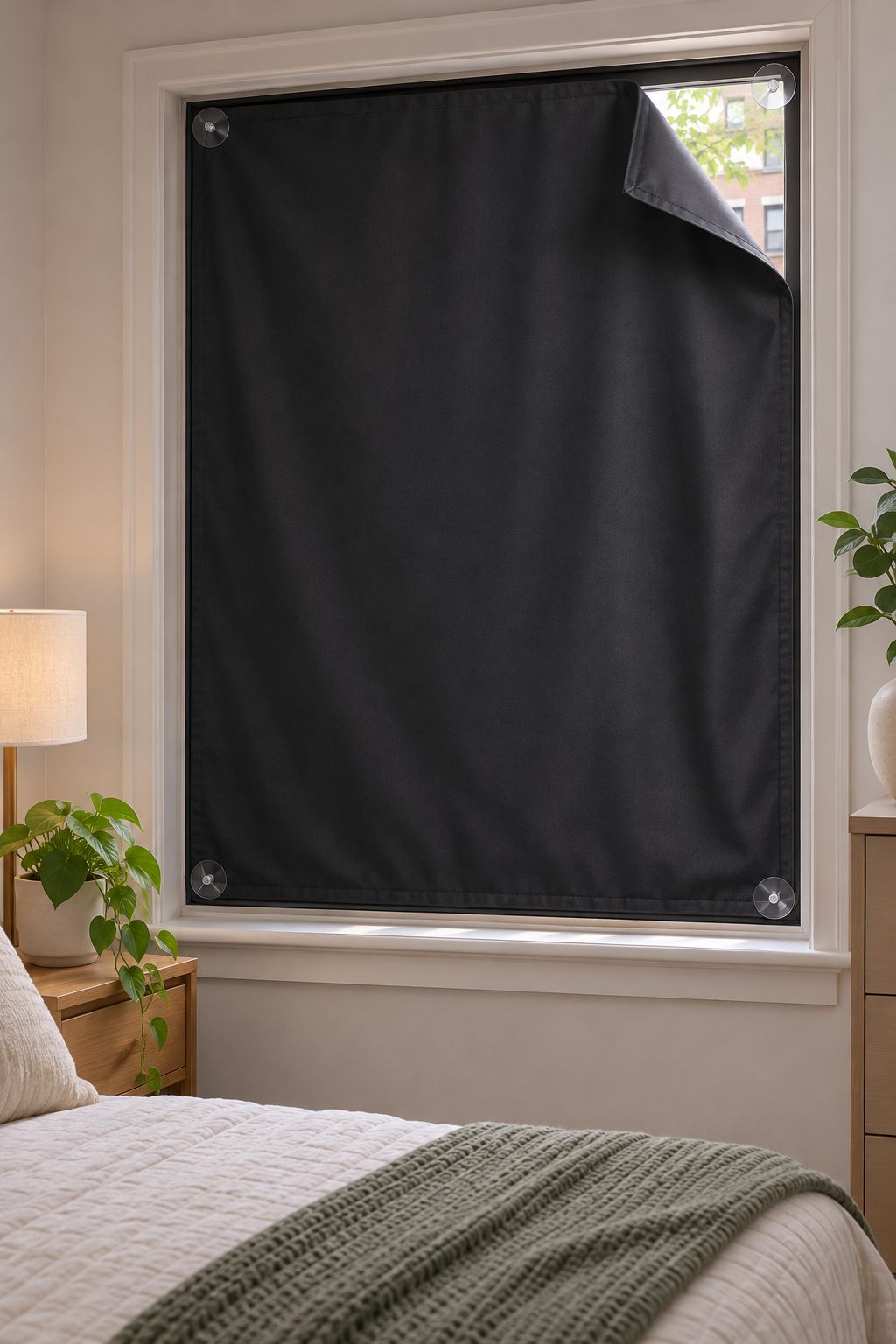
Separate fabric opacity from room blackout
“Blackout” can describe the fabric, the finished installation, or both. A fabric may block light through its center while the room remains bright around the edges. Product photos taken at night or with carefully framed windows do not show daytime leakage.
Measure the glass, frame, recess, handles, and any window air conditioner. Decide whether the panel must stay in place all day or come down every morning. That routine changes which mounting method is practical.
- Suction-cup panel: portable and direct to glass, but depends on clean smooth glass and reliable cups.
- Hook-and-loop panel: can seal edges better, but adhesive compatibility and removal matter.
- Tension-rod curtain: looks more conventional, but rod capacity and side gaps affect performance.
- Static or compression-fit shade: avoids adhesive, but needs a compatible frame and exact dimensions.
Compare portable blackout systems
Choose the mounting category first, then compare panel dimensions and fabric.
| System | Best fit | Daily advantage | Main check |
|---|---|---|---|
| Suction cups | Smooth glass and temporary use | Fast to move between rooms or trips | Cup count, edge tension, glass access, and heat exposure |
| Hook-and-loop | Repeated use on an approved flat frame | Can reduce side gaps when sized correctly | Adhesive surface, curing, residue, and replacement tabs |
| Tension rod | Recessed window with parallel sides | Curtain can open during the day | Rod span, fabric weight, top and side leakage |
| Compression fit | Exact frame dimensions | No adhesive or separate rod | Frame geometry, removal method, and ventilation clearance |
Do not combine multiple mounting methods unless the manufacturer describes that setup. Extra tape, improvised hooks, or heavy clips can change the load and make removal harder.
Measure beyond the glass
Measure the glass width and height, then the frame or recess available for attachment. Note latches, handles, screens, blinds, vents, and window air-conditioning controls. A panel that covers the glass but blocks a latch creates a new daily problem.
Add enough overlap for the specific system. Direct-to-glass panels often need material beyond the visible glass, while a curtain needs width for folds and side coverage. Use the maker’s finished-size diagram rather than treating the package dimension as the covered opening.
Decide how the room should work during the day
A nursery, shift-worker bedroom, temporary guest space, and travel room have different routines. If the panel stays installed, plan how you will ventilate the room, inspect condensation, and reach the window. If it comes down daily, consider folding time, storage volume, and whether suction cups or tabs remain attached.
The rental bedroom organization plan can help preserve a clear path to the window. Do not solve light leakage by pushing a tall dresser or loose storage against the opening.
Treat heat and energy claims carefully
The Department of Energy explains that window coverings can affect heat gain, heat loss, glare, privacy, and comfort, but the result depends on the attachment type, season, climate, and how it is used. A portable panel should not be sold to you with a universal savings promise.
Dark material directly against sunlit glass can become warm. Follow the product’s glass-compatibility and temperature guidance, especially for insulated, tinted, laminated, or damaged windows. Ask the property contact if the lease or building rules restrict applied window products.
Check cords, cribs, and furniture placement
A cord-free portable panel avoids one common hazard, but existing blinds behind it may still have accessible cords. CPSC recommends cordless window coverings when young children are present and advises moving cribs, beds, furniture, and toys away from window cords.
Inspect the complete window, not only the new panel. If you use a no-drill curtain rod, include rings, clips, liners, and the full panel weight in the load check.
Plan removal, cleaning, and travel storage
Suction cups collect dust and skin oils; fabric panels collect condensation and window residue. Follow the cleaning directions and allow every component to dry before folding. Storing a damp blackout panel in a sealed pouch can create odor and material damage.
For travel, confirm the packed dimensions and whether replacement cups or tabs are available. For longer absences, use the pre-travel apartment reset to decide whether the panel should remain installed or be removed so the window can be checked.
Run a daylight edge test
Test the installation when the window receives its brightest normal light.
- Clean and dry the permitted attachment area exactly as directed.
- Install the panel without trimming or making irreversible changes.
- Stand inside the room after your eyes adjust for several minutes.
- Check the top, sides, bottom, suction points, seams, and hardware openings.
- Open and close the window or blind controls, then remove and reinstall the panel once.
If the center is dark but the edges glow, a wider panel or different mounting geometry is more useful than simply buying thicker fabric.
Common buying mistakes
- Buying by fabric claim without measuring edge overlap.
- Covering a latch, vent, window air conditioner control, or escape opening.
- Using adhesive on an unapproved finish.
- Ignoring existing blind cords behind the panel.
- Folding the panel while it is damp or dirty.
Frequently asked questions
Are portable blackout curtains truly blackout?
Some fabrics are opaque, but room darkness depends on installation and edge gaps. Judge the complete setup in daylight rather than relying only on the fabric label.
Do suction cups damage windows?
They avoid holes, but the manufacturer must approve the glass type and temperature conditions. Clean glass, inspect the cups, and remove them by the instructed method instead of pulling the fabric.
Can I cut a portable panel to size?
Only if the product instructions allow trimming. Cutting can damage edge sealing, create fraying, or eliminate a return option.
Will a blackout panel cool the room?
Window coverings can affect solar heat and comfort, but results vary by material, fit, climate, window type, and use. Do not assume a specific temperature or utility-bill reduction.
Sources and fact-checking
This guide was checked against the following current sources. Product dimensions, load limits, materials, mounting instructions, warranties, and return terms still need to be verified on the exact listing before purchase.
- U.S. Department of Energy — Energy Efficient Window Coverings — supports careful, use-dependent claims about window coverings, comfort, glare, and energy performance
- U.S. Consumer Product Safety Commission — Window Covering Cords — supports cordless choices and child-safety placement around window-covering cords




댓글 0
첫 댓글을 남겨보세요.