
Reusable Moving Crate Weight Limit: Rental Rules First
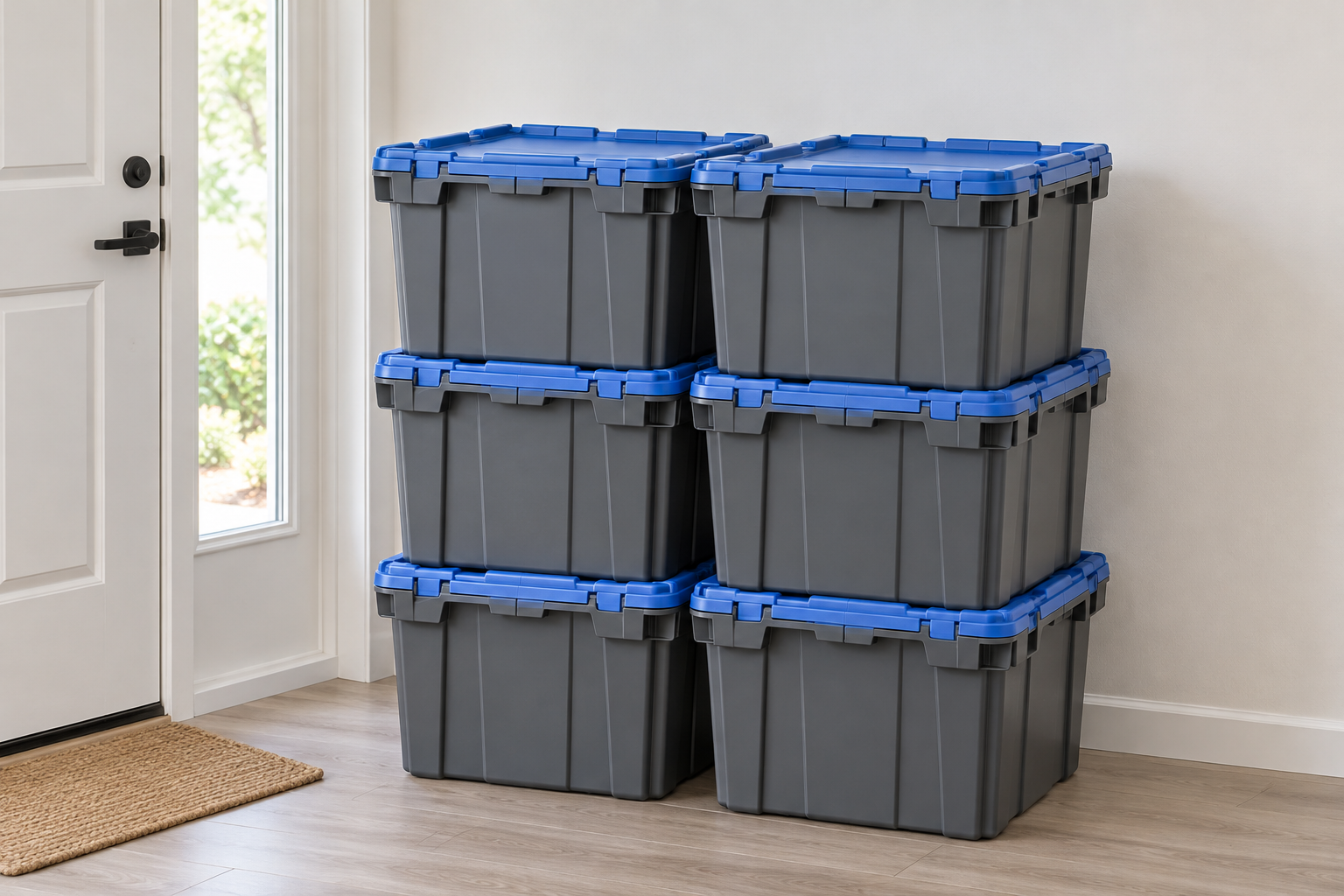
Reusable moving crate weight limit is not answered by a cardboard-box label. A rental crate is a reusable plastic container in a specific provider’s system, and its usable limit, lid, stacking rules, pickup terms, and return location belong to that system. Boxbee’s FAQ sets a 50-pound limit for its plastic crates. That is Boxbee’s per-crate policy. The FAQ does not specify whether the empty crate’s weight is included, and it is not a personal-lifting or stacked-crate rating. It is also a different decision from buying corrugated boxes with printed Edge Crush Test or shipping specifications.
Before reserving, read the exact provider’s current product or rental terms. Ask for the per-crate contents limit, whether the limit changes when crates are stacked, the required lid position, permitted contents, and who loads the crates. Do not carry over a number from a cardboard moving box, a delivery tote, or a different reusable-crate company. A capacity statement only has meaning with its product, configuration, and handling definition.
Reusable moving crate weight limit: separate the numbers
“Weight limit” can describe several different things: the maximum contents inside one closed crate, the load allowed when crates are stacked, or an operational limit for a person lifting and carrying a crate. Those are not interchangeable. A crate might be suitable for a certain amount of contents yet still be a poor hand-carry for a particular person or route. A stack may have a separate height or loading rule even when each individual crate is within its contents limit.
Write down each provider statement beside the condition it applies to. If a representative gives an informal answer but the written rental page or agreement does not state it, treat the limit as unconfirmed. Do not invent a per-crate number by dividing a truck load, estimating the thickness of plastic, or comparing the crate to a typical cardboard carton.
| Question | Why it is separate | What to ask the rental provider |
|---|---|---|
| Contents limit | Applies to what goes inside one crate | What is the maximum contents weight for this exact crate? |
| Stacking limit | Depends on lid, alignment, stack height, and system rules | How many loaded crates may be stacked and in what orientation? |
| Carry decision | Depends on the person, handles, route, and item distribution | Does the provider prescribe a two-person lift or handling method? |
| Truck loading | Depends on tie-down, placement, and vehicle plan | Are there loading restrictions or items that cannot be transported? |
Choose crate contents by density, not by empty space
A reusable crate can look roomy enough for a dense collection of books, tools, dishes, or files. Empty volume is not permission to fill every inch with a heavy material. Pack dense items in a way that remains manageable under the exact provider limit, then use lighter items to finish the remaining space if the provider’s rules allow it. Close the lid only when contents are below the rim and no item interferes with the closure or stack.
Do not use the crate’s rigid walls as a reason to skip protection. Fragile items still need packing material and should not move around inside the container. Follow the provider’s prohibited-items rules and any separate instructions for liquids, sharp tools, hazardous products, electronics, or sensitive records. The crate is a rental container, not a statement that every household item is appropriate to transport inside it.
Confirm the rental loop before you replace cardboard
A crate-rental plan can include delivery, pickup, or return conditions that affect an apartment move. Verify the provider’s current service area, schedule, rental term, and condition rules before booking. Do not assume that one company’s logistics apply to another provider.
This is why a rental crate should not be treated as a generic “better box.” Cardboard may have a different purchase, reuse, recycling, and labeling routine. Rental crates trade the assembly and disposal task for a pickup-and-return obligation. Pick based on the route and schedule you can actually complete, not on a generalized claim about which packaging is superior.
Use labels that work with the provider’s crate rules
Labeling still matters, but tape, marker, or adhesive choices can be restricted by a rental provider because the crate must be returned in usable condition. Ask what label method is permitted before applying anything. Keep the label focused on destination room and handling need rather than putting private information on an exterior that will be seen during transport.
For a room-by-room unpacking sequence, use our moving box labels system after confirming the rental company’s acceptable labeling method. The organizational method does not change the crate’s rental conditions or any weight limit.
Plan the actual carrying route
Measure the narrowest doorway, elevator entry, hallway turn, and parking-to-unit route. A crate that stacks efficiently in a truck can still be awkward in a narrow stairwell or through a small apartment door. Keep the path clear and decide where loaded crates can be set down without blocking an exit. Avoid building a tall stack in a hallway, at the top of stairs, or in front of a door.
Use the handles only as the product directs and keep fingers away from pinch points between stacked crates. If a crate is too heavy to control, unpack and redistribute its contents rather than treating a plastic shell as an invitation to force the lift. A quoted container limit is not a personal lifting recommendation.
Do not borrow cardboard-box numbers
A corrugated moving box may list a maximum weight, cubic capacity, shipping eligibility, or Edge Crush Test. Those labels describe that box and often a specific purpose. They do not establish a safe contents limit for a rental crate. Likewise, a reusable crate’s contents limit does not rate a cardboard box, a bin at home, or a stack on a hand truck.
Keep each number attached to the thing it measures. A corrugated carton’s printed limit or ECT rating is not reusable-crate data and must not be used to estimate a plastic-crate limit.
Keep the provider rule with the crate record
Save the provider name, crate model, stated contents limit, rental dates, and any handling directions in the same moving note as your room plan. If another household member packs the crates, share that record rather than relying on an unlabeled stack. A crate from a different company may look similar but have a different capacity policy, lid design, delivery arrangement, or return procedure.
Use our four-week apartment moving checklist to schedule delivery, packing, and pickup questions around the provider’s terms. The checklist is a planning aid only: it does not set a crate weight limit or replace the rental agreement. Recheck the provider’s written policy when your reservation changes, when you add crates, or when a mover will handle the load.
FAQ
How much weight can a reusable moving crate hold?
Use the exact rental provider’s current written limit for that crate. Do not substitute a cardboard-box number or an estimate based on crate size.
Is a stack limit the same as the weight limit inside one crate?
No. A stack limit can depend on closure, alignment, height, and the provider’s handling system. Ask for both rules separately.
Can I label rental crates with packing tape?
Ask the provider first. Rental crates may have return-condition or labeling rules, so use only the method the provider allows.
Does Boxbee’s 50-pound crate limit tell me how much I can lift?
No. It is a Boxbee crate policy, not a personal lifting recommendation or a stacked-crate, truck-payload, rating.
Sources and fact-checking
Checked against the official sources below on November 27, 2026. This is research-based guidance, not a claim of hands-on product testing.


댓글 0
첫 댓글을 남겨보세요.