Moving Box Labels: A Small-Apartment System That Speeds Up Unpacking
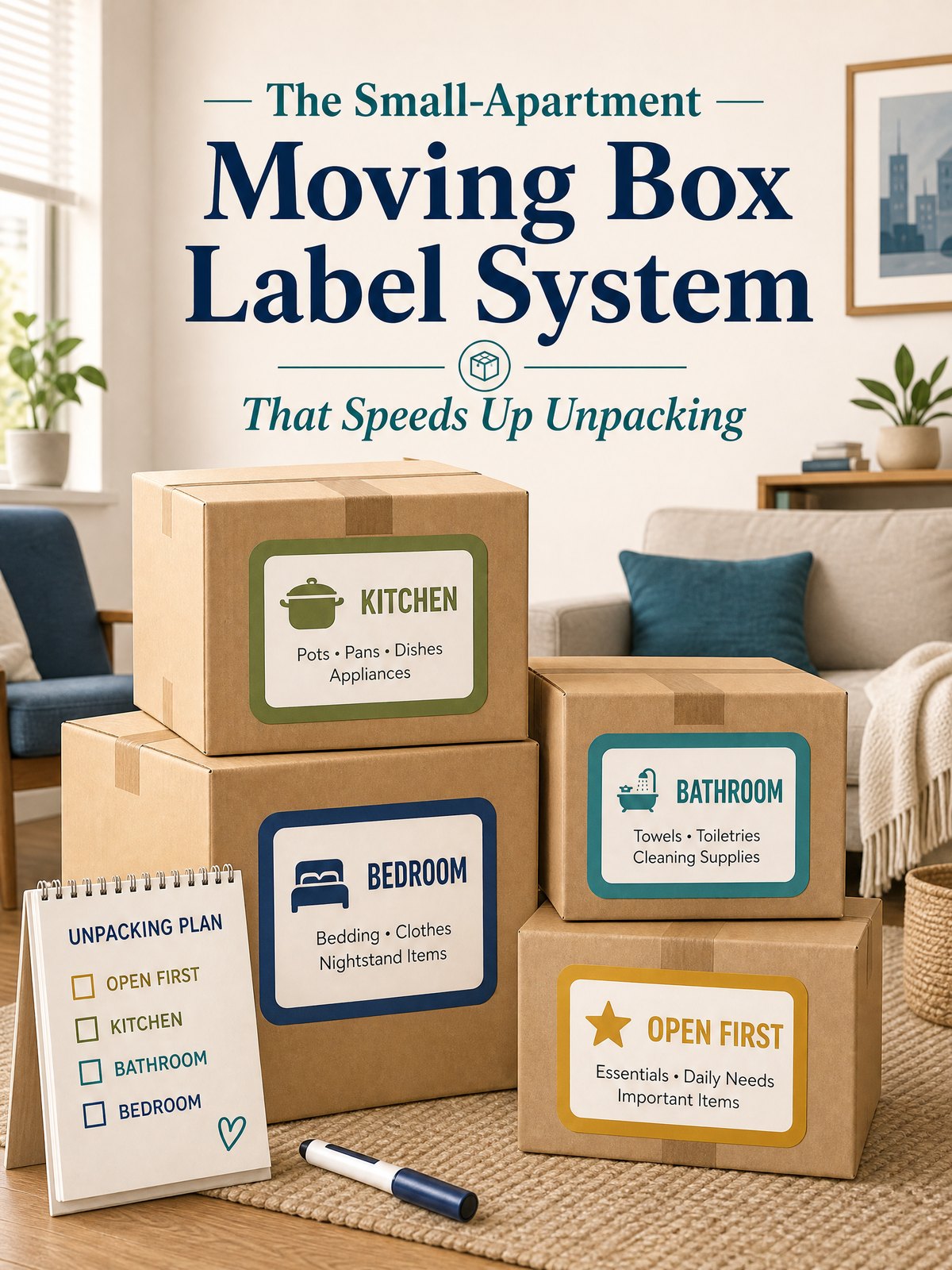
This guide focuses on moving box labels for U.S. renters and small-home movers, with a practical system for choosing what to buy, what to prepare, and what to verify before moving day.
Moving into a small apartment means precious floor space and only a few hours of free energy after the move. Without a clear labeling system, boxes pile up in the living room and it can take days to find the essentials you need right away.
This article shows a compact, four-part label scheme—room, zone, priority, and “open-first”—that helps you unpack the smallest apartment faster. The method is deliberately low-tech and easy to maintain so you can set it up on moving day and actually use it.
Start with the real constraint
In a small apartment you are constrained by two things: usable floor area and time. Boxes that sit unopened in walkways reduce usable space, and the more scattered your essentials are, the longer it takes to feel settled.
Any labeling system that helps must do two things: (1) tell you what needs immediate attention, and (2) point movers or helpers to a final or temporary place where a small apartment can live with fewer trips. The trade-off is that detailed inventories take time to make; this system aims for minimum labeling that gives maximum unpacking speed.
At-a-glance plan
| Label | What it means | When to open | Quick action |
|---|---|---|---|
| OPEN-FIRST | Box contains immediate essentials (toiletries, chargers, kettle) | First hour in apartment | Carry to kitchen or bathroom and unpack essentials only |
| PRIORITY A | Daily-use items for first week (coffee, basic cookware, daily clothes) | Next 2–6 hours | Place in visible zone near final room; unpack key items only |
| ROOM:Kitchen/Living/Bed | Boxes destined for specific rooms with nonessential contents | After immediate needs are met | Stack near room door or in closet and unpack by zone when time allows |
| STORE / DONATE | Seasonal items, duplicates, or things to evaluate later | Whenever a clear spot is available | Move to a storage bin or donation box to reduce clutter |
Build the system step by step
- Choose four label types and a visible marker. Assign exact words: OPEN-FIRST, PRIORITY A, ROOM:Kitchen (or Living/Bed), and STORE/DONATE. Use a thick permanent marker and a bright strip of tape or a colored sticker as a visual cue; a color is a practical option rather than a rule.
- Before loading the truck, create OPEN-FIRST boxes. Pack one or two small boxes with bathroom basics, phone chargers, a simple meal kit, important documents, and a change of clothes. Mark these OPEN-FIRST clearly on top and all sides.
- Group boxes destined for the same room into stacks and mark each with the ROOM label and a brief contents note. On a small move, limit each room stack to what you can unpack in a single session—this keeps the stack from crowding the apartment floor.
- Mark a few boxes PRIORITY A. These hold items you want available that day but don’t need opening immediately—coffee setup, the one pot you cook with, a day’s wardrobe. Place them so they’re accessible without blocking doorways.
- Use STORE/DONATE for extras you don’t want in the apartment right away. Leave these labeled and separate; sorting them later is often faster than deciding during the move.
After you’ve labeled, create a simple map on a single page that shows where OPEN-FIRST and PRIORITY A boxes should be placed on arrival (for example: bathroom sink area; kitchen counter by the stove; a corner of the bedroom). Give the map to your helpers or tape it to the inside of the front door. This minimizes back-and-forth trips and keeps walkways clear in a small space.
Trade-offs to consider
No single system is perfect for all moves; pick what matters most to you and accept a few trade-offs.
- Speed vs. precision: Faster labeling reduces detail in box contents, which can mean more rummaging later; detailed inventories save time later but slow down moving day—the priority method is a practical option to balance both.
- Floor space vs. staging space: Keeping boxes stacked in one corner keeps floors clear but can make that corner unusable until unpacked; spreading boxes to each room reduces a single clutter zone.
- Paper map vs. digital notes: A single printed map is visible to all helpers; a phone photo or shared note reduces paper but requires everyone to use their device.
Keep it workable
Maintain the system by limiting labeling to the four types and enforcing two rules: always mark the top and at least two sides of a box, and place OPEN-FIRST and PRIORITY A boxes where they won’t block exits. After unpacking a box, recycle or collapse it immediately so the small apartment’s floor space returns to usable condition. If you use a multi-person household, keep the one-page map near the door as your shared reference until everything is put away.
How to Make Moving Box Labels Work for Paid Movers and Helpers
Moving box labels work best when they answer three questions without opening the carton: where it goes, how soon it should be opened, and whether it needs careful handling. Use a thick marker or printed label with a room name in large type, then add a short priority code such as OPEN FIRST, A, B, or STORAGE. Avoid labels such as miscellaneous because they postpone the decision until your new home is already crowded.
Before loading begins, give everyone the same room names. If the new apartment has one combined living and dining area, divide it into zones such as KITCHEN WALL, WINDOW SIDE, or DESK CORNER. Photograph the final label on each important carton. That creates a lightweight visual inventory without requiring a spreadsheet for every fork and towel.
Label the unload path, not just the contents
Put the destination on the top and at least two sides. Mark fragile contents only when the carton is actually packed to protect them. Keep OPEN FIRST boxes with you when practical, rather than burying them in the truck. The related guide to packing dishes for a move explains how to separate fragile kitchen items, while the moving-day essentials bag covers items that should not go into a standard moving carton.
A good label system costs very little, but it can reduce paid unloading time because helpers do not need to stop and ask where every box belongs. It also limits repeated lifting after the movers leave, which matters when a small apartment has narrow halls or limited staging space.
FAQ
How many OPEN-FIRST boxes should I pack?
Pack one to two small OPEN-FIRST boxes for a single occupant, and add one more per additional adult or for long travel times; this is a personal planning approach to ensure immediate needs are covered without overfilling walkways.
What if my lease restricts where moving trucks can park or where boxes can be staged?
Follow your lease and any building rules. If parking or staging is restricted, coordinate with building management and plan to make more trips or move boxes quickly inside to avoid fines or delays; checking with your landlord or property manager before moving day is essential.
Should I write a full inventory on every box?
Full inventories are useful but time-consuming; for a small apartment, a short contents note plus one of the four labels is often sufficient. Keeping a digital photo of the box label or a single page list of the most important boxes is a practical option that reduces time on moving day.
When you’re ready, pack and label your OPEN-FIRST boxes and create the one-page placement map before the truck arrives so helpers can follow a single plan. Revisit the STORE/DONATE boxes within a week to avoid long-term clutter in a small apartment.
Should moving box labels use colors, words, or both?
Use both when possible. A written room and priority remain understandable if a colored sticker falls off or a helper cannot distinguish the color. Repeat the label on the top and two sides so it stays visible in a stack.
Sources and fact-checking
This guide provides practical editorial guidance. Requirements and safe choices can depend on the product, lease, local rules, and individual situation.
- Ready.gov — Financial Preparedness — Ready.gov advises organizing critical household, insurance, financial, and medical records before an emergency and safeguarding them in a secure accessible location.
Fact-checked against the linked official resources on November 1, 2026.