
Portable Carpet Cleaner for Apartment Living: Fit and Storage
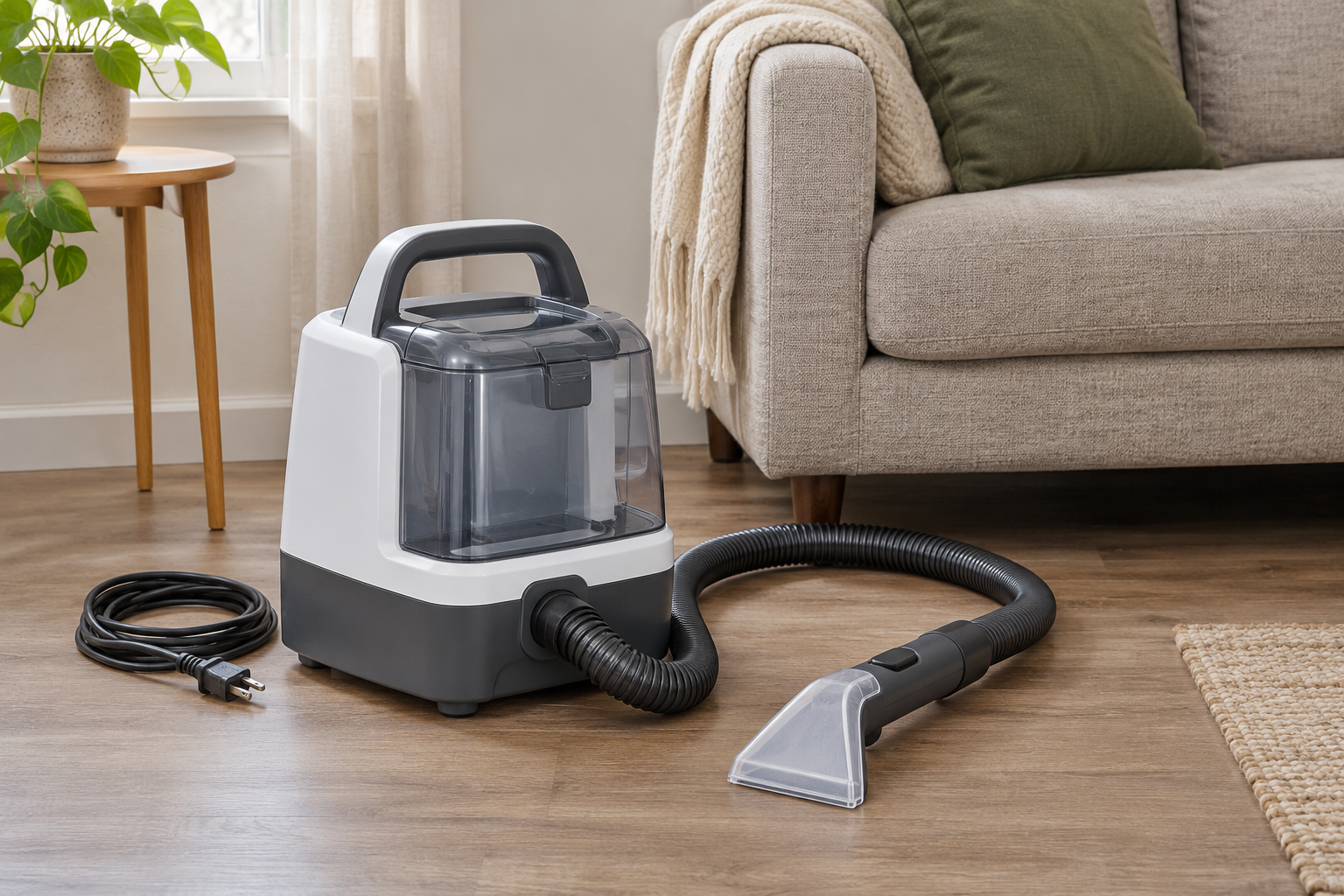
A portable carpet cleaner for apartment use makes sense when you need to extract small spills from approved carpet or upholstery and have room to rinse, dry, and store the machine afterward. Start with the sofa’s care instructions, not the cleaner’s size. A compact extractor is not automatically suitable for every couch, and a small tank does not eliminate the need for a drying area.
Let the furniture tag make the first decision
Find the upholstery care label beneath the seat or cushions and read the furniture maker’s instructions. In its upholstery cleaning guide, BISSELL says its carpet cleaners and formulas can be used on furniture tagged W or WS. That does not mean every tagged item tolerates every formula or treatment method.
If the tag is missing, unclear, or directs you to a specialist, stop before wet cleaning and contact the furniture maker. Do not infer suitability from a fabric’s color or from a retailer photo of a similar sofa. Removable cushion covers also should not be assumed machine-washable.
When water-based treatment is permitted, follow the specified hidden-area test and wait for the result before treating the visible stain. Check for color transfer, a changed texture, or a mark left after drying. A test does not overrule an explicit care prohibition.
Buy for spots, not the entire apartment carpet
A portable extractor combines liquid application with suction through a small tool. It is a different purchase from a dry vacuum, a garment steamer, or a steam mop. Confirm what the actual model does rather than treating all machines advertised as cleaners as interchangeable.
If your main job is occasional sofa spills or a small rug spot, a hand tool may suit the task. If the apartment has extensive wall-to-wall carpet that needs a full clean, compare a suitable rental machine or a professional service instead. A small tool can be inconvenient across a large floor even when the motor is capable of spot extraction.
Keep dry vacuuming in the routine where the surface instructions permit it. The room-by-room apartment cleaning checklist can help separate ordinary debris removal from the less frequent wet-cleaning job. Buying a spot cleaner does not replace all the other steps.
Compare the space required before and after cleaning
| Purchase check | Why it matters in an apartment | How to verify |
|---|---|---|
| Stored width, depth, height | A hose or handle can exceed the body footprint | Measure the complete stored arrangement |
| Hose reach | You need access across the cushion without pulling the unit | Compare usable route to tool reach |
| Cord reach | The nearest outlet may be behind furniture | Trace a safe path to the work area |
| Tank removal | A shelf can block upward or sideways removal | Allow the full removal motion |
| Sink fit | Tanks need emptying and rinsing | Check opening and faucet clearance |
| Drying location | Wet parts cannot go straight into a packed cabinet | Reserve a protected, ventilated spot |
Use one documented model as a measuring example
The BISSELL Little Green 1400B product page lists a 4.5-foot hose, a 15-foot cord, and a 48-ounce clean-tank capacity. These numbers are useful for a fit exercise, not a recommendation that this model is best for every apartment.
Trace the hose from the machine’s intended position to the far seat corner, including the bend around an arm. Consider how you will reach the back cushion without dragging the machine across the room. For the cord, include the actual route around furniture rather than measuring through it.
The tank capacity is not the weight of the complete machine and does not tell you how many cushions can be cleaned. Look up empty weight separately and consider the added liquid when carrying it. Do not promise yourself a certain number of stain treatments per tank; the job and manufacturer’s method determine consumption.
Plan extraction and drying as one job
Read the instructions before mixing solution. Use the machine-compatible formula and dilution, and use only the water temperature the manual permits. More concentrated detergent is not a documented shortcut to a better result.
Apply the method specified by the machine and the fabric maker, including extraction passes. Avoid repeatedly soaking a stubborn spot because the surface still looks dirty. If the stain does not respond to the approved method, stop and reassess instead of escalating heat or chemical strength.
Keep the treated furniture out of normal use until it is dry under its care instructions. Plan where people will sit meanwhile, especially if the couch is the apartment’s only comfortable seat. Do not schedule a broad upholstery job immediately before guests arrive and assume the fabric will be ready on time.
There is no reliable universal drying time for every apartment. Material, padding, applied water, extraction, and room conditions vary. If dampness persists or an odor suggests a deeper problem, seek appropriate help rather than repeatedly cleaning over it.
The machine needs its own cleanup
Before putting it away, follow the manual for emptying the dirty tank, rinsing tools and the hose, cleaning filters if applicable, and drying removable components. Keep electrical parts out of the sink. Follow the formula label and local wastewater instructions for disposal; do not pour collected cleaning water into an outdoor storm drain.
Check whether the included hose-cleaning attachment is part of the package you are buying. A tool supplied with one model number may not be included with another retailer version. Look up replacement tanks, seals, and tools before treating the machine as a long-term purchase.
Store cleaning solution in its original labeled container according to its warnings. The under-sink storage guide helps you check pipe access and leak protection, but a crowded sink cabinet is not automatically a suitable place for a damp electrical appliance.
When ownership is not the convenient option
Skip ownership if your furniture does not allow the treatment, you rarely need extraction, or you cannot provide a cleanup and drying spot. A rented machine still requires care compatibility; a professional service may be more appropriate for uncertain upholstery or a larger job.
For a portable carpet cleaner for apartment shopping list, prioritize an approved surface, comfortable full-tank handling, useful tool reach, and parts access. Extra attachments matter only when they solve a job you actually have.
FAQ
Can I clean a sofa with no care tag?
Do not guess. Contact the furniture manufacturer or a qualified upholstery professional before using water or cleaning formula.
Does portable mean cordless?
No. The cited Little Green model uses a power cord. Check power type and reach on the exact model.
Can I use dish soap in the tank?
Use only solutions and dilution permitted by the machine manufacturer and fabric instructions. Household substitutions can fall outside those instructions.
Can I store it immediately after cleaning?
Only after completing the specified emptying, rinsing, and drying steps. Reserve space for that process rather than putting wet parts into a closed cabinet.
Sources and fact-checking
Checked November 19, 2026: BISSELL Little Green 1400B (HTTP 200) and BISSELL upholstery guidance (direct fetch HTTP 403; full official article readable and inspected in browser). Manufacturer specifications are not independent performance testing. No personal-use claim, guaranteed stain removal, or fixed drying time is made.


댓글 0
첫 댓글을 남겨보세요.