
Countertop Compost Bin: Odor, Capacity, and Cleaning Checks
A countertop compost bin is a short-term food-scrap collector, so the best size is the one you can empty and wash before odors, liquid, or fruit flies become a problem. Check your local compost program first, then compare lid operation, liner policy, removable pail, carrying route, counter footprint, and how easily every corner can be cleaned.
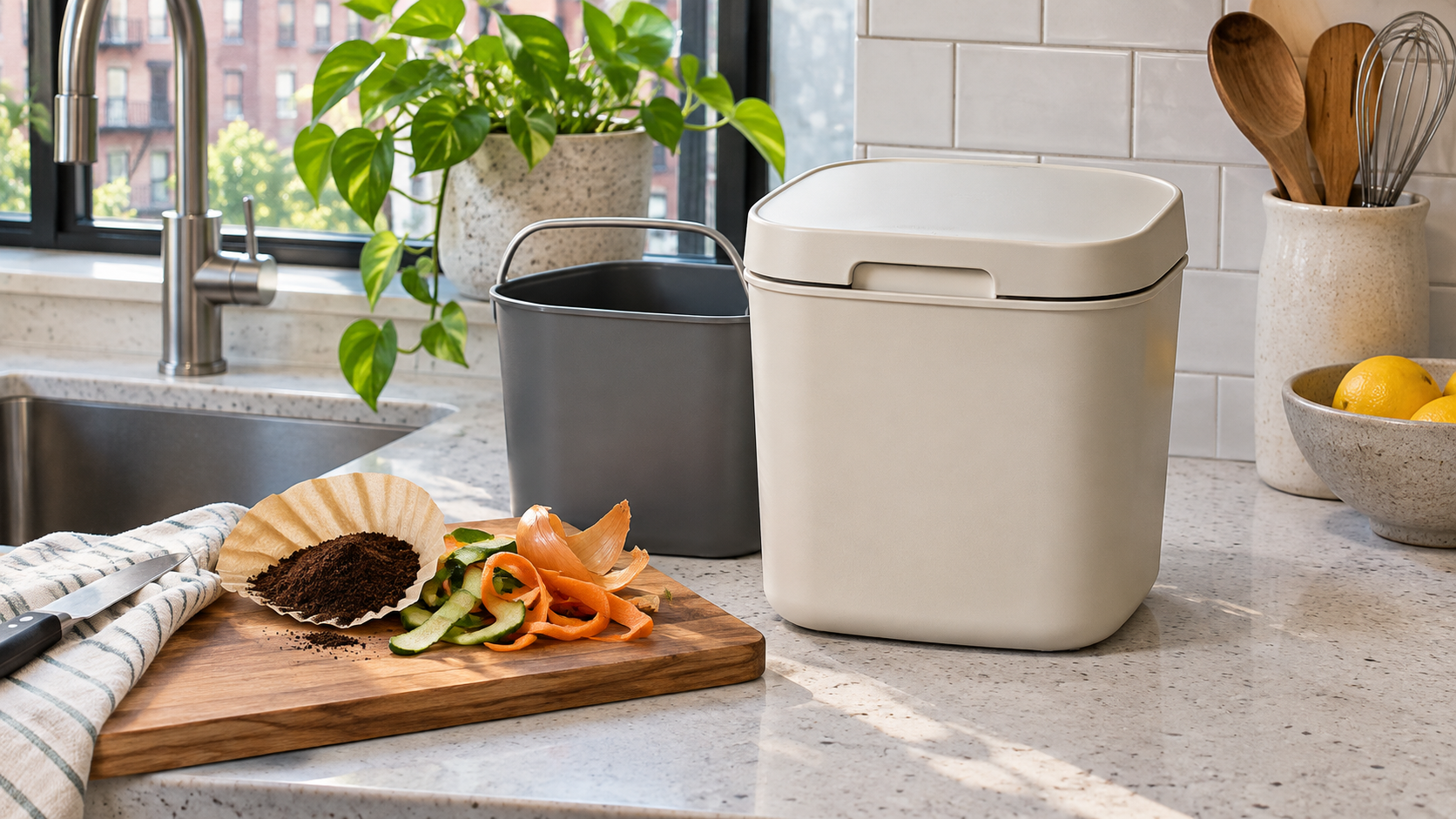
A kitchen caddy does not turn scraps into finished compost by itself. EPA defines composting as managed aerobic decomposition. Electric food-scrap dehydrators and grinders may reduce volume, but EPA notes that their output is not finished compost unless it later enters a composting system.
Start with the destination for the scraps
Decide whether material will go to backyard compost, a municipal curbside program, a drop-off site, a worm bin, or the trash. Accepted items differ. EPA advises avoiding meat, dairy, fats, oils, and some cooked foods in typical backyard piles because they can attract animals and may not break down adequately, while some municipal programs accept them.
That destination controls the container choice. A loose kitchen caddy may work when you empty vegetable scraps daily into a backyard pile. A local curbside program may allow a particular liner. A freezer container may be more practical for infrequent drop-off. Never assume a bag labeled compostable is accepted by your local facility.
| Collection style | Best fit | Main advantage | Check before buying |
|---|---|---|---|
| Ventilated lid with filter | Frequent countertop use with regular emptying | Airflow and carbon may reduce some odor buildup | Filter price, replacement availability, and local scrap rules |
| Sealed smooth lid | Short storage and easy wipe-down | Contains drips and fruit-fly access when closed | Odor concentration when opened and gasket cleaning |
| Removable inner pail | Carry route to outdoor or curb bin | Outer shell stays on counter | Handle strength, corner shape, and dishwasher status |
| Freezer container | Infrequent drop-off or warm-weather pest concern | Stops odor and insect activity while frozen | Freezer footprint, label, and approved container material |
Nine buying checks for a countertop compost bin
1. Check local acceptance rules
Visit the municipal or hauler website before choosing liners, capacity, or odor features. Backyard compost guidance differs from commercial collection. Produce scraps, coffee grounds, and eggshells are commonly accepted at home, while meat, dairy, grease, pet waste, and compostable serviceware require special attention. Build the shopping list around your actual destination.
2. Choose an emptying schedule first
Estimate how many cups of scraps your household produces between trips outside. A large pail encourages longer storage, which can mean more odor, liquid, and weight. In a small kitchen, a modest container emptied every day or two is often easier to clean and carry than a week-size bin occupying valuable prep space.
3. Measure the counter and opening path
Record the footprint and lid-open height. Check whether the lid hits a cabinet, whether a swing top blocks nearby items, and whether you can scrape a cutting board into the opening without dropping food behind the bin. If the caddy will live under the sink, measure around pipes and cleaning products rather than using cabinet width alone.
4. Decide between airflow and sealing
A vented lid can use a carbon filter and may let some moisture escape, while a tightly sealed lid can contain drips and insect access but trap concentrated odor. Neither design removes the need to empty and wash the container. Compare gaskets, filter holders, hinge crevices, and the availability of replacement filters.
5. Inspect cleaning access
Look for rounded corners, a smooth interior, removable gasket, detachable lid, and a pail that fits your sink. Verify dishwasher claims for the exact part; metal coatings, filters, wood handles, and electronic lids may require hand washing. A beautiful narrow opening can be difficult to scrub after wet scraps collect at the bottom.
6. Check liner policy and fit
Some local programs accept paper, certified compostable, or even clear plastic liners, while others prohibit them. The bin manufacturer may recommend a custom size that adds recurring cost. If you plan to use no liner, make sure the pail can be rinsed easily. If using liners, confirm they do not prevent the lid from closing.
7. Plan the carrying route
A removable inner bucket with a solid handle can reduce spills. Estimate the weight of wet scraps, check whether the lid stays attached during carrying, and measure the route through doors or stairs. If the destination is outdoors, choose a setup you can manage in rain, winter, or after dark without balancing an open bowl.
8. Control liquids at the source
Drain excess cooking liquid and follow local rules for grease and oils; do not rely on a charcoal filter to manage a wet leaking mixture. A small piece of accepted paper or a washable bottom insert may help with moisture only if your compost program permits it. Clean drips immediately so the outer shell and counter do not become the odor source.
9. Separate caddies from electric food recyclers
A simple countertop compost bin stores scraps. Electric dehydrators or grinders use power to reduce volume and may require filters, cleaning, and a destination for the processed material. EPA states that pre-processing output is not finished compost. Compare these products as different tools rather than assuming a higher price creates usable soil amendment.
Countertop compost bin worksheet
- Destination: backyard pile, curbside service, drop-off, worm bin, freezer, or trash.
- Accepted material: local rules for meat, dairy, grease, bags, paper, and compostable products.
- Volume: scraps per day, emptying schedule, pail capacity, and filled carrying weight.
- Fit: counter footprint, lid-open height, cabinet clearance, and cutting-board access.
- Cleaning: removable pail, rounded corners, gasket, filter, dishwasher status, and drying space.
- Recurring cost: liners, carbon filters, replacement parts, and collection fees.
These TrendIssue routines can make food-scrap collection part of the kitchen system rather than another overflowing container.
- A Small Home Trash and Recycling Routine — coordinate compost with the rest of the waste stream
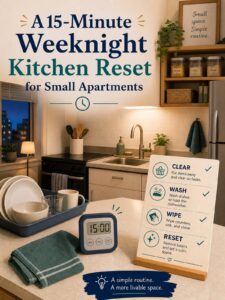
- A 15-Minute Weeknight Kitchen Reset — attach emptying and rinsing to a repeatable time
- How to Clean a Rental Kitchen — clean the pail and surrounding counter without creating chemical clutter
Build the routine before the bin arrives
Odor control depends more on accepted contents, time, temperature, and cleaning than on a single lid feature.
- 1. Confirm rules: Save the current local program page and list exactly what belongs in the container.
- 2. Start small: Use the planned emptying schedule for one week with a temporary bowl or freezer container to estimate real volume.
- 3. Set the zone: Place the bin where cutting scraps can enter easily without sacrificing the main prep area.
- 4. Empty and rinse: Remove scraps before the container is overfilled, rinse or wash as directed, and dry before relining.
- 5. Review after a week: If odors or flies appear, shorten storage time, change accepted contents, improve cleaning, or use freezer storage instead of buying a larger bin.
Common mistakes and tradeoffs
Buying a week-size bin for a two-day routine: Extra capacity often increases storage time rather than convenience.
Assuming compostable bags go everywhere: Facilities have different processing rules; verify local acceptance.
Calling dehydrated scraps compost: EPA distinguishes pre-processed material from biologically stable finished compost.
Relying on a carbon filter alone: Filters do not replace prompt emptying and thorough cleaning.
Ignoring the sink fit: A pail that cannot be washed comfortably is hard to maintain in a small kitchen.
Frequently asked questions
How big should a countertop compost bin be?
Choose capacity from daily scrap volume and how often you will empty it. The smallest size that fits the routine is usually easier to carry, wash, and fit on the counter.
Do countertop compost bins smell?
Any stored food scraps can smell. A lid and filter may help, but contents, temperature, time, liquid, emptying frequency, and cleaning have greater influence.
Can I put meat and dairy in it?
Only if the destination program accepts them. EPA generally advises avoiding meat, dairy, fats, and grease in typical backyard compost piles, while some municipal services accept all food scraps.
Are electric countertop composters the same thing?
No. Electric food recyclers grind or dehydrate scraps. EPA says the output is not finished compost unless it later enters a composting system.
Sources and fact-checking
- U.S. EPA: Composting at Home
- U.S. EPA: Composting
- U.S. Consumer Product Safety Commission: Recalls & Product Safety Warnings
Fact-check completed November 16, 2026. Product specifications, prices, manuals, and recall status can change, so verify the exact model before purchase.



댓글 0
첫 댓글을 남겨보세요.