A Weekend Deep-Clean Plan for a Studio Apartment
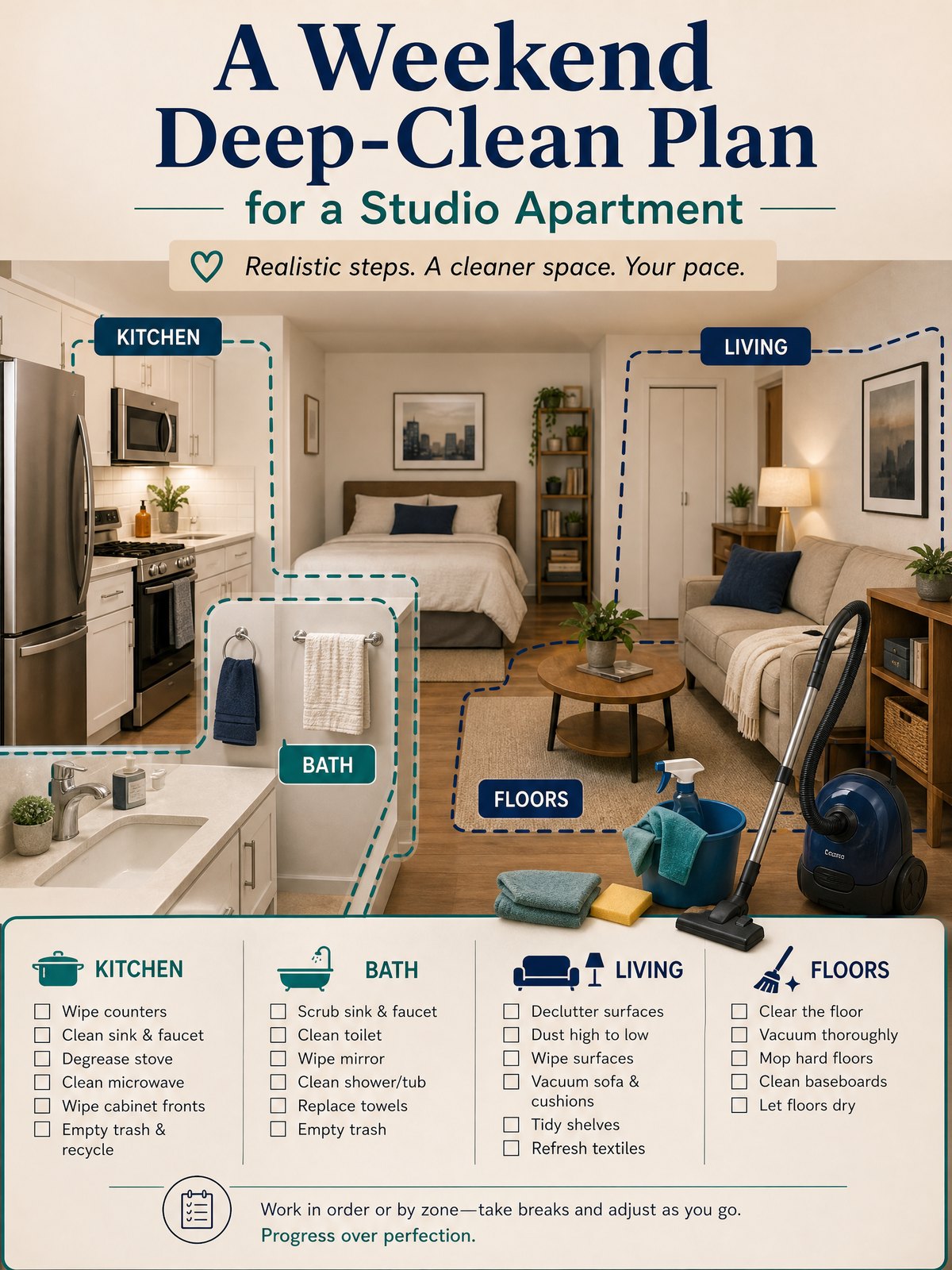
Small studios get messy quickly, and a full deep clean feels overwhelming when you have one weekend and other life to live. The goal here is a realistic, room-by-room weekend plan that gets visible dirt, grime, and high-touch surfaces addressed so your space feels noticeably fresh.
This plan sequences work so you don’t redo tasks, uses simple timing cues, and keeps disinfection separate from routine cleaning except when you decide it’s necessary. Follow product labels, your lease, and local guidance where rules or safety matter.
Start with the real constraint
Renters and small-space dwellers usually face two constraints: limited floor space and limited uninterrupted time. Treat the weekend deep clean as a single project you’ll finish in phases rather than trying to sanitize every surface to hospital standards; that’s rarely needed and increases time and expense.
Practical fact to keep in mind: the U.S. Centers for Disease Control and Prevention distinguishes cleaning with soap and water from disinfecting, and says cleaning alone is sufficient in most situations unless illness-related circumstances make disinfection appropriate. Use that distinction to decide which surfaces you need to disinfect (for example, after a household illness) and which you can clean with soap and water or a multipurpose cleaner as a practical option.
At-a-glance plan
| Area/Surface | Estimated Time | Priority Signal | Key Tasks |
|---|---|---|---|
| Kitchen (counters, sink, stove) | 45–60 minutes | Visible grease, dirty dishes, food smells | Clear dishes, degrease stove, wipe counters, clean sink, take out trash |
| Bathroom (toilet, sink, shower) | 30–45 minutes | Soap scum, hair, standing water | Remove clutter, scrub shower/tub, clean toilet bowl/exterior, wipe mirrors |
| Main living / sleeping area | 30–60 minutes | Clutter, visible dust, crumb buildup | Declutter surfaces, dust high to low, vacuum/sweep and spot-mop floors |
| Finish pass & air | 15–30 minutes | Remaining dust, odors, lint | Final wipe of high-touch points, empty bins, open windows or use fan to air out |
Build the system step by step
- Prep and centralize supplies: gather garbage bags, microfiber cloths, multipurpose cleaner, dish soap, scrub brush, broom/vacuum, mop or floor wipes, and a small caddy so you carry one kit through the studio.
- Declutter fast: do a 15–20 minute pass to gather trash, dirty dishes, laundry, and items that belong elsewhere. Use boxes labeled “put away,” “donate,” and “temporary storage” as a practical option to keep momentum.
- Kitchen first: wash dishes or load the dishwasher, degrease the stove top, wipe counters and cabinet faces, and clean the sink. Taking care of food-related surfaces first prevents crumbs and smells from spreading to the rest of the space.
- Bathroom next: remove towels and rugs to launder, scrub tub/shower and toilet, wipe sink and fixtures, and finish with a mirror wipe. If illness is a concern, identify which surfaces you plan to disinfect and follow product label instructions for contact time.
- Living area and floors: dust from high to low, wipe electronics and tables, then vacuum and/or mop floors. Finish with a brief final pass on high-touch points like door handles, light switches, and the bathroom door knob.
Completing tasks in this sequence prevents re-soiling cleaned areas and keeps the work focused. Treat disinfection as a separate step only when you have a reason to (for example, recent sickness), and otherwise rely on routine cleaning for everyday upkeep as a personal planning approach.
Trade-offs to consider
No single weekend plan fits every lifestyle. Choose a balance that fits your priorities and schedule.
- Time vs detail: Spending 90–120 minutes on a room gives deeper results; a 30–45 minute pass yields visible improvement with less fatigue as a practical option.
- One-person pace vs help: Invite a roommate or friend to split tasks for speed, or accept a solo weekend with staged breaks if coordination isn’t worth the time saved.
- Cleaning vs disinfecting: Routine cleaning is usually enough; reserve disinfectant use for illness-related situations and always follow product label directions and local guidance.
Keep it workable
After your deep clean, maintain the result with short, consistent habits: a 10–15 minute nightly reset (dishes away, wipe counters, fold one item of clothing), a midweek 20-minute touch-up for the bathroom or kitchen, and a weekly 30–60 minute session for vacuuming and dusting. These micro-sessions prevent the next weekend from becoming a huge project and keep your studio functional without constant effort.
FAQ
Should I disinfect every surface during a weekend deep clean?
Not usually; the CDC distinguishes cleaning with soap and water from disinfecting and notes that cleaning alone is sufficient in most situations unless illness-related circumstances make disinfection appropriate. Treat disinfecting as a targeted step after illness or when required by an event, and follow product labels if you choose to disinfect.
How do I decide what to clean first if I only have four hours?
Prioritize food-prep surfaces, the bathroom, and floors. Use the table’s priority signals: visible grease and dirty dishes first, then soap scum and hair, then main living clutter and floors. This sequence stops the things that create the worst smells or stains from lingering.
Can I use one multipurpose cleaner for everything?
A single multipurpose cleaner can work for many surfaces as a practical option, but always check the product label before using it on delicate materials like wood furniture, stone counters, or electronics, and follow manufacturer instructions where applicable.
Pick a specific weekend, put the steps on a checklist, and set two-hour blocks on your calendar to make the work predictable. After finishing, keep the supply caddy handy so short upkeep sessions are effortless.
Sources and fact-checking
This guide provides practical editorial guidance. Requirements and safe choices can depend on the product, lease, local rules, and individual situation.
- U.S. Centers for Disease Control and Prevention — Cleaning and Disinfecting — CDC distinguishes cleaning with soap and water from disinfecting, and says cleaning alone is sufficient in most situations unless illness-related circumstances make disinfection appropriate.
Fact-checked against the linked official resources on August 27, 2026.