A 15-Minute Weeknight Kitchen Reset for Small Apartments
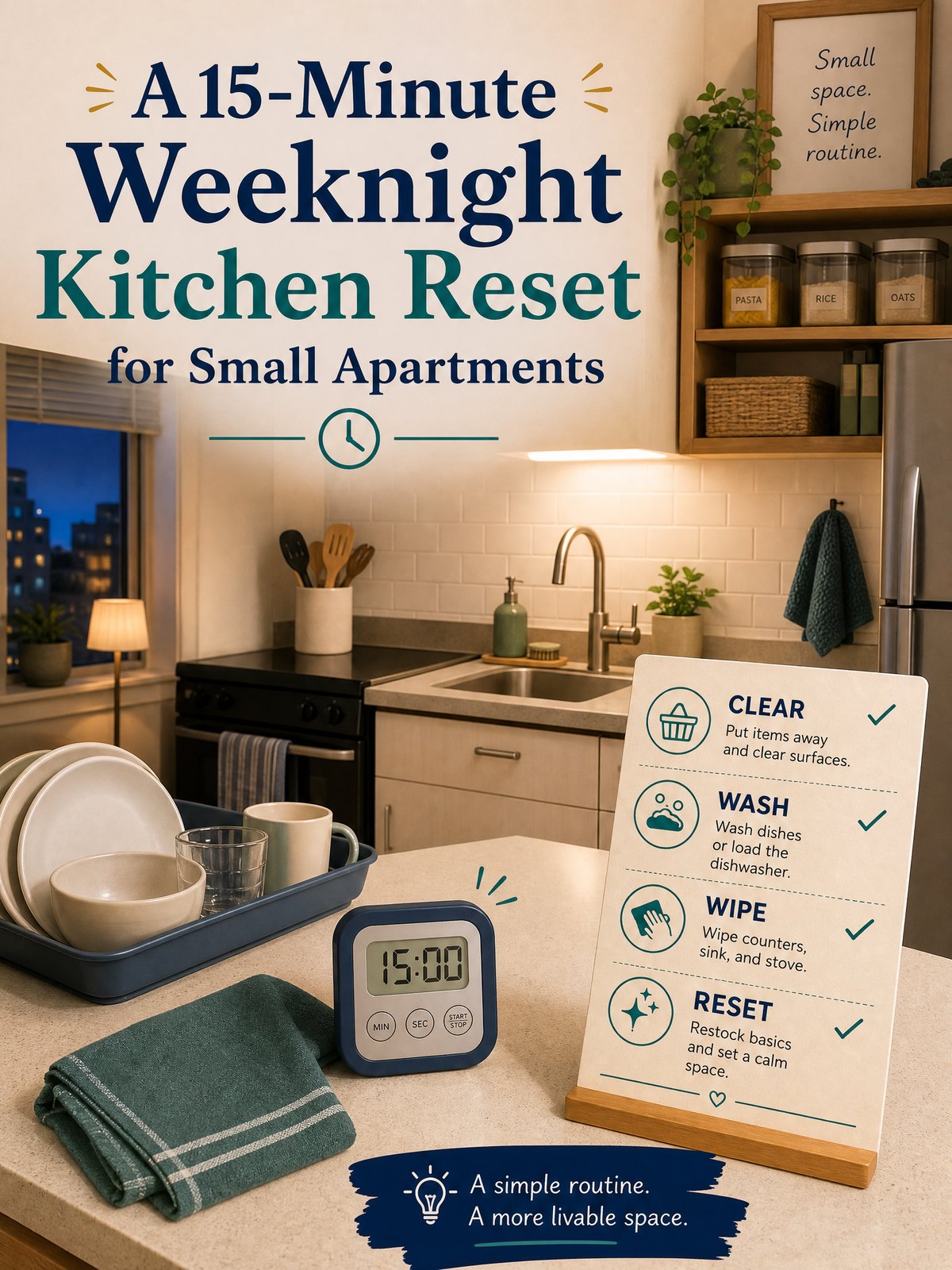
After dinner the kitchen in a small apartment can quickly feel out of control: a crowded sink, one narrow counter, and a trash can that fills before the next trash day. This piece gives a focused, repeatable 15-minute routine you can do most weeknights to clear surfaces, handle dishes and food safely, and keep odors and clutter from accumulating.
The outcome: a small-kitchen reset you can complete in the time it takes to put on a podcast episode — enough to make the space usable for the next day without turning dish duty into a long chore. The steps below are practical options you can adapt to your layout and lease rules.
Start with the real constraint
Small apartments usually have two practical limits: surface area and short-term storage. You can only stage a handful of dishes on one counter and the sink area fills quickly. Accepting that constraint lets you design a short routine that prioritizes what must be clear tonight versus what can wait.
Another constraint is where leftover food ends up. Use FoodSafety.gov’s cold storage guidance for how long to keep perishable leftovers and to decide whether something needs refrigeration immediately; checking the official chart is the safest way to verify storage times. Also remember to follow your lease and local rules for waste and recycling when you store or dispose of food scraps.
At-a-glance plan
| Task | Time | Decision signal |
|---|---|---|
| Collect plates, cups, and trash into two zones (sink area and trash bag/bin) | 3 minutes | More than two items per person in use |
| Rinse and stack/soak dishes: fast-rinse for dishwasher or single-sink soak for handwashing | 4 minutes | Sink starts to feel crowded |
| Wipe visible crumbs and spills on counters and stove surface | 4 minutes | Surface looks or feels sticky |
| Sort leftovers and take out trash/recycling; set out drying dish or load dishwasher | 4 minutes | Leftovers that won’t fit in fridge or trash nearing full |
Build the system step by step
- Clear visible clutter: Put all dishes, mugs, and utensils into two staging spots — the sink and a temporary bin or the edge of a counter as a holding zone. This gives you a quick visual of how much work there is. (Practical option.)
- Consolidate and rinse: Fast-rinse plates and utensils immediately to prevent food from sticking; place dishwasher-safe items in the machine or stack them for handwashing. If you have only a single sink, consider a brief soak for baked-on pieces in warm water to save time later. (Practical option, follow product label and manufacturer instruction for appliance use.)
- Wipe high-touch surfaces: Use a damp cloth or an all-purpose spray and a paper towel to wipe counters, stove knobs, and the table. The CDC distinguishes cleaning with soap and water from disinfecting and notes that cleaning alone is sufficient in most situations unless illness-related circumstances make disinfection appropriate; follow label instructions if you choose to disinfect.
- Handle leftovers and trash: Decide which food goes to the fridge using FoodSafety.gov’s cold storage guidance for timing, and remove trash to a bag or corridor bin per your building rules. If you compost, follow your lease and local authority guidelines for indoor storage and pickup. (Personal planning approach: put perishables in the fridge promptly to avoid needing later deep cleaning.)
- Finish and reset: Load the dishwasher or set a small drying rack on a towel, wipe the sink rim, and return one clear surface for morning use — a coffee station or a breakfast bowl spot. This small reset makes it easier to start the next day.
These five steps are meant as practical options that stay within a 15-minute window. Adjust the order depending on whether you have a dishwasher or only one sink. Always follow product labels and manufacturer instructions when using cleaning products and appliances, and check building rules about trash and compost storage.
Trade-offs to consider
Any fast evening routine accepts compromises; decide which trade-offs fit your life and schedule.
- Speed versus thoroughness: Quick rinses and stacking save time now but may require a longer wash on the weekend.
- Sooner washing versus soaking: Washing immediately prevents buildup but soaking lets you leave tougher jobs for a dedicated time — choose what you’ll reliably do.
- Short-term fridge space versus portion control: Putting large containers in a small fridge can crowd important items; as a personal planning approach, transfer food into shallower containers so you can fit more safely.
Keep it workable
Make the routine sustainable by limiting the number of decision points: use a single small bin for counter clutter, keep one multipurpose cloth near the sink, and set a dishwasher run threshold (for example, run it when it’s two-thirds full). If your lease or building has specific rules on waste, compost, or storing items outside your unit, follow those rules and your local authority’s guidance for disposal.
FAQ
What if my sink is the only large surface and it fills quickly?
Use a two-zone staging approach as a practical option: a small counter hold spot for clean-but-not-put-away dishes and the sink for dirty items; rinse items to reduce odor and stacking bulk, and consider a compact dish rack that fits vertically to save horizontal space. Verify any permitted changes to your unit (like adding shelving) with your landlord or lease.
When should I disinfect instead of just cleaning?
The CDC distinguishes cleaning with soap and water from disinfecting and says cleaning alone is sufficient in most situations unless illness-related circumstances make disinfection appropriate; follow the CDC guidance and the product label for disinfectants if you need to disinfect surfaces after a known exposure or as advised by health authorities.
How should I store leftovers in a tiny fridge?
Follow FoodSafety.gov’s cold storage guidance for how long different foods can be kept; as a practical option, use small, shallow containers so items fit on fridge shelves, label containers with date made, and prioritize placing highly perishable items where the fridge is coldest; always follow local food-safety advice and your personal comfort with risk.
Try the routine for a week and tweak one step — like soaking instead of immediate washing — to match your energy level. Record the small changes that make the reset feel automatic so it stays manageable.
Sources and fact-checking
This guide provides practical editorial guidance. Requirements and safe choices can depend on the product, lease, local rules, and individual situation.
- U.S. Centers for Disease Control and Prevention — Cleaning and Disinfecting — CDC distinguishes cleaning with soap and water from disinfecting, and says cleaning alone is sufficient in most situations unless illness-related circumstances make disinfection appropriate.
- FoodSafety.gov — Cold Food Storage Chart — FoodSafety.gov provides food-specific refrigerator and freezer storage guidance and directs readers to use the official chart for details.
Fact-checked against the linked official resources on August 27, 2026.