How to Reset a Small Refrigerator Before Grocery Day
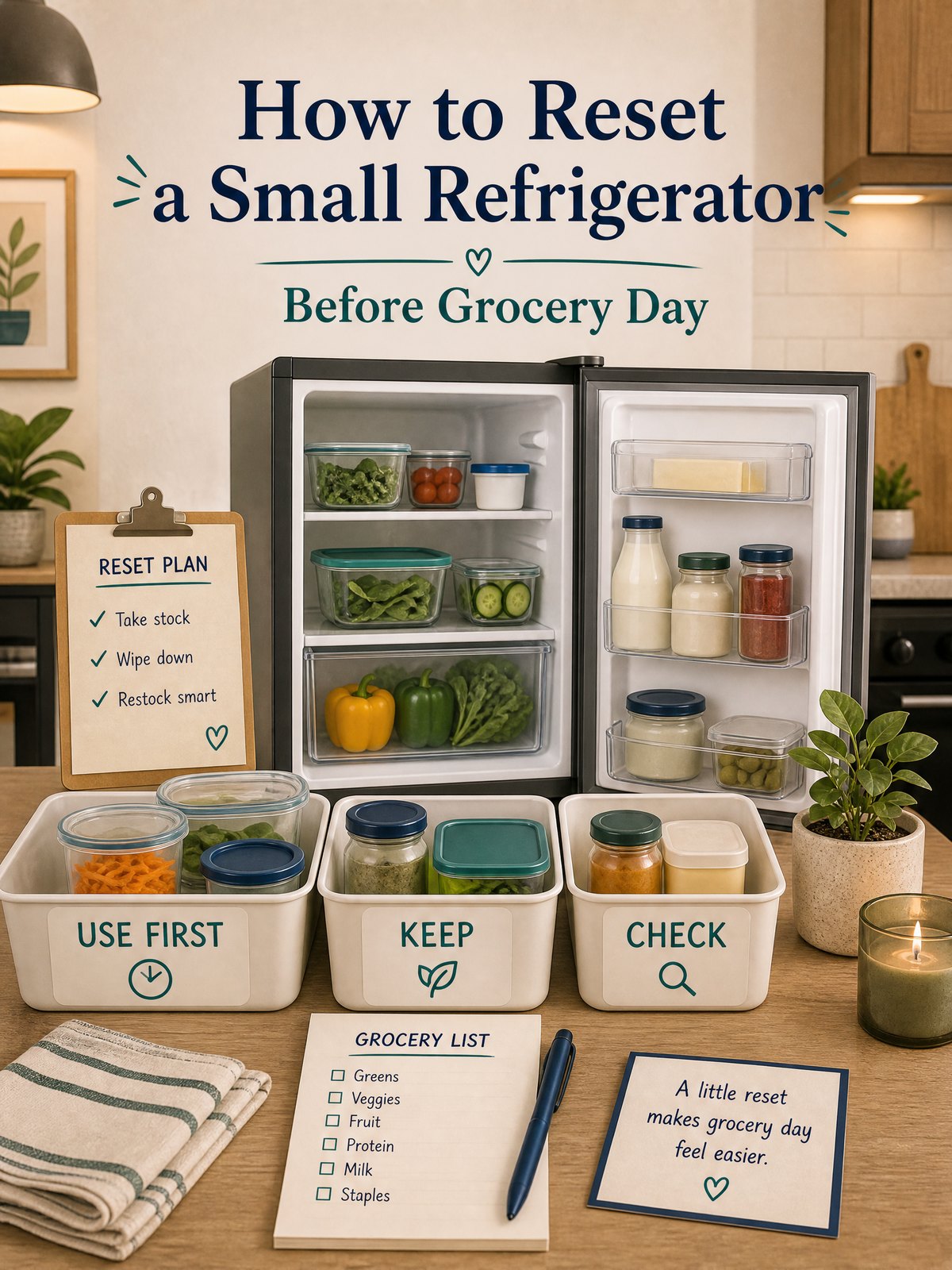
Small refrigerators fill up fast, and the day before a grocery run is the best time to reset yours so you don’t keep bad food, waste space, or double-buy items. This short routine helps you inspect what’s actually safe to keep, clear away spills that attract odors, and make room for the week’s shopping.
Outcome: you will be able to categorize food into keep, use soon, or discard, clean the interior appropriately, and arrange items so they are visible and stay at safe temperatures according to official storage guidance.
Start with the real constraint
The single biggest constraint in a small refrigerator is limited volume. You can only store a certain amount of perishable food safely while keeping airflow and consistent temperature. Crowding the interior, especially around vents or the thermostat area, reduces cooling performance and makes it harder to spot spoiled items.
Another real constraint is decision time: spending hours rearranging on grocery night isn’t practical for most people. This guide focuses on short tasks that fit into a 20–40 minute window and on using official sources for safety decisions. For food-specific storage timing, consult the FoodSafety.gov cold food storage chart rather than relying on memory or generalized rules.
Finally, cleaning choices matter but are often simple. The U.S. Centers for Disease Control and Prevention distinguishes cleaning (soap and water) from disinfecting, and says cleaning alone is sufficient in most situations unless illness-related circumstances make disinfection appropriate. Follow product labels, appliance manufacturer instructions, and any lease or local rules if those apply.
At-a-glance plan
| Step | What to check | Time estimate | Decision signal |
|---|---|---|---|
| Quick purge | Expired items, obvious mold, leaky packages | 5–10 minutes | Discard any visible spoilage; keep labeled, intact items for chart lookup |
| Pull and inspect | Leftovers, deli meats, soft cheeses, produce drawers | 5–10 minutes | Set aside uncertain items to check against FoodSafety.gov timing |
| Spot clean | Spills, sticky shelves, drainage area | 5–15 minutes | Clean with soap and water; consider disinfecting only for illness-related situations per CDC |
| Arrange & zone | Group by use-by urgency and storage needs | 5–10 minutes | Place soon-to-use items frontmost and long-life items toward the back |
Build the system step by step
- Empty the easy-access areas: take out the top shelf and door bins where you keep condiments and drinks so you can see what’s visible at glance.
- Quick purge: toss anything with visible mold, torn packages, or liquids that have leaked into other containers. When in doubt about how long a specific item is safe, use the FoodSafety.gov cold food storage chart to decide.
- Inspect leftovers and prepared food: move them to a clean countertop surface and check labels or dates. If a container is unlabeled and you cannot confirm its age, mark it as a potential discard or use it first; checking the official storage chart is recommended for specifics.
- Spot clean shelves and drawers with warm, soapy water; rinse and dry. Use disinfectant only when your situation involves known illness exposure or as directed on product labels, following CDC guidance about cleaning versus disinfecting.
- Restock with zones: place items you plan to eat within two days where they are most visible, longer-storing items further back, and raw meat on the lowest shelf in a sealed container to avoid drips (this is a practical option and should be verified with your appliance manual or local guidance when needed).
Those five steps create a repeatable reset that fits into a single pre-grocery session. Labeling leftovers with dates and keeping a small bin for “eat first” items can be a personal planning approach to help you maintain the system between full resets.
Trade-offs to consider
Every small-fridge reset balances speed, thoroughness, and food retention. Decide which compromise suits your routine.
- Speed vs. thoroughness: a quick purge saves time but might miss items you could safely keep if checked against the official chart.
- Visibility vs. coldest storage: arranging all frequently used items at the front improves access but may place some foods away from the coldest spots; you can balance this as a practical option based on what you store most.
- Cleaning type: soap-and-water cleaning is usually enough and faster; disinfecting takes more time and should follow CDC guidance when appropriate.
Keep it workable
Maintain the reset by making a short checklist you can run through weekly: quick purge, check one drawer for leaks, and wipe any visible spills. Treat detailed inspections and deeper cleaning as a once-every-4–8-week personal planning approach unless you notice odors, leaks, or illness exposure that suggest you should act sooner. Always follow appliance manufacturer instructions for cleaning and any lease or local rules about disposal or shared-fridge use.
FAQ
How long can leftovers safely stay in my small refrigerator?
Use the FoodSafety.gov cold food storage chart for food-specific timing rather than relying on a single rule of thumb; the chart is the official source for refrigerator and freezer storage guidance.
Should I disinfect the fridge after a spill?
The Centers for Disease Control and Prevention distinguishes cleaning with soap and water from disinfecting and says cleaning alone is sufficient in most situations; consider disinfecting only if someone in the household is ill or if a product label or local guidance requires it.
Do I need a fridge thermometer and where should I put it?
A thermometer is a practical option for monitoring interior temperature and can help you spot a cooling problem early; place it in the middle of a shelf away from vents or the door so it reflects the usable storage temperature rather than transient air near the opening.
Next step: set a weekly reminder for a five- to ten-minute fridge check and bookmark the FoodSafety.gov cold food storage chart for fast lookup. Keep manufacturer instructions, product labels, and your lease rules handy when decisions intersect with appliances, cleaning chemicals, or disposal requirements.
Sources and fact-checking
This guide provides practical editorial guidance. Requirements and safe choices can depend on the product, lease, local rules, and individual situation.
- FoodSafety.gov — Cold Food Storage Chart — FoodSafety.gov provides food-specific refrigerator and freezer storage guidance and directs readers to use the official chart for details.
- U.S. Centers for Disease Control and Prevention — Cleaning and Disinfecting — CDC distinguishes cleaning with soap and water from disinfecting, and says cleaning alone is sufficient in most situations unless illness-related circumstances make disinfection appropriate.
Fact-checked against the linked official resources on August 27, 2026.