How to Clean and Reorganize a Small Pantry Before the Holidays
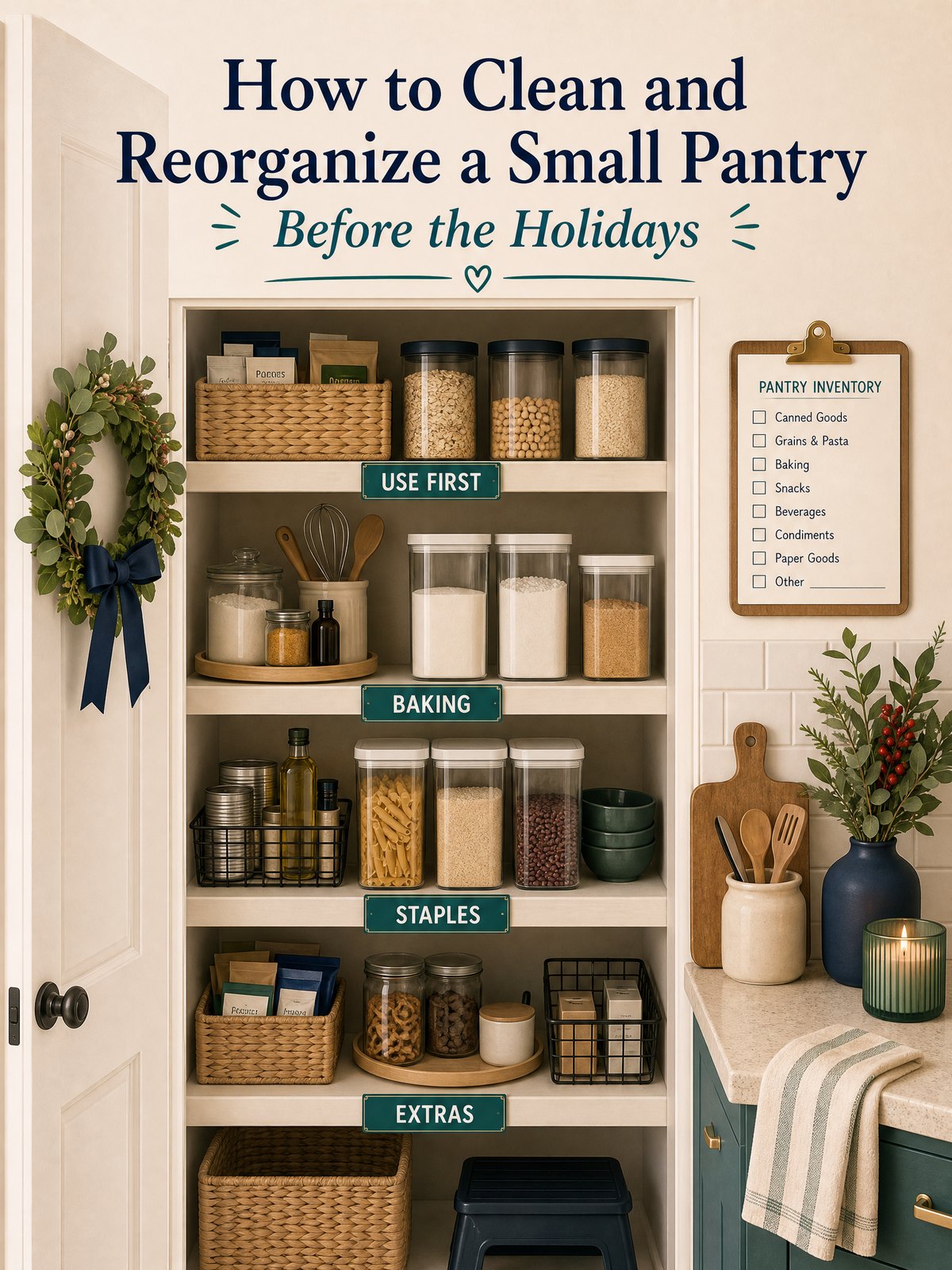
Holidays mean extra shopping, more cooking, and a lot of traffic through a small pantry. If your shelves are crowded, expired items are hiding in the back, and you need space for seasonal supplies, a focused clean-and-reorg session will make holiday meals easier and reduce stress.
This guide walks you through a food-first rotation and clear checks for anything perishable, plus a cleaning approach that matches everyday needs. Follow your lease, product labels, and manufacturer instructions where relevant, and consult local guidance for disposal rules or safety questions.
Start with the real constraint
Space is the limiting factor in a small pantry; you cannot keep everything at once. That reality forces choices—what stays on the shelf for immediate use, what moves to long-term storage (or out of the pantry), and what gets tossed. Treat your pantry like a short-term staging area for the next two to four weeks of cooking and entertaining, and that constraint will guide realistic decisions.
Another real constraint is perishability. Not all items are effectively stored at room temperature after opening, and some prepared or perishable items need refrigeration or immediate use. Before you toss or donate anything perishable, check the specific storage guidance from FoodSafety.gov, which provides food-specific refrigerator and freezer storage guidance and directs readers to use the official chart for details.
At-a-glance plan
| Step | Estimated time | Decision signal | Quick tip |
|---|---|---|---|
| Empty one shelf at a time | 10–20 minutes per shelf | Visible crumbs, sticky cans, or mixed expired dates | Work top-to-bottom to avoid re-soiling cleaned shelves |
| Group and assess contents | 15–30 minutes | Open packages, damaged seals, or unclear dates | Make three piles: keep, use soon, remove |
| Check perishable items | 5–10 minutes per suspect item | Product opened, prepared, or labeled perishable | Consult FoodSafety.gov chart or manufacturer label |
| Reorganize by use and visibility | 20–40 minutes | Items you reach for several times a week | Place high-use items at eye level and rotate forward |
Build the system step by step
- Remove everything from a single shelf and place items on a table or the floor nearby. Working one shelf at a time limits disruption and gives space to clean and reorganize.
- Sort items into three piles: keep on the shelf, use soon (meal plan or set a reminder), and remove (donate, recycle, trash). Labeling these piles is a personal planning approach that helps when several people are deciding together.
- Check any item that could be perishable—opened sauces, homemade mixes, prepared toppings, or anything with a “use by” label—against the FoodSafety.gov storage chart or the manufacturer’s instructions before deciding to keep or discard.
- Wipe the empty shelf with warm soapy water to remove crumbs and sticky residue. The CDC distinguishes cleaning with soap and water from disinfecting, and says cleaning alone is sufficient in most situations unless illness-related circumstances make disinfection appropriate; follow product label instructions if you choose to disinfect.
- Return items using food-first rotation: place items you plan to use soon at the front and earliest-eye-level spots, and move longer-term or bulk items to the back or top shelf. Use clear containers or simple labels to keep categories visible.
After these steps, do a quick walk-through of the whole pantry and remove anything that still seems out of place. If you live in a rental, check your lease about making fixture changes (like adding shelves or adhesive hooks) and follow disposal rules from your local authority for food donation or trash.
Trade-offs to consider
When reorganizing a small pantry, convenience, visibility, and strict food preservation compete. Choose the balance that works for your cooking habits and household size.
- Visibility vs. capacity: Keeping everything visible takes more shelf surface; stacking saves space but hides items.
- Immediate use vs. bulk savings: Stocking sales or bulk buys saves money but requires more discipline to rotate items before they degrade.
- Deep clean frequency vs. daily upkeep: A thorough seasonal clean frees up space but requires a time block; small daily or weekly checks prevent large messes.
Keep it workable
Set a realistic maintenance routine: one short sweep each week and a more focused reorg before big shopping trips or holiday cooking sprees. Use a simple labeling habit—add the date you opened a jar or package with a felt-tip marker—or keep a list on your phone of items that need to be used soon. These low-effort practices keep the system functioning without a major overhaul every month.
FAQ
How do I decide whether a sauce or jar is still safe to use?
Check the product label and, for perishable or opened items, consult the FoodSafety.gov chart for refrigerator and freezer storage guidance; if a product shows visible spoilage such as mold or an unusual texture, removing it is a practical option.
Should I disinfect shelves after cleaning?
The CDC distinguishes cleaning with soap and water from disinfecting and says cleaning alone is sufficient in most situations unless there are illness-related circumstances; follow the disinfectant product label when disinfection is appropriate and allowed under your lease.
Can I use plastic bins and labels in a rented pantry?
Yes, free-standing plastic bins and removable labels are a low-impact option for renters; verify any adhesive or hardware changes against your lease and use non-damaging solutions where required.
After you finish, keep a short shopping-and-use list for the week to maintain the food-first rotation. Plan another 30–60 minute session after the first week of holiday activity to reset the pantry and reclaim any wasted space.
Sources and fact-checking
This guide provides practical editorial guidance. Requirements and safe choices can depend on the product, lease, local rules, and individual situation.
- FoodSafety.gov — Cold Food Storage Chart — FoodSafety.gov provides food-specific refrigerator and freezer storage guidance and directs readers to use the official chart for details.
- U.S. Centers for Disease Control and Prevention — Cleaning and Disinfecting — CDC distinguishes cleaning with soap and water from disinfecting, and says cleaning alone is sufficient in most situations unless illness-related circumstances make disinfection appropriate.
Fact-checked against the linked official resources on August 27, 2026.