A Spring Decluttering Plan for a Small Apartment
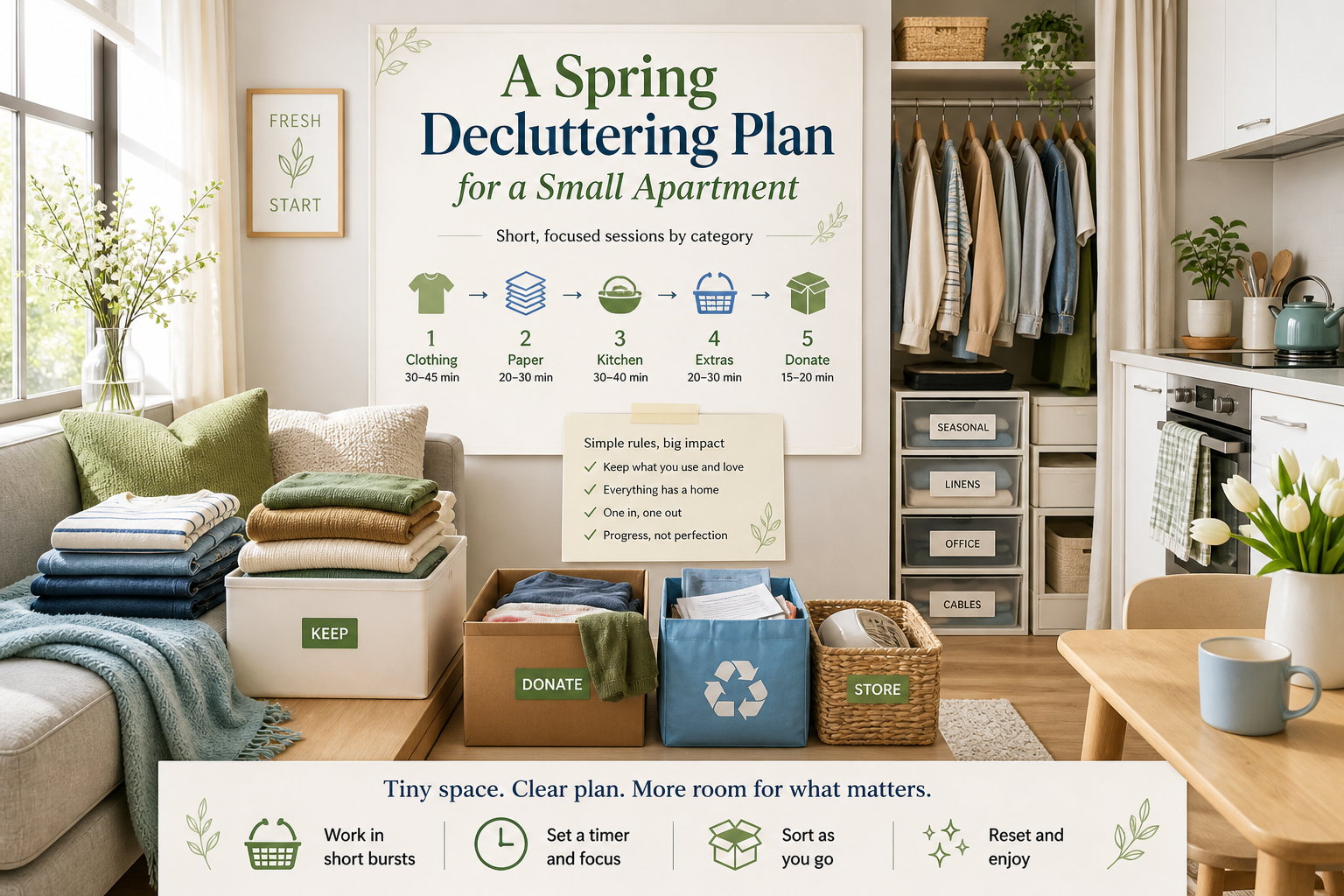
Small apartments fill up faster than we expect: two sets of winter gear, a stack of takeout containers, and a drawer where everything ends up. That clutter makes daily life feel heavier and cleaning take longer, but it doesn’t require an all-day overhaul.
This plan shows how to use short, focused sessions that each target a single category, plus clear decision signals and local disposal reminders for restricted items, so you finish with less clutter and a practical maintenance system.
Start with the real constraint
Space is the constraint. In a small apartment you don’t have the luxury of spreading out or staging large piles; you need a routine that fits into countertops, the kitchen table, or one clear floor space. That means sessions that are short enough to complete without creating a new mess.
Another real constraint is disposal: some things can go in a donation bag or curb trash, and others need special handling. When an item could be hazardous or regulated (for example, paints, solvents, batteries, pesticides), follow the product label, manufacturer instructions, your lease terms where relevant, and local collection guidance. The U.S. Environmental Protection Agency notes that products such as paints, cleaners, oils, batteries, and pesticides can need special disposal care, and advises following labels and local collection guidance.
At-a-glance plan
| Category | Session length | Decision signal | Disposal or destination note |
|---|---|---|---|
| Clothing and shoes | 45–60 minutes | Worn this season? Fits comfortably? Repairable? | Donate, consign, or recycle textiles; verify local drop-off rules and follow lease for bulky donations left in common areas. |
| Paper: bills, mail, manuals | 30–45 minutes | Current, tax-related, or tied to ongoing warranty/maintenance? | Shred personal documents as needed; recycle other paper according to local rules and remove sensitive data before discarding. |
| Kitchenware and food-storage containers | 45 minutes | Used in last 6–12 months? Stackable and functional? | Donate usable items, recycle or discard cracked or warped containers per local rules and food-safety guidance; follow manufacturer care instructions for specialty items. |
| Cleaning supplies, paints, batteries | 30–45 minutes | Unexpired? Label intact? Hazardous smell or leaking? | Follow product label and local collection guidance; the EPA notes paints, cleaners, oils, batteries, and pesticides may need special disposal care. |
Build the system step by step
- Choose the category and set a timer. Pick one category from the table and commit one focused session—no mixing categories. A timer keeps you from overthinking small decisions.
- Prepare four boxes or bags before you start: Keep (back to shelf), Donate/Sell, Recycle, and Dispose/Follow-Local-Rules.
- Make swift decision passes. For each item, use the table’s decision signals. If you’re unsure, set a one-week hold and put the item somewhere visible; if you don’t use it during the hold, move it to donate/recycle.
- Document restricted items. If you encounter batteries, old cleaners, or leftover paint, label them and check your city’s hazardous-waste page or call local waste services before placing them in the Dispose box.
- Finish with staging and immediate departures. Put Keep items back in an organized way, place Donate items in your car or near the door for a scheduled drop-off, and set a calendar reminder to handle the Dispose items according to local collection days.
After those steps, you’ll have reduced decision fatigue and created a repeatable pattern: pick a category, set a short timer, make quick decisions, and move restricted items to a labeled holding place until you follow local disposal instructions. This keeps sessions manageable and prevents clutter from migrating to another corner.
Trade-offs to consider
No plan is perfect for every renter; here are three practical trade-offs to weigh before you start.
- Time vs. thoroughness: Short sessions keep you motivated but may miss deep sorting; longer sessions let you tackle complex items but require more space clearing first.
- Immediate offload vs. temporary hold: Dropping donations quickly frees space, but holding items briefly can prevent unnecessary discards if your needs change.
- Minimal storage vs. redundancy: Keeping duplicates for convenience saves time later but uses valuable space; choose which duplicates truly add value for your routine.
Keep it workable
A maintenance rhythm is what makes decluttering stick. Commit to one short session each week through spring—each session targets a single category from the table. After that, spend 10 minutes every two weeks returning stray items to their proper homes and moving donation bags out. When you encounter potentially hazardous or regulated items, pause and follow the product label, manufacturer guidance, your lease if it applies, and local disposal instructions before deciding.
FAQ
How do I choose which category to start with?
Pick whatever touches your daily life most—if clothing spills into your living room, start with clothing; if a messy kitchen slows cooking, choose kitchenware. Starting where you feel the most friction gives you an immediate reward and motivation to continue.
What if I live in a building with strict donation or trash rules?
Check your lease or building handbook before leaving donations in common areas; follow any move-out or bulk-trash procedures your landlord or property manager sets. When in doubt, schedule drop-offs or coordinate with building management to avoid fines or lost items.
How should I handle items I suspect are hazardous?
If an item is paint, battery, oil, pesticide, or a strong cleaner, stop and read the label; then consult your city or county waste collection guidance. The EPA advises following labels and local collection guidance for household hazardous products, and local rules determine acceptable drop-off options.
Take one category session this weekend and complete it end-to-end: decide, bag, and schedule any drops. Then add a weekly 45-minute session to keep the momentum going.
Sources and fact-checking
This guide provides practical editorial guidance. Requirements and safe choices can depend on the product, lease, local rules, and individual situation.
- U.S. Environmental Protection Agency — Household Hazardous Waste — EPA notes that products such as paints, cleaners, oils, batteries, and pesticides can need special disposal care, and advises following labels and local collection guidance.
Fact-checked against the linked official resources on August 27, 2026.