
Water Leak Detector for Renters: Choose a Standalone Alarm
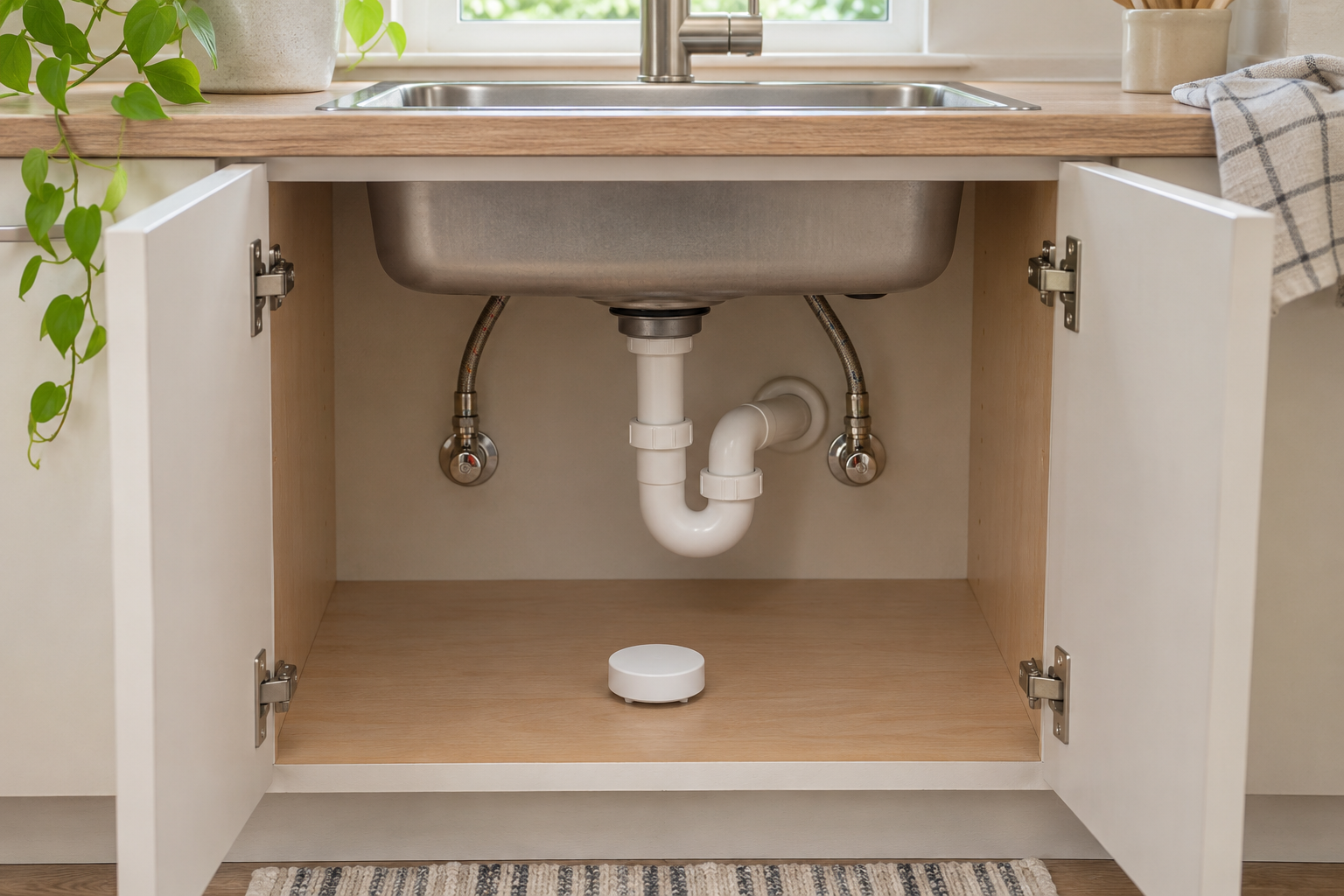
A water leak detector for renters can be a small standalone battery alarm placed where a leak is likely to reach its sensing contacts. It does not need to modify the plumbing, but it does need a suitable location, working power, and someone who can hear and respond to it. An audible alarm alone is not remote monitoring or automatic water shutoff.
For a small apartment, the first buying question is not which app looks best. It is whether the detector fits the actual leak-prone space without being covered by storage, getting splashed during normal use, or becoming impossible to test.
Choose the job before choosing the device
There are separate products for sensing water, sending a message, and shutting off a supply. A basic local alarm handles the first task and makes a sound. A connected detector may add notifications, subject to its network and setup requirements. A shutoff system involves different installation decisions and may require property-owner involvement.
The Zircon Leak Alert product page gives a concrete example of the standalone category: a self-contained battery-powered unit requiring no wiring, with an audible alarm and low-battery indicator. Its manufacturer lists locations including under sinks, near dishwashers and refrigerators, and near plumbing and toilets. Those are candidate locations, not a guarantee that a detector will catch every leak there.
For renters who want a device they can take along at move-out, a loose, accessible alarm may be simpler than installed plumbing equipment. Check the lease and property rules before attaching anything, accessing a utility closet, or placing equipment around a landlord-owned appliance.
| Design | Useful buying question | Main limitation |
|---|---|---|
| Standalone contact alarm | Can water reach the contacts and can I hear it? | No remote notification unless explicitly included |
| Alarm with remote sensing cable | Can the probe lie where the body cannot fit? | Cable routing and approved positioning matter |
| Connected leak detector | Will the required network and notification setup work? | Messages depend on model-specific power, connectivity and settings |
| Automatic shutoff system | Who owns the plumbing and approves installation? | Not interchangeable with a loose battery alarm |
Map the leak path, not just the empty space
Look inside the cabinet before adding another organizer. Identify the drain, supply connections, shutoff handles, cabinet seams and removable trays. Decide where escaped water might collect and where the model’s contacts are intended to sit.
Do not put the alarm on top of a storage bin just to keep it tidy. If the sensing contacts are underneath the unit, elevating it may prevent contact with water on the cabinet floor. Conversely, do not assume a detector body is waterproof or designed for immersion. Follow the specific manual.
Measure the available footprint and height. Allow enough clearance to lift the unit out, open its battery compartment and return it to the same orientation. A detector that technically fits behind a drawer may still be a poor purchase if testing requires dismantling the cabinet.
Leave valves and service panels accessible. Use the under-sink storage guide to keep cleaning supplies in removable groups rather than packing the sensing area. A cabinet photo can help a roommate return the alarm correctly after cleaning.
Ask whether an alarm inside a closed cabinet will help you
A manufacturer’s sound rating is not a promise you will hear the device from your bedroom, with the dishwasher running, or from outside the apartment. Consider closed cabinet doors, the location of sleeping areas and any hearing-access needs before relying on a local audible alert.
Use the manufacturer’s test procedure after positioning the unit. Keep people and pets away from an unexpectedly loud test, and do not improvise by flooding a cabinet. If you cannot reliably notice the signal, a local-only alarm may not suit the job. Compare another notification method rather than buying several identical units and assuming the problem is solved.
Someone who travels frequently may need connected notifications or an agreed check-in arrangement. Even then, confirm who can actually enter and respond. A message sent to a phone cannot turn a valve or move belongings by itself.
Read the battery instructions while the model is still returnable
Check whether a battery is included, which chemistry and size are specified, how the cover opens and what the low-battery signal means. Zircon lists a 9V alkaline battery for the cited model; do not assume that requirement applies to every detector.
Include battery replacement and any app, hub or subscription requirements in your comparison. For a standalone model, confirm that basic local operation does not depend on creating an account. For any model, read the maintenance and test instructions rather than inventing a universal replacement interval.
After cleaning nearby or moving supplies, make sure the device has not been turned over, isolated from the floor, or tucked behind a bottle. Ordinary household activity can change placement without anyone noticing.
Prepare the response before the first beep
Save your property manager’s maintenance and after-hours contacts. Know how the landlord wants urgent leaks reported. If an alarm sounds, assess the situation from a safe position. Do not reach into standing water near energized equipment or attempt unauthorized plumbing repairs.
If you can safely see the source, describe it clearly: room, cabinet or appliance, active dripping or pooling, and any nearby electrical concern. Take photos only when safe. Ask maintenance for instructions about valves rather than experimenting with unfamiliar controls.
A detector does not determine responsibility for damage, change a lease, replace insurance, or prove that hidden materials are dry. Its useful role is narrower: alerting you to water that reaches its sensors. For broader cabinet access, the renter cabinet organization plan can help keep maintenance areas easy to reach.
FAQ
Will a standalone alarm work without Wi-Fi?
A genuinely standalone audible model can operate without Wi-Fi, subject to its battery and instructions. Verify the exact model rather than relying on the product family name.
Can one alarm cover my entire kitchen?
Do not assume so. A contact alarm detects water that reaches its sensing area. Separate cabinets or appliance spaces may need separate assessment.
Can I hide it in a sealed plastic bag?
Not if that blocks the sensing contacts or conflicts with its manual. Protection that keeps water off the contacts can defeat detection.
Does the alarm shut off water automatically?
Not unless that capability is explicitly part of the system. The standalone alarm discussed here is a warning device, not a plumbing shutoff.
Sources and fact-checking
Reviewed November 19, 2026. Zircon’s official Leak Alert page supports the example model’s standalone operation, candidate locations and battery information. Placement and response checklists are editorial advice. Sound performance in a particular apartment, detection coverage and damage prevention were not tested or guaranteed.




댓글 0
첫 댓글을 남겨보세요.