10 Renter-Friendly Vertical Storage Ideas That Do Not Require Drilling
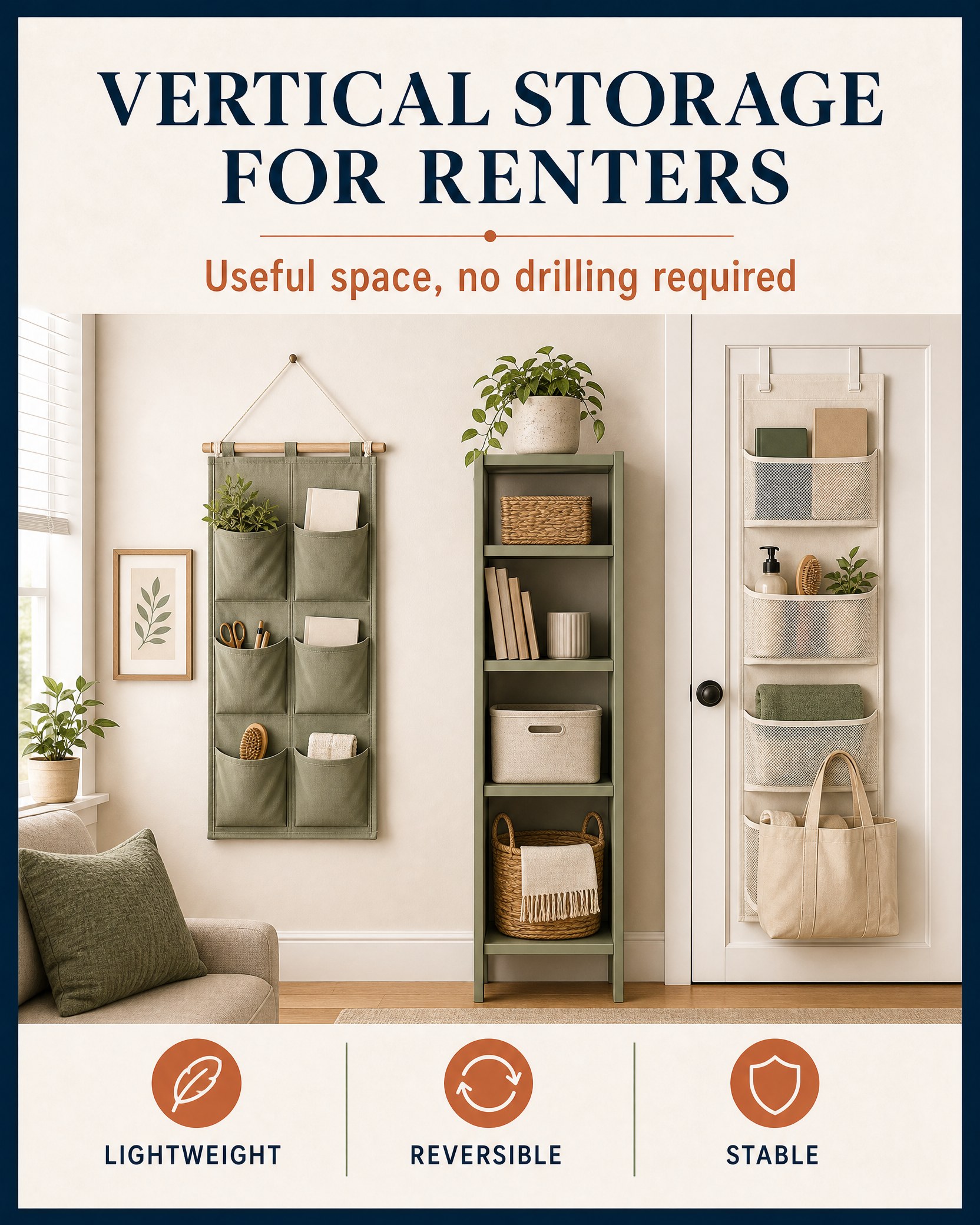
Renting doesn’t have to mean giving up vertical storage. With the right no-drill strategies you can use walls, doors, and corners to reclaim floor space and keep things accessible.
This guide lists 10 renter-friendly vertical storage ideas and gives a clear decision framework so you can match each idea to the weight of items you’ll store, what your lease allows, and how risky removal might be.
Why vertical storage works for renters
Vertical storage maximizes usable space without expanding your footprint. For renters that means shelving toiletries, kitchen tools, or shoes higher up instead of crowding floors. The trick is to pick systems that respect lease rules, manufacturer limits, and the finish of the walls or doors you’re using.
Quick decision table (solution types)
At-a-glance reference
| Solution type | Best for item weight | Typical lease constraints | Removal risk |
|---|---|---|---|
| Adhesive hooks/strips and wall pockets | Light (keys, small tools, lightweight toiletries) | Usually allowed if walls are undamaged | Low to medium (follow removal guidance) |
| Tension rods and corner poles | Light to medium (shower items, linens) | Often okay; avoid on fragile finishes | Low when used as intended; higher if overloaded |
| Over-the-door organizers | Light to medium (shoes, cleaning tools) | Permitted when door condition isn’t at risk | Low to medium |
| Freestanding tall, slim units | Medium to heavy (books, kitchen small appliances) | Generally unrestricted; check for floor protection | Low (but can tip if not appropriately loaded) |
10 renter-friendly vertical storage ideas (no drilling)
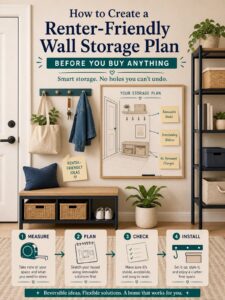
- Adhesive hooks and wall pockets — Lightweight entryway items, jewelry, and small tools pair well with removable adhesive hooks and pockets. Ideal for items under a few pounds; check product limits and your lease for wall finish rules.
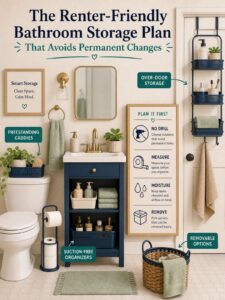
- Over-the-door organizers — Shoe pockets, slim shelves, or multi-pocket organizers hang over doors to store shoes, cleaning supplies, or toiletries. Best for light-to-medium weight items and doors that close freely without pressure.
- Tension rods — Placed inside closets, between cabinets, or in showers, tension rods create additional hanging and shelf space. Use them for hanging spray bottles, lightweight baskets, or curtains to hide storage.
- Magnetic strips and magnetic baskets — On refrigerators, stoves with magnetic surfaces, or metal studs, magnetic strips hold knives, tools, or spice containers. They’re intended for light-to-medium objects and depend on the strength of the magnetic surface.
- Suction-cup bathroom caddies — Shower caddies and small shelves that rely on suction cups work on smooth tile or glass. They’re best for toiletries and lightweight bottles and should be used only for the loads the manufacturer specifies.
- Freestanding tall, narrow shelving units — Slim floor-to-ceiling bookshelves or narrow towers give you heavy-duty vertical storage without drilling. They can hold heavier items but consider tipping risk and floor protection beneath the unit.
- Corner tension poles — Adjustable poles that fit into corners provide stacked shelves for toiletries or kitchen items. Use them for medium-weight items and avoid exceeding suggested load limits.
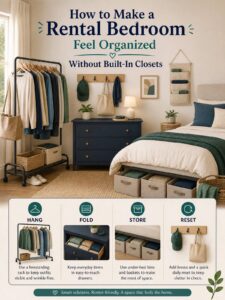
- Hanging closet organizers — Fabric or lightweight hard shelves that hang from the closet rod multiply vertical storage for clothing, shoes, and linens. Keep heavier items on the floor or on freestanding shelves.
- Hanging baskets from closet rods or shelves — Wire or woven baskets clipped or hooked from a closet rod create extra vertical layers for accessories and small textiles. They’re a good match for light-to-medium goods.
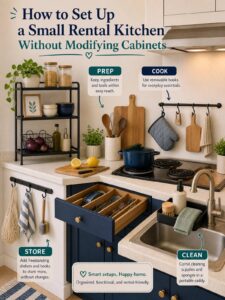
- Adhesive rail systems with removable cups — Small rails that attach with removable adhesives hold cups or hooks for kitchen utensils, hair tools, or toiletries. Use these only for items within the adhesive’s rated weight.
Decision guidance: match idea to items, lease rules, and removal risk
Below is a concise decision list that maps each idea to three quick checks you can run before buying or committing:
- Adhesive hooks and wall pockets — Item weight: light. Lease constraints: usually fine if removal won’t damage paint. Removal risk: low to medium; follow manufacturer removal steps.
- Over-the-door organizers — Item weight: light–medium. Lease constraints: usually permitted; ensure doors still operate. Removal risk: low to medium; watch door edges.
- Tension rods — Item weight: light–medium. Lease constraints: often acceptable; avoid on fragile surfaces. Removal risk: low when used correctly; don’t overload.
- Magnetic strips/baskets — Item weight: light–medium (dependent on magnet strength). Lease constraints: fine if mounted to metal surfaces, not walls. Removal risk: low; magnets don’t affect paint.
- Suction-cup caddies — Item weight: light. Lease constraints: limited by surface type (tile/glass). Removal risk: low if surface is clean; suction can fail over time.
- Freestanding tall shelving — Item weight: medium–heavy. Lease constraints: minimal, but landlords may request floor protection. Removal risk: low for walls, higher for tipping if unevenly loaded.
- Corner tension poles — Item weight: light–medium. Lease constraints: usually fine. Removal risk: low if used per guidance; avoid overloading.
- Hanging closet organizers — Item weight: light–medium. Lease constraints: fine so long as closet rods aren’t damaged. Removal risk: low; remove carefully to avoid stretching or deforming the rod.
- Hanging baskets from closet rods — Item weight: light. Lease constraints: minimal. Removal risk: low.
- Adhesive rail systems — Item weight: light. Lease constraints: usually allowed; check wall finish rules. Removal risk: low to medium; adhesives can take paint with improper removal.
Common materials and when to pick them
Metal shelves are best for heavier items, woven or fabric organizers work for shoes and clothes, and plastic or acrylic solutions work well for lightweight toiletries. Choose materials that match the expected load and environment (moisture-resistant for bathrooms, for example).
FAQ
Can adhesive hooks hold kitchenware or cookware?
Adhesive hooks are generally intended for lightweight items. Check the product’s weight rating and manufacturer instructions; heavier cookware is better placed on freestanding shelving or inside cabinets.
Are tension rods safe for shelves in a rental?
Tension rods can provide solid short-term support when used for their intended purpose. They’re best for hanging or supporting light-to-medium loads; verify product limits and avoid placing heavy objects that might slip or dislodge the rod.
Will using over-the-door organizers void my lease?
Most leases don’t prohibit over-the-door organizers, but it depends on the lease language about door condition and alterations. When in doubt, ask your landlord and inspect the door’s finish after removal.
Choose solutions that fit the weight you need to store, respect lease language, and can be removed without leaving damage.
Sources
Safety note: For guidance on preventing furniture tip-over and securing tall units consider the U.S. Consumer Product Safety Commission recommendations: https://www.cpsc.gov/Safety-Education/Safety-Education-Centers/AnchorItgov.
Related guide: How to Organize a Rental Kitchen Without Changing the Cabinets
Related guide: Renter-Friendly Bathroom Storage Ideas for a Small Space
Next step
Measure vertical space (height and width), list the items you want to store, and use the decision list above to choose one or two compatible solutions. Verify your lease and the product’s weight rating before you purchase.
Reminder: Always verify lease rules and manufacturer instructions; adhesive and tension solutions should be used only as intended to avoid damage or failure.
Sources and fact-checking
This article provides practical editorial guidance. Safety, cleaning, disposal, rental, and product decisions can depend on the item, its instructions, and local requirements.
- U.S. Consumer Product Safety Commission — Anchor It! — For furniture, TV, or elevated-storage safety, follow product instructions and secure top-heavy furniture where appropriate.
Fact-checked against the linked official resources on August 27, 2026.