A Laundry Routine for Small Apartments: Keep Clothes From Taking Over
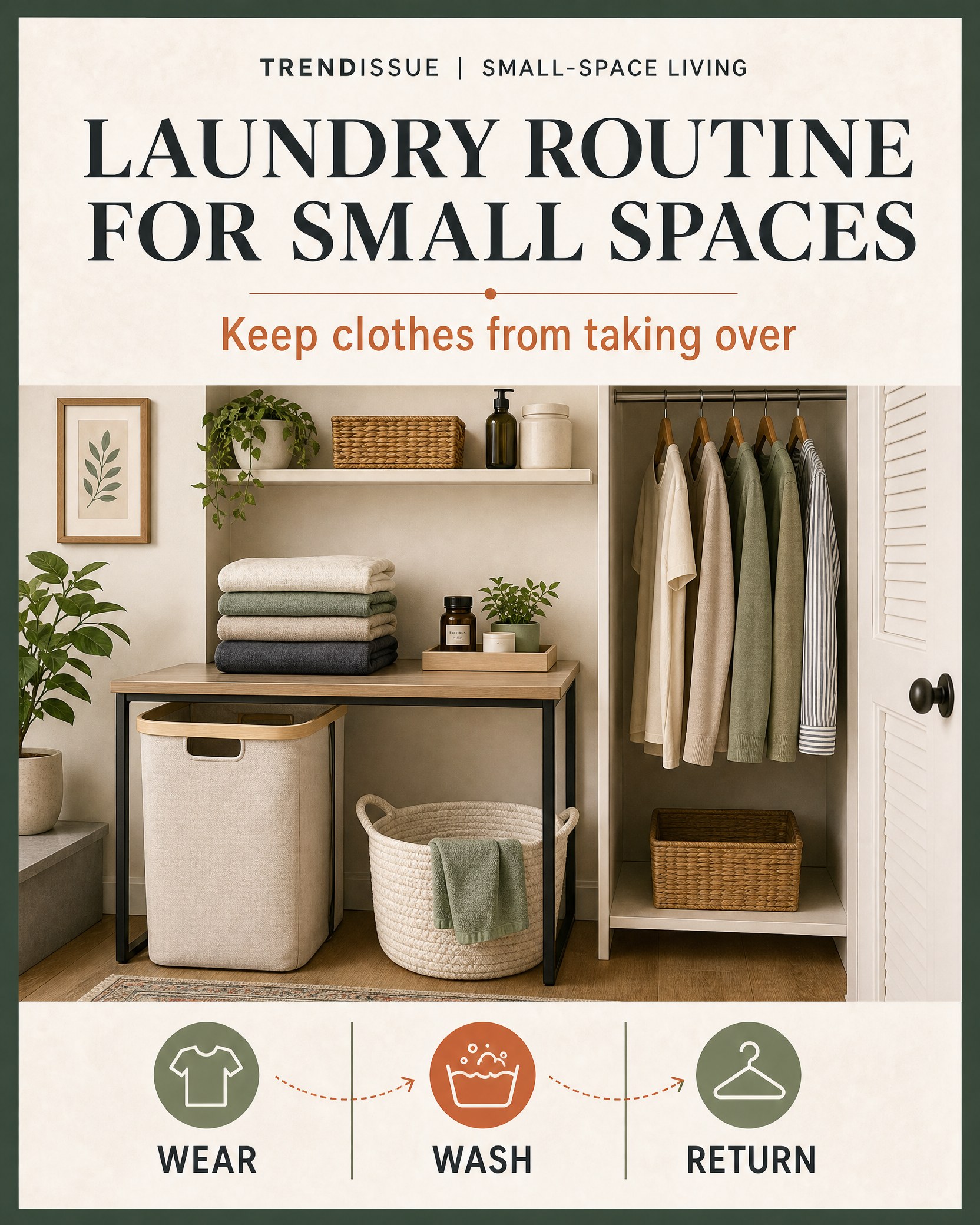
Clothes can overwhelm a small apartment if you don’t set a straightforward path from wearing to storage. The solution isn’t a perfect system or a closet full of specialty bins — it’s a three-stage routine that moves garments through a single, repeatable flow: wear, wash, return.
This article gives a compact, realistic process you can follow every week, with a dedicated small-space folding point so laundry gets folded quickly instead of becoming a permanent pile. The routine balances convenience and space limits, and includes clear trade-offs so you can adjust it for your life.
Stage 1: Wear — Contain and Assess
Start with containment close to where you change. A slim laundry hamper, a hook for worn-but-not-dirty layers, and one small basket for daily items keeps clothes from migrating onto chairs and beds. The goal is to make decisions fast: is this item ready to wear again, or destined for the wash?
Decide at the moment you take something off. If it’s lightly worn and still fresh (jeans, sweaters worn once), hang it on a wall hook or a narrow valet stand. If it’s sweaty or stained, toss it directly into the hamper. That tiny extra choice prevents the “maybe” pile that swallows small spaces.
Stage 2: Wash — Batch Smart
In a small apartment, fewer but fuller loads save space and mental energy. Batch by fabric type and need: colors together, delicates in a mesh bag, and towels separate. If you use a laundromat or shared laundry, plan two load types per trip to maximize the time you’re out of the apartment.
Keep a small kit near your hamper: travel-size detergent, a mesh bag for delicates, and stain spray. That eliminates hunting for supplies mid-load and reduces the chance of a partial wash that leaves clothes piled up.
Small-space folding point
The folding point is where dirty becomes ready-to-put-away. In tiny homes this needs to be portable and quick: a clear stretch of table, the foot of the bed, or a folding tray that slides under the couch. The rule is twofold: fold within 30 minutes of the dryer finishing, and do it in one seated session.
At-a-glance reference
| Folding Surface | Why It Works | Trade-off |
|---|---|---|
| Small folding tray | Compacts easily, sets up anywhere | Needs storage when not in use |
| Dining table corner | Comfortable height, always accessible | Interrupts meals if left out |
| Bed foot | No extra furniture needed | Risk of wrinkles if bed is used soon after |
| Sofa tray | Multitasks with TV time | Needs clearing before guests arrive |
Stage 3: Return — Put Clothes Away
The return stage is where most systems fail in small apartments. After folding, avoid the temptation to leave items on a chair. Use a short checklist: hang shirts, fold sweaters, stack jeans, and immediately put each stack into its home. If your closet is tiny, consider rotating seasonal items into vacuum bags or under-bed storage to free immediate hanging space.
Related guide: How to Organize a Small Closet Without a Custom System
Storage tweaks that actually fit small homes
Storage in small apartments is always a compromise between accessibility and neatness. Choose a few high-impact investments: a slim rolling cart for folded items, a shallow dresser for stacked tees, and a set of uniform hangers so more garments fit on a single rod. The aim is to reduce friction between folding and returning — the lower the friction, the less likely clothes will pile up.
Prioritize by frequency
Keep daily-wear items closest: under the bed or the top drawer for pajamas, a couple of hooks for outerwear near the door, and a small shelf for frequently used accessories. Less-used pieces can live in harder-to-reach spots.
Related guide: A 20-Minute Sunday Reset for a Small Home
Weekly rhythm and trade-offs
Pick a weekly laundry rhythm you can keep: many people find one weeknight load and one weekend folding session works. Trade-offs are real: more frequent small loads reduce the in-apartment pile but increase trips to shared machines. Fewer, larger loads save time at the laundromat but need more immediate folding space when you get home. Choose what fits your energy and available space.
Practical tips to prevent backsliding
- Set a timer for folding — 15–30 minutes to force a single focused session.
- Keep a lightweight folding board to speed shirt folding and improve stack stability.
- Limit countertop or chair space for clothing: if there isn’t an available surface, you’ll be forced to put things away.
- Reward a completed return stage with a small routine (music, tea) so it becomes pleasant, not punitive.
Next step
Tonight, clear a 20–30 minute window: sort worn clothes into three destinations (re-wear hook, hamper, laundry kit), run a single sensible load, and fold immediately when it finishes. That single completion of the three-stage flow will feel like reclaiming the apartment — and is the best way to know what to adjust next.
FAQ
How often should I do laundry in a small apartment?
It depends on your wardrobe and schedule. Aim for a predictable rhythm you can maintain — for many renters that’s one weeknight load and one weekend session. Prioritize folding immediately after the dryer to avoid piles.
What if I don’t have a dryer or shared laundry takes a long time?
Plan for air-drying: hang delicates on a fold-down rack near airflow, batch items by drying time, and use the folding point as soon as items are dry to avoid wrinkles. If machines are far, batch two compatible loads per trip.
Can this routine work if I share the apartment?
Yes. Agree on shared spaces for the folding point and storage, and assign simple rules: each person folds their own laundry within a set time after the dryer cycle finishes. Small shared habits prevent clothes from taking over communal areas.
Sources and fact-checking
This article provides practical editorial guidance. Safety, cleaning, disposal, rental, and product decisions can depend on the item, its instructions, and local requirements.
- U.S. Centers for Disease Control and Prevention — Cleaning and Disinfecting — For everyday home cleaning, use product-label directions; disinfecting may be appropriate when illness circumstances call for it.
Fact-checked against the linked official resources on August 27, 2026.