How to Create a Renter-Friendly Wall Storage Plan Before You Buy Anything
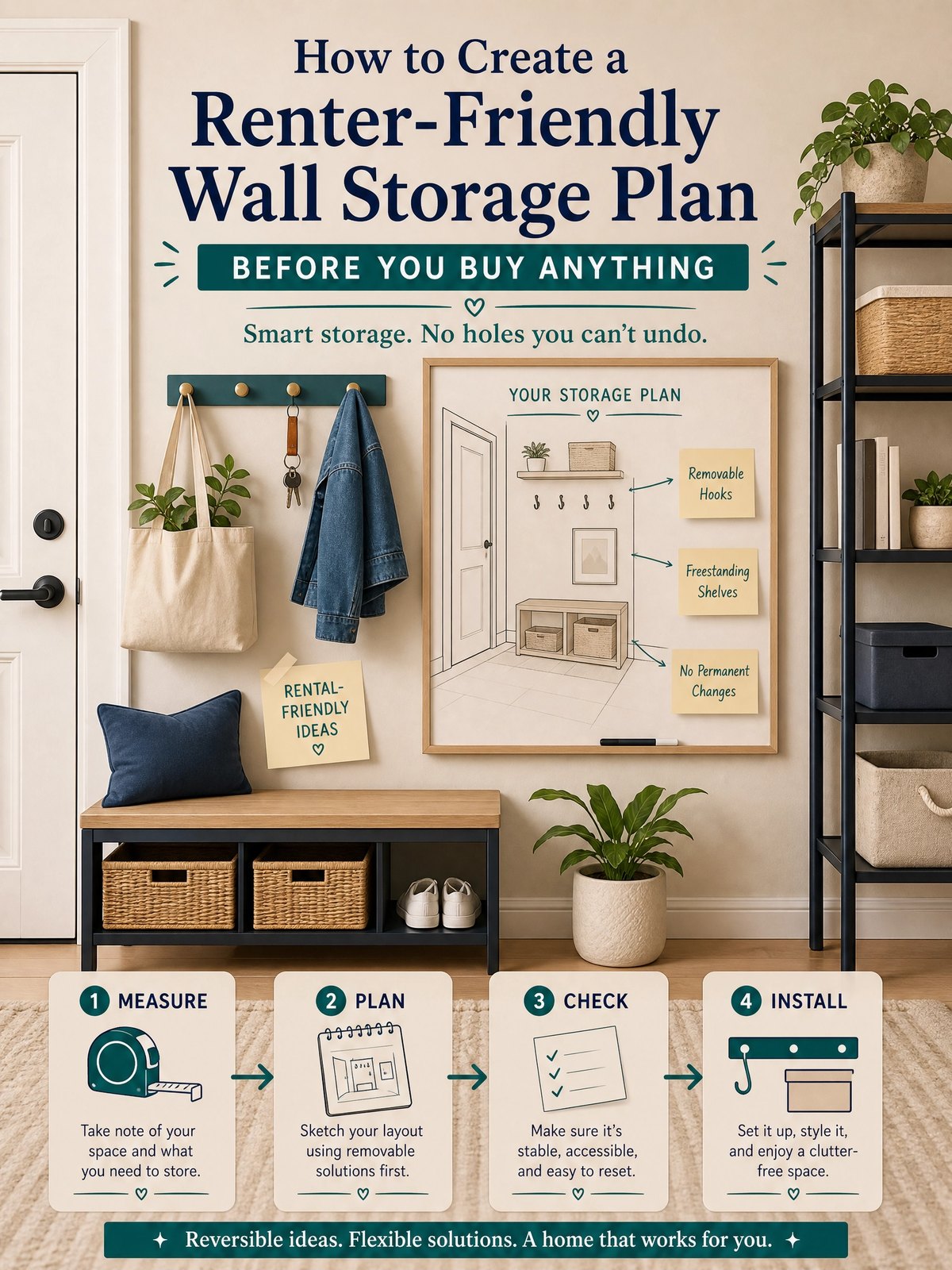
Renters who want wall storage face two practical problems: a small budget and a lease that limits drilling. Before you buy anything, decide how much permanent change you can make and which walls are available for hardware-free storage.
This article compares four renter-friendly approaches—freestanding, tension, over-door, and adhesive—so you can map options to the room, the items you need to store, and your lease rules. Follow the steps here to pick a mix that holds what you have without surprises.
Start with the real constraint
The single most important constraint for renters is not style or price but permission: what your lease allows and what you are willing to restore when you move out. Ask your landlord or property manager about drilling policy and write down any limits. If the lease is silent, treat removal and repair as a likely expectation and plan accordingly.
Next, inspect the wall surfaces. Hollow drywall behaves differently than plaster or concrete. Take quick measurements: stud spacing if you can find studs, ceiling height, door swing, and floor-to-ceiling distances. These measurements guide whether a freestanding tower will fit, how tall a tension pole must be, or if an over-door rack will clear trim. Always follow product labels and manufacturer instructions when installing anything.
At-a-glance plan
| Decision signal | Renter-friendly option | When to buy | Quick setup action |
|---|---|---|---|
| Lease forbids drilling | Freestanding shelving or furniture with wall anchor option | Buy after measuring floor footprint and ceiling height | Place unit, then add anti-tip straps if allowed per label |
| Short vertical space, high traffic | Over-door rack or slim tension pole shelves | Buy when door thickness and clearance are confirmed | Install over the door or tension between floor and ceiling per instructions |
| Need lightweight storage for small items | Adhesive hooks and small strips | Purchase after testing a small area for surface adhesion | Clean the wall, apply per label, wait full cure time before loading |
| Large or heavy items (books, records, cookware) | Freestanding unit anchored to wall where allowed | Buy sturdy unit sized to load and available wall anchors | Assemble, position, and secure following manufacturer instructions and lease allowance |
Build the system step by step
- List what you need to store and prioritize by weight and frequency of use—daily-access items go lowest and lightest items can go higher.
- Measure the spot(s): width, depth, ceiling height, door swing, and wall material. Photograph the area for reference and to check clearance with roommates or landlord.
- Match storage type to constraint: choose freestanding for heavy loads, tension for narrow vertical gaps, over-door for storing by doors, and adhesive hooks for light, quick-access items.
- If you plan any anchors or drilling, verify your lease and get written permission if required; otherwise select nonpenetrating or removable systems. Always follow manufacturer instructions when installing hardware or anchors.
- Install progressively: start with one unit or small test area to confirm stability and that the solution meets daily use needs before buying more.
Working stepwise reduces returns and damage. Start with a single freestanding or adhesive element and live with it for a few days to see if reach, sightlines, and daily workflows are improved. If you need to add anchoring later, consult your lease and landlord and follow product instructions and any local rules.
Trade-offs to consider
No single approach is perfect; each choice balances permanence, load capacity, and visual impact.
- Freestanding units hold heavy items but use floor space and may still need anti-tip anchoring for safety if allowed.
- Tension poles save drilling but can slip or mark ceilings; they are best in narrow vertical spots and for moderate loads.
- Adhesive solutions are minimally invasive but usually limited to lightweight items and depend on surface condition and proper curing time.
Keep it workable
Maintenance keeps a renter-friendly wall system useful. Check fasteners and tension poles monthly for slippage, clean adhesive surfaces per label guidance, and re-tighten or reposition as use patterns change. Label shelves or baskets for categories so items return to their spot; this reduces weight surprises. If you must disassemble, follow the manufacturer’s removal instructions to minimize wall damage and preserve your security deposit possibilities. When anchors or hardware are used, keep receipts and installation notes to show what was changed.
FAQ
Can I use anti-tip anchors on a freestanding shelf without landlord permission?
Follow your lease and ask the landlord if the lease requires permission; this is a question to verify locally. If you have permission, follow the manufacturer instructions for anchors and the CPSC guidance to secure top-heavy furniture where appropriate.
Will adhesive hooks damage painted drywall?
Adhesive hooks can sometimes remove paint or leave residue; manufacturer labels usually describe expected outcomes and removal steps. Test one hook in an out-of-sight spot, follow curing times, and be prepared to follow local repair expectations when you move out.
How do I decide between tension poles and over-door racks?
Use door-thickness and clearance as decision signals: over-door racks are simplest when the door swings freely and hardware fits; tension poles work when you need vertical shelving in a gap but check ceiling finish and headroom before buying.
Next, try one solution in the most-used spot to confirm reach and stability. Then expand or swap out elements based on real daily use and any landlord requirements.
When in doubt about safe installation, follow the product label and manufacturer instructions, check your lease, and contact local authorities or the property manager for rules that apply to your unit.
Sources and fact-checking
This guide provides practical editorial guidance. Requirements and safe choices can depend on the product, lease, local rules, and individual situation.
- U.S. Consumer Product Safety Commission — Anchor It! — CPSC advises following manufacturer instructions, securing TVs and top-heavy furniture where appropriate, and keeping climb-attracting items away from the top of furniture.
Fact-checked against the linked official resources on August 27, 2026.