Renter-Friendly Pantry Organization: A No-Renovation System
If your pantry feels like a game of Tetris every time you cook, this guide gives a no-renovation system you can start this weekend. It focuses on three simple habits—meal-first placement, a one-container-per-function rule, and a weekly inventory check—so meals are easier and food waste drops without drilling, painting, or permanent changes.
Everything below is built for rented and small-home kitchens: tools that slide on and off shelves, freestanding solutions that work in tight spaces, and placement logic that puts what you use together. Follow the process, weigh the trade-offs, and take the clear next step at the end to get one shelf fully functional in an hour or two.
Start with a meal-first placement
Think like you cook: build zones around the meals you actually make. If you make breakfast most mornings, keep cereal, oats, coffee, and spreads together at eye level. If dinner is a quick pasta and sauce, make a dinner zone with pasta, jarred sauce, and a small rack for spices used in that dish.
This isn’t about grouping by category alone (all baking, all snacks). It’s about grouping by how items combine during real meals. Meal-first placement shortens the path between ingredients and the counter, which cuts time and friction during busy evenings.
Choose containers and follow the one-container-per-function rule
Containers simplify visibility and stop pantry items from becoming a jumble of mismatched bags and boxes. The key rule: assign one container type to each function and stick to it—one jar for dry grains, one bin for snacks, one canister for coffee. That reduces duplicate containers and confusion when restocking.
A one-container-per-function checklist
Make a short list: breakfast items, baking staples, bulk dry goods, snacks, and sauces. Choose a container for each and don’t create duplicates unless a function truly needs a second unit.
Practical containers that work for renters
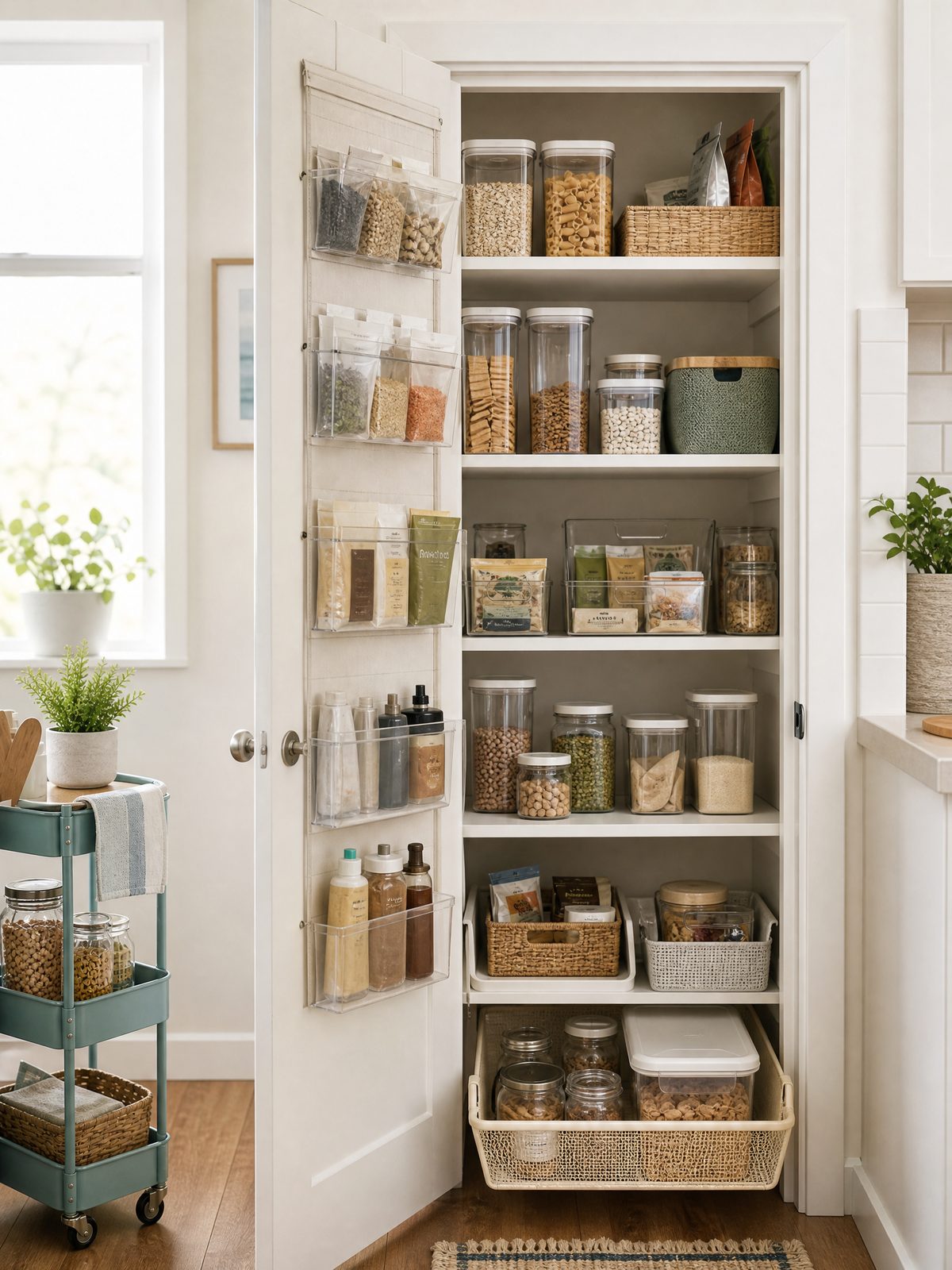
Prioritize stackable, clear, or labelable containers that can be moved easily. Open bins make it simple to grab snacks; wide-mouth jars are great for rice and grains; shallow baskets are ideal for single-serve sauces. Avoid permanent fixtures—freestanding shelves, under-shelf baskets, and tension or over-the-door organizers provide flexibility.
At-a-glance reference
| Container type | Best for | How to use |
|---|---|---|
| Clear canister | Rice, pasta, flour | Keep at eye level, label with content and purchase date |
| Open bin | Snack packs, fruit | Group by meal (breakfast or lunch grab-and-go) |
| Shallow basket | Single-serve sauces, packets | Place near the cooking zone for quick reach |
| Riser/stack shelf | Small jars, spice bottles | Create a two-level surface to maximize vertical space |
Layout by frequency: put everyday items front and center
Place the items you use daily at comfortable height and frequently used meal zones. Less-used bulk or specialty items go on higher or lower shelves. This habit reduces daily search time and keeps the most important ingredients accessible—especially helpful in a compact rental kitchen where shelf depth is limited.
Related guide: How to Organize a Small Kitchen Without Buying More Storage
Implement a weekly inventory check that actually works
Make the inventory simple: one minute per shelf. Open the pantry, glance for low staples, perishable items that need to be used, and anything expired. Update a single list—digital note, whiteboard on the fridge, or a paper list stuck inside the pantry door. The point is speed: frequent quick checks prevent weekend scrambles and impulse buys.
Related guide: How to Organize a Rental Kitchen Without Changing the Cabinets
Quick process to set up the system
- Clear one shelf or cabinet completely; wipe it down.
- Sort contents by meal use (breakfast, lunch, dinner, snacks, baking).
- Choose one container per function from your supplies and transfer items.
- Arrange by frequency—daily items forward, bulk items back.
- Label containers and place a small list for your weekly inventory check.
Trade-offs and renter-friendly choices
No-renovation systems can’t create unlimited space. You’ll trade some aesthetic uniformity for flexibility: clear, stackable storage beats built-in drawers when you may have to move. Choosing fewer, multipurpose containers may mean slightly more handling when you cook multiple dishes, but it reduces clutter and makes restocking faster.
If you need extra storage temporarily, inexpensive freestanding shelving or a narrow rolling cart can add capacity without changes to the unit.
Clear next step
Pick one shelf you use most for meals and commit one hour this weekend to apply the meal-first placement and one-container-per-function rule. After arranging, set a weekly reminder for a 3–5 minute inventory check. Small momentum—one shelf, one habit—creates visible improvement and makes the whole pantry feel manageable.
FAQ
How do I keep cereal and snacks fresh without bulky bins?
Use wide-mouth jars for cereal and shallow bins for snacks to protect from pests and maintain visibility. If space is tight, place these containers at eye level in your meal-specific zone so they’re easy to use and rotate.
What if I share pantry space with roommates?
Label personal zones and agree on shared zones for staples. The one-container-per-function rule helps here: assign a container per shared function (one coffee canister, one spice rack) so responsibilities for restocking stay clear.
How often should I replace or rotate containers?
Swap out containers when they no longer seal well, or if you change your meal patterns. Otherwise, inspect them during your weekly inventory check and replace only when worn—this keeps costs and waste down while preserving the system’s reliability.
Sources and fact-checking
This article provides practical editorial guidance. Safety, cleaning, disposal, rental, and product decisions can depend on the item, its instructions, and local requirements.
- U.S. Environmental Protection Agency — Household Hazardous Waste — For cleaners, paint, batteries, oils, pesticides, or other potentially hazardous leftovers, follow the product label and local collection guidance.
Fact-checked against the linked official resources on August 27, 2026.