How to Organize a Small Kitchen Without Buying More Storage
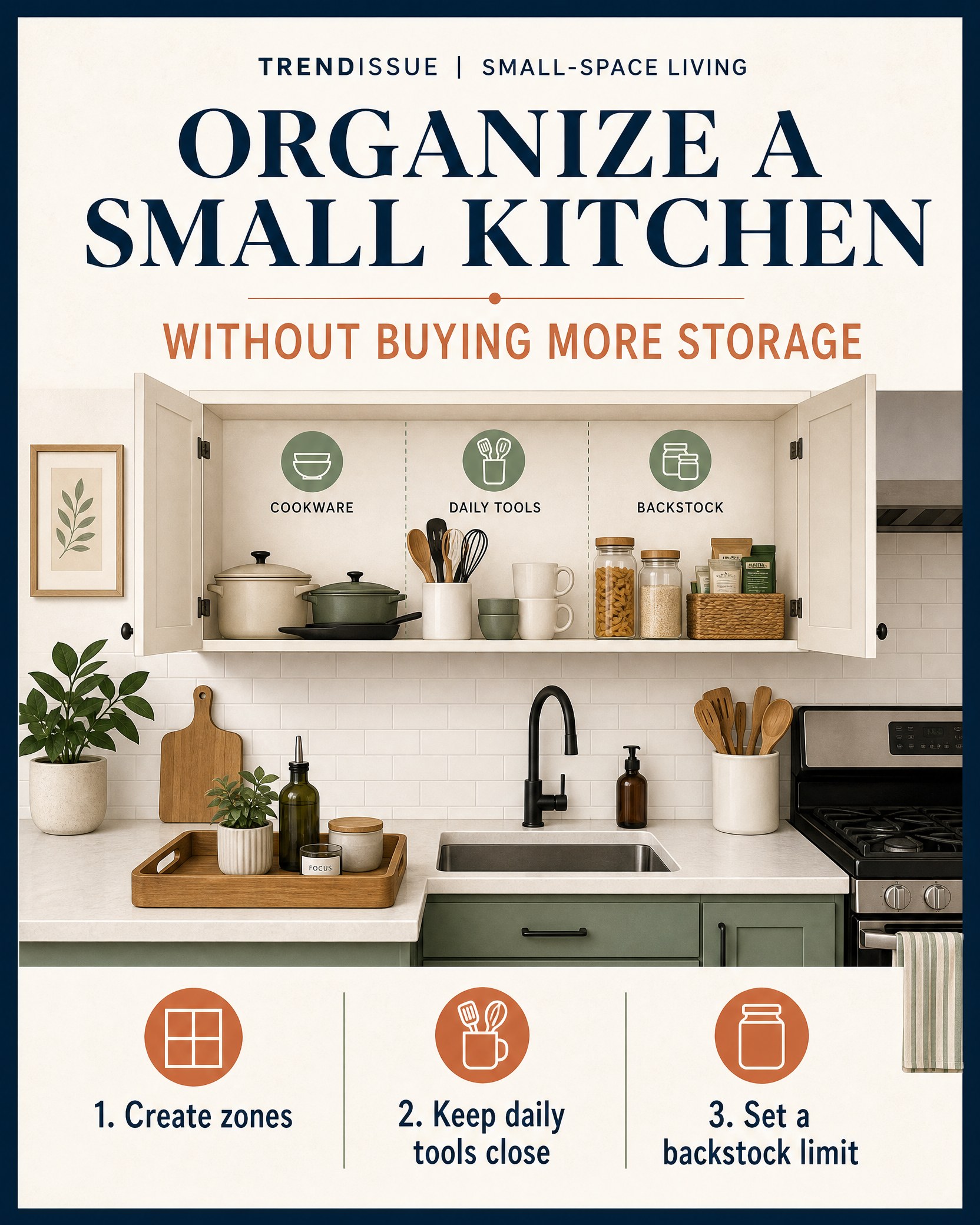
A small kitchen can feel crowded long before it is actually full. The problem is usually not the number of cabinets. It is that high-use items, backup supplies, and rarely used tools are all competing for the same easy-to-reach space.
The simplest fix is to organize your kitchen around how you use it, not around matching containers or a perfect social-media look. This guide walks through a practical reset that uses the storage you already have. Set aside about 90 minutes for a first pass, then refine it after you have cooked in the new system for a week.
The goal is not an empty kitchen. The goal is to make the next meal easier to start, cook, and clean up.
Start by Defining Your Kitchen’s Daily Jobs
Before taking everything out of a cabinet, list the jobs your kitchen performs most often. In a small home, the same counter may be used for coffee, meal prep, homework, and a laptop. Your storage should reduce the number of times you need to move things out of the way.
Most small kitchens need four working zones:
At-a-glance reference
| Zone | Keep within easy reach | Move elsewhere or store higher |
|---|---|---|
| Prep | Cutting board, one good knife, mixing bowl, frequently used spices | Specialty tools used less than monthly |
| Cook | Pots, pans, utensils, cooking oil, oven mitts | Duplicate pans and novelty gadgets |
| Clean | Dish soap, sponge, dish towels, dishwasher supplies | Bulk backups and unopened multiples |
| Serve / eat | Everyday dishes, glasses, lunch containers | Partyware and seasonal serving pieces |
Stand in the spot where each job happens. If you prepare food beside the stove, keeping the cutting board and daily utensils across the room creates small, repeated friction. Moving them one cabinet closer can make the room feel larger because your routine becomes shorter.
Do a Fast “Use, Backup, Elsewhere” Sort
Emptying every cabinet at once often creates a discouraging mess. Instead, work one shelf or drawer at a time. Make only three temporary groups: use, backup, and elsewhere.
The “use” group contains items you reach for at least once or twice a week. The “backup” group includes unopened foil, extra dish soap, duplicate food containers, and pantry overflow. The “elsewhere” group holds things that belong in another room, are expired, are broken, or do not serve your household anymore.
Do not ask whether an item might be useful someday. Ask a more specific question: Would I look for this here during a normal week? If the answer is no, it should not occupy your best storage space.
Give the Countertop a Short, Specific List
A clear counter is useful only if it stays clear. Rather than trying to remove everything, decide in advance what earns a permanent place. For many households, that list might be a coffee maker, a knife block or magnetic strip, one utensil crock, and a small tray for oils used every day.
Everything else needs a home that is one step away. A blender used twice a month can live in a lower cabinet. A stack of mail should not live beside the toaster; a small tray near the entryway is a better destination. If appliances are hard to put away because their cords tangle, loop and secure the cord before returning the appliance to its cabinet.
A useful rule is this: the countertop is a work surface first and a storage surface second. When the counter holds fewer decisions, cooking becomes easier and cleaning takes less time.
Use Cabinets by Frequency, Not by Category Labels
Many kitchens put every baking item together and every pantry item together. That can work in a large kitchen, but in a compact room it may force you to reach past daily essentials for the sake of a tidy category. Frequency should come first.
Put daily dishes and glasses on the shelves between waist and eye level. Place heavy pots and small appliances on low shelves so they can be lifted safely. Use the highest shelves for special-occasion pieces, large stockpots, and backups. Keep one clearly defined spot for food-storage containers, with lids stored vertically in a small open bin or narrow box so they do not disappear under a pile.
If you use bins, treat them as retrieval tools, not as extra places to hide clutter. A bin should let you pull out a full category in one motion—such as snack supplies or baking extracts—then return it without rearranging the shelf.
Create a One-Week Pantry Test
A small pantry becomes frustrating when it contains both active food and long-forgotten food. For one week, place a removable label or small piece of tape on the foods you use. At the end of the week, you will see what deserves eye-level access and what can move higher or toward the back.
Group pantry foods by meal decision: breakfast, lunch-building, quick dinners, snacks, and baking. This is often more helpful than strict alphabetizing. Keep the ingredients for your three most common meals close together, even if that means a jar of sauce sits near pasta rather than with all condiments.
When you buy a replacement item, place it behind the open item. This first-in, first-out habit makes it easier to use food before it becomes stale. Check expiration dates as you reset; dispose of questionable food according to local guidance.
Make a Small “Backstock” Boundary
Bulk buying can save money, but it can also turn a small kitchen into a supply closet. Set a visible limit for backups: perhaps one shelf, one bin, or one half of a cabinet. When it is full, pause before buying more.
The boundary matters more than the container. It protects daily-access space and gives you a quick visual signal when supplies are already adequate. If you do not have room for backstock in the kitchen, choose a dry, accessible area elsewhere in the home and keep only the current package in the kitchen.
Use Doors, Walls, and Vertical Space Carefully
Cabinet doors can hold lightweight items such as measuring spoons or potholders when the hardware is designed for that use and does not prevent the door from closing. Narrow wall-adjacent spaces can also support a slim cart or shelving unit, but convenience should never override stability.
If you add a freestanding pantry shelf, baker’s rack, or tall storage unit, follow the manufacturer’s directions and secure top-heavy furniture when appropriate. The U.S. Consumer Product Safety Commission advises anchoring top-heavy furniture and using the supplied anti-tip devices; it also recommends keeping tempting items off the top of furniture that children may climb. [1]
Keep knives, cleaning products, and hot appliances stored according to their instructions and out of children’s reach where children are present. Organizing should make a home easier to use, not introduce new hazards.
Finish with a Five-Minute Closing Routine
The most durable kitchen systems are maintained in small moments. After dinner, return clean dishes, wipe the prep area, put one stray non-kitchen item where it belongs, and take a quick look at the next day’s lunch or coffee supplies. Five minutes will not create a showroom kitchen, but it will keep the system from collapsing between larger resets.
After one week, notice where items accumulate. That pile is feedback, not failure. If reusable containers always land on the counter, their cabinet may be too inconvenient. If mail keeps entering the kitchen, create a drop zone near the door. Adjusting the system to your actual routine is what makes it sustainable.
Frequently Asked Questions
What is the first thing to organize in a small kitchen?
Start with the area that causes the most daily frustration, usually the countertop or the drawer where utensils and tools pile up. A visible improvement creates momentum and shows which items need a closer home.
Should I buy organizers before decluttering?
Usually no. First decide what you use and where it needs to live. Then measure the final space and buy only the one or two tools that solve a clear access problem. This prevents organizers from becoming additional clutter.
How do I keep a tiny kitchen from looking messy?
Limit permanent countertop items, keep daily tools close to their point of use, and give backups a fixed boundary. A weekly pantry check and a short nightly reset do more than a major reorganization performed once a year.
Your Next Step
Choose one cabinet or drawer and complete the “use, backup, elsewhere” sort today. When the kitchen is working better, use the same zone approach for your bathroom in Small Bathroom Organization: A Renter-Friendly Plan That Keeps Counters Clear and your sleeping area using the same zone approach.
References
[1] U.S. Consumer Product Safety Commission, “AnchorIt.gov”
Sources and fact-checking
This article provides practical editorial guidance. Safety, cleaning, disposal, rental, and product decisions can depend on the item, its instructions, and local requirements.
- U.S. Consumer Product Safety Commission — Anchor It! — For furniture, TV, or elevated-storage safety, follow product instructions and secure top-heavy furniture where appropriate.
Fact-checked against the linked official resources on August 27, 2026.