
Hanging Closet Organizer: Capacity Before You Buy
A hanging closet organizer trades rod width for shelves, so it helps only when folded items need space more than hanging clothes do. The organizer also concentrates weight in a small section of the existing rod. Before buying, inspect the rod, supports, wall connections, and the wardrobe you plan to move into the cubbies.
Measure the organizer empty and loaded. Soft fabric shelves can sag, side pockets can collide with garments, and a long unit can erase the open floor space needed for shoes, bins, or long coats.
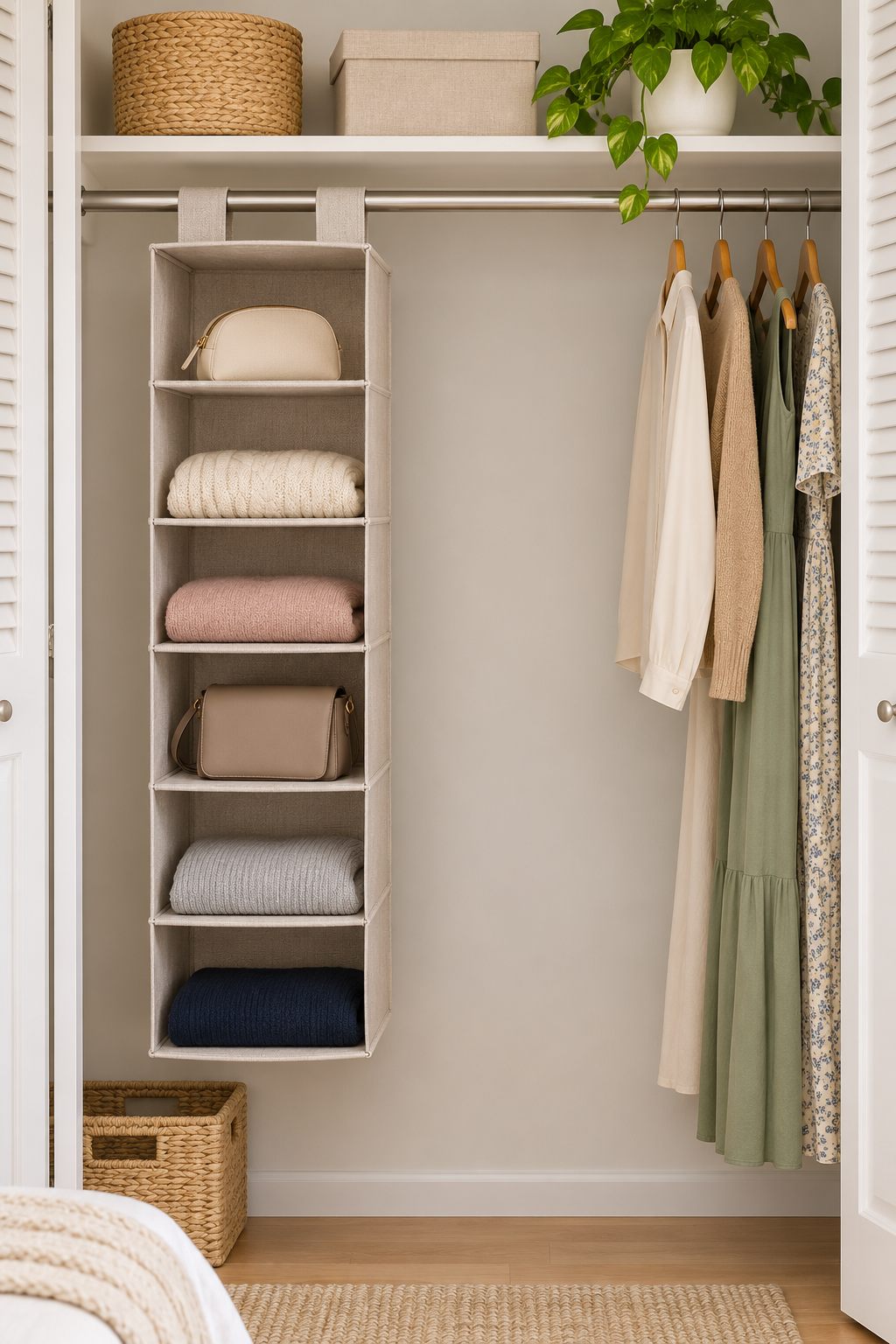
Know the space exchange
A hanging organizer does not create capacity from nothing. It occupies part of the rod and the vertical space beneath it. In return, it creates open cubbies for folded clothes, small bags, accessories, or bins.
The decision is strongest when you can name the items moving out of unstable piles. If the organizer will hold “miscellaneous,” it will likely become another compressed pile.
- Fabric shelf tower: light and portable, but shelf shape depends on inserts and load.
- Rigid hanging shelves: hold shape better but add weight and moving bulk.
- Hanging rod extender: creates another rail for short garments rather than folded storage.
- Freestanding shelf: preserves rod width but uses floor space and may need stability measures.
Compare the closet tradeoffs
Measure the wardrobe as well as the closet.
| Question | Measure | Good sign | Warning sign |
|---|---|---|---|
| Can the rod support it? | Rod span, brackets, existing load, organizer rating | Stable rod with documented capacity and sound supports | Sagging rod, loose sockets, unknown overloaded hardware |
| What width is lost? | Organizer width plus side pockets | Enough rail remains for required garments | Coats and dresses become compressed or inaccessible |
| What height is used? | Organizer length and lower clearance | Cubbies fit without crushing floor storage | Bottom shelf rests on shoes, bin, or heater |
| Will shelves stay usable? | Cubic dimensions and intended item weight | Folded items fit without bulging | Heavy jeans or bags make shelves bow |
A product load rating does not verify the closet rod. Both the organizer and the existing structure must be suitable.
Inventory hanging and folded items first
Count long garments, short garments, folded sweaters, jeans, bags, and accessories. Measure the current rod length used by each group. If long garments already fill the rail, a hanging tower may create more problems than it solves.
Use the small closet organization guide to edit and group items before choosing hardware. The organizer should fit a known category, not postpone decluttering.
Inspect the existing rod and supports
Look for sagging, movement at sockets, loose center brackets, cracked wood, or pulled fasteners. Do not hang a new organizer from a damaged or improvised rod. Report building-owned hardware that needs repair.
Load the organizer gradually and evenly. Concentrating heavy denim, handbags, or bins in one column can stress the rod and deform soft shelves even if the total appears below a broad rating.
Measure shelf depth and retrieval angle
A deep cubby can hide folded clothes at the back. A shallow cubby can let stacks fall forward. Measure the folded size of the intended items and the space needed for your hand to reach the rear without pulling the whole stack out.
Side pockets add useful small storage but also increase the practical width. Include them when checking contact with neighboring garments, closet doors, and walls.
Preserve long-garment and floor zones
Hang the organizer beside short garments when possible, leaving uninterrupted height for coats, dresses, or uniforms. Keep the lower section away from damp shoes and floor-cleaning residue.
For seasonal decisions, use the seasonal clothes storage plan. Moving rarely used garments out of the daily closet may solve the problem without adding a full hanging tower.
Use breathable, dry storage practices
Do not place damp laundry, worn workout clothes, or musty textiles into enclosed bins inside the organizer. EPA guidance emphasizes moisture control; closets need dry contents and enough air movement to avoid persistent damp conditions.
Vacuum bags may reduce off-season bulk, but they add dense weight. If you use them, keep them on a supported shelf or floor rather than packing several heavy compressed bags into a hanging fabric cubby.
Plan for moving and cleaning
Choose removable shelf inserts and washable or wipeable surfaces when practical. Empty the organizer before lifting it off the rod, and fold it according to the instructions rather than bending rigid panels.
If a move is approaching, pair the decision with the closet decluttering before moving guide. A portable organizer is useful only if the items inside are worth moving.
Run a one-column load test
Test the organizer gradually before filling every shelf.
- Measure remaining rod width, long-garment clearance, and floor space.
- Inspect the rod, sockets, and center supports.
- Install the empty organizer and confirm doors and garments move freely.
- Load the lowest shelf with one normal folded category, then add shelves upward gradually.
- Recheck rod sag, shelf shape, and access after 24 hours.
If the rod moves, the shelves bow sharply, or garments become compressed, reduce the load or choose floor-supported storage.
Common buying mistakes
- Buying before counting how much rod width the wardrobe already uses.
- Treating the organizer rating as proof that the closet rod is strong enough.
- Loading heavy bags or dense compressed textiles high in soft shelves.
- Blocking long garments, closet doors, vents, or floor storage.
- Using cubbies for damp or unedited miscellaneous clothing.
Frequently asked questions
How much weight can a hanging closet organizer hold?
Use the exact product’s per-shelf and total guidance, then confirm the existing rod and supports can handle the concentrated load. There is no universal safe number.
Are fabric organizers good for jeans?
Only if the shelf construction and stated load support the folded stack without severe sagging. Dense denim may be better on a supported shelf or in a drawer.
Will a hanging organizer damage the closet rod?
It can if the rod is weak, already overloaded, poorly supported, or exposed to a concentrated load. Inspect and load gradually.
What is the best category for the cubbies?
Light, dry folded items used often enough to justify open access, such as sweaters, T-shirts, or small bags within the organizer’s limits.
Sources and fact-checking
This guide was checked against the following current sources. Product dimensions, load limits, materials, mounting instructions, warranties, and return terms still need to be verified on the exact listing before purchase.
- U.S. Environmental Protection Agency — Mold, Moisture and Your Home — supports dry storage and moisture control in enclosed home spaces
- U.S. Consumer Product Safety Commission — Anchor It! — supports stability awareness when comparing a hanging organizer with freestanding furniture alternatives



댓글 0
첫 댓글을 남겨보세요.