
Under Shelf Basket: A Small-Kitchen Fit Checklist
An under shelf basket creates one extra layer only if the clips fit the shelf and the basket does not make the space below harder to use. The most important measurements are shelf thickness, usable depth, basket drop, door and hinge clearance, and the height of items that remain underneath.
Use the basket for one lightweight category. It is best for towels, wraps, packets, or other items that can be lifted out easily. It is a poor place for heavy glass, leaking packages, hot cookware, or anything that needs to be secured from children.
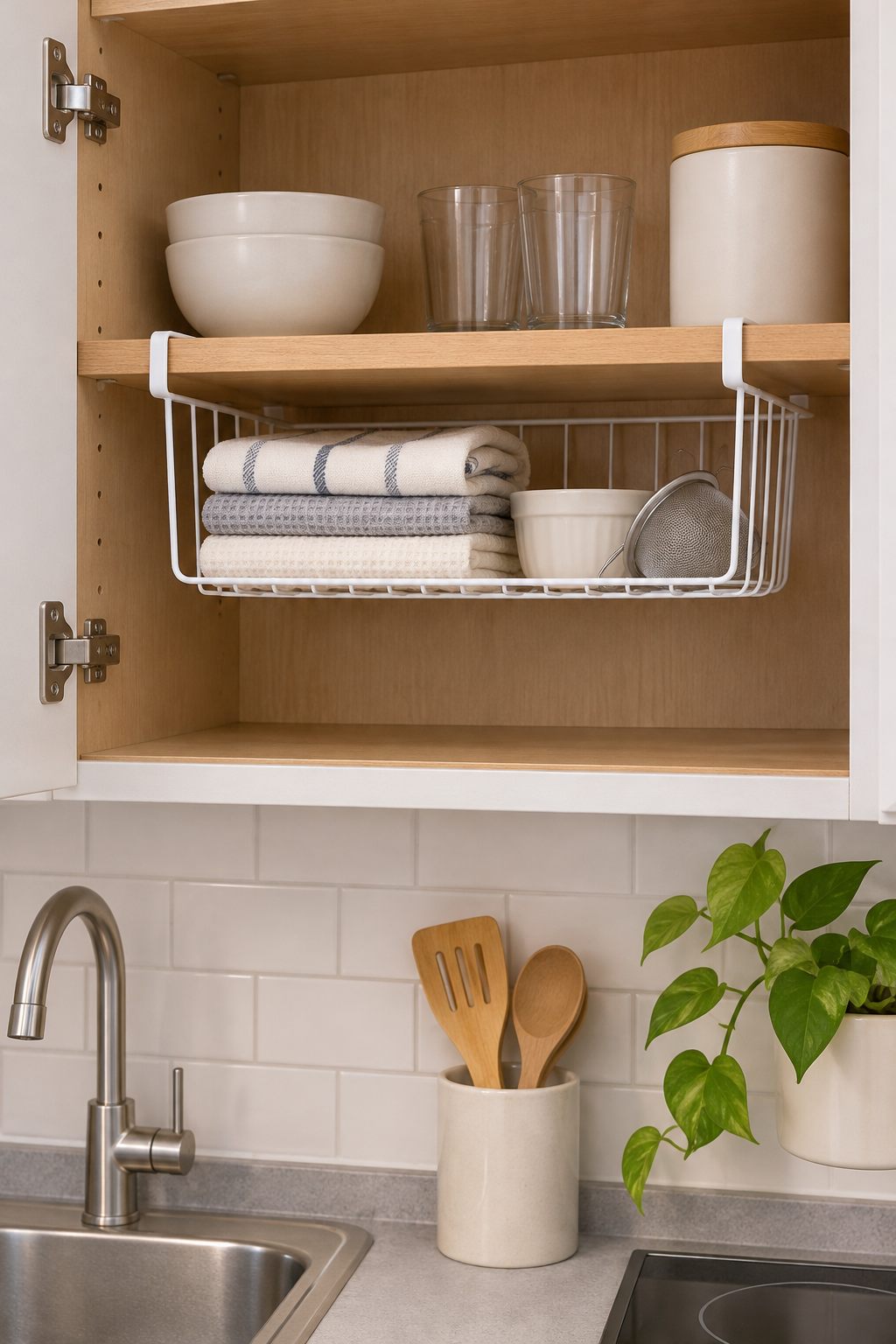
Understand the space you gain and lose
The basket occupies the air below a shelf, but the clips also take space on top of that shelf. You gain a shallow compartment while losing vertical clearance above and below. Measure both effects before buying.
Wire and mesh designs behave differently. Wide wire can let small packets fall through, while solid baskets are easier to contain but can trap dust and hide leaks. The best material depends on the category.
- Slide-on wire basket: quick to install, but must match shelf thickness and lip shape.
- Clamp basket: may feel more secure, but needs enough edge and can leave pressure marks.
- Hooked basket: depends on a compatible shelf or rail and may swing.
- Adhesive under-shelf drawer: adds a surface-compatibility and removal question.
Check every fit dimension
Measure the cabinet with doors open and closed.
| Measurement | Where to measure | What it affects | Common miss |
|---|---|---|---|
| Shelf thickness | Front edge and deeper section | Clip or clamp fit | Decorative front edge differs from main shelf |
| Usable depth | Front lip to back wall or contents | Whether the basket inserts fully | Pipe, bracket, hinge, or shelf pin blocks it |
| Basket drop | Shelf underside to basket bottom | Clearance for items below | Basket fits empty but crushes lower storage |
| Door and hinge clearance | Basket corners with doors closing | Whether cabinet closes and items are reachable | Handle or hinge hits loaded basket |
If the shelf bows, has a loose pin, or is already near its load rating, do not add a hanging basket until the cabinet is assessed.
Choose one lightweight category
Kitchen towels, reusable bags, wraps, snack packets, and light lids are easier fits than cans, jars, dishes, or appliances. The basket’s own load rating and the cabinet shelf’s rating both matter.
The renter kitchen cabinet organization plan helps identify which category actually lacks a home. Do not install a basket merely because the air looks empty.
Measure with the cabinet fully loaded
Empty cabinets create misleading clearance. Put the normal plates, containers, or pantry items back on the shelf and below it. Slide a cardboard strip under the shelf to simulate the clip, then hold a box at the listed basket depth.
Open every door and drawer and remove an item from the back. If the basket forces you to unload the front each time, the gained capacity is not useful.
Protect food and household items
Keep food separate from cleaning chemicals and store every product according to its label. Do not use a basket over open food, heat, or a sink area where leaks and condensation are common.
For pantry categories, combine the basket with the pantry inventory system. The extra layer should have a maximum quantity and review date so it does not hide expired or duplicate items.
Check shelf material and finish
Thin adjustable shelves, glass shelves, wire racks, and laminated particleboard have different edges and load behavior. A clip designed for solid wood may not sit flat on a wire shelf or decorative lip.
Use protective pads only when the manufacturer permits them. Added material changes the clip opening and grip. Inspect for scratches or pressure marks during the first week and remove the basket if the shelf starts to bow.
Keep cabinet access simple
Store items that can be removed one-handed without looking up into the basket. Avoid sharp tools, breakable containers, and heavy objects above face level. Do not load beyond the maker’s rating.
If cabinet access is already complicated, the small rental kitchen setup may reveal a better zone outside the cabinet. More layers are not always better than fewer, clearer categories.
Clean and inspect the hidden surfaces
Remove the basket periodically to clean the shelf underside, clips, and cabinet corners. Look for crumbs, leaks, rust, coating damage, and moisture. Dry every surface before reinstalling.
If the basket holds food-contact items such as towels or wraps, keep them away from leaking packages and follow normal kitchen hygiene. Replace a basket with cracked welds, sharp coating loss, or distorted clips.
Make a cardboard fit model
A simple mock-up shows whether the basket will steal too much space.
- Measure shelf thickness, depth, and the opening between hinges.
- Cut a box to the listed basket width, depth, and drop.
- Hold it under the shelf while normal items remain above and below.
- Close both cabinet doors and remove an item from the back.
- Estimate the intended load and compare it with both basket and shelf guidance.
If the model fits only in an empty cabinet, choose a smaller basket or reorganize the existing categories first.
Common buying mistakes
- Measuring the decorative shelf edge instead of the main shelf thickness.
- Ignoring lost clearance above and below the clips.
- Loading cans, glass, or heavy dishes into a lightweight basket.
- Blocking hinges, cabinet doors, shelf pins, or back access.
- Using extra storage without an inventory limit.
Frequently asked questions
Will an under shelf basket fit every cabinet?
No. Shelf thickness, edge shape, depth, hinges, pins, doors, and the space below vary. Use the exact product dimensions and a mock-up.
What should I store in an under-shelf basket?
Lightweight categories that are easy to remove, such as towels, wraps, packets, or reusable bags, within the product and shelf limits.
Can I use one on a glass shelf?
Only if the basket maker and cabinet manufacturer permit that application. Concentrated clip pressure and shelf condition matter.
Why will the cabinet door not close after installation?
The basket corner, clip, or loaded contents may enter the hinge or door path. Remove it and remeasure rather than forcing the door.
Sources and fact-checking
This guide was checked against the following current sources. Product dimensions, load limits, materials, mounting instructions, warranties, and return terms still need to be verified on the exact listing before purchase.
- USDA Food Safety and Inspection Service — Shelf-Stable Food Safety — supports label-aware, condition-aware pantry storage and review
- U.S. Fire Administration — Cooking Fire Safety — supports keeping combustible storage and clutter away from cooking heat



댓글 0
첫 댓글을 남겨보세요.