
Collapsible Laundry Basket: Measure It Open and Folded
A collapsible laundry basket saves space only if its folded shape fits a real storage spot and its open shape carries your normal load. Some designs fold flat but stay wide; others collapse narrowly but use flexible walls that are harder to carry when full. Measure both states and think through the route to the laundry room.
The useful comparison is not simply plastic versus mesh. It is structure, handle placement, ventilation, cleaning, load size, stair control, and where the basket lives between laundry days.
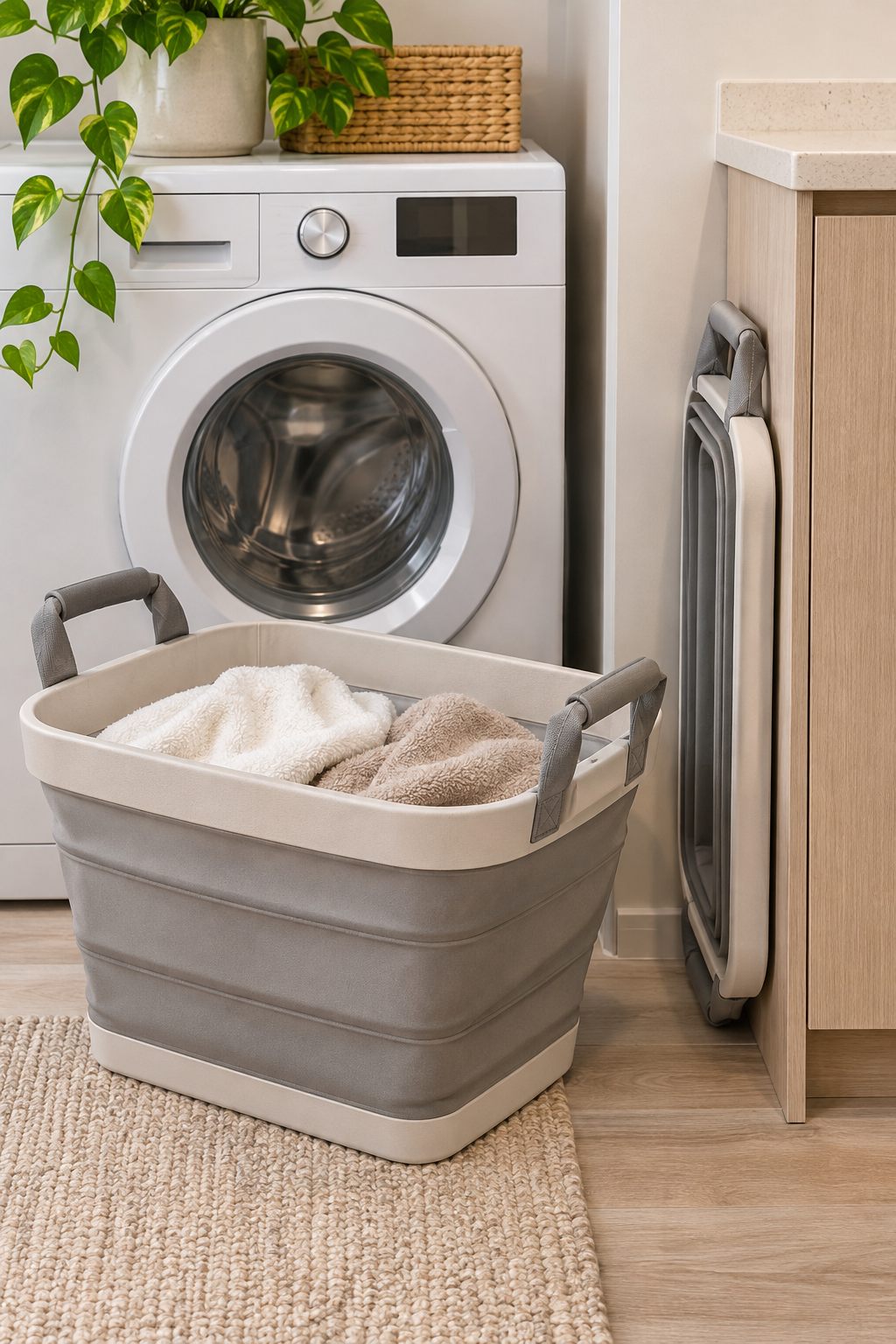
Choose the collapse style by routine
Pop-up mesh baskets fold very small and ventilate, but they can twist and spill when heavily loaded. Rigid folding tubs keep an open shape and support wet towels better, but the hinges and flexible walls add weight and folded thickness. Fabric-frame baskets can look tidy in a room but may need spot cleaning and careful drying.
Decide whether the basket is for collecting dirty laundry, carrying a sorted load, transporting wet items, or storing supplies. One product may not do every job well.
- Pop-up mesh: light and breathable, but less structured on stairs.
- Folding plastic tub: stable and wipeable, but heavier and wider when folded.
- Fabric-frame basket: comfortable carry and tidy appearance, but slower to clean and dry.
- Collapsible hamper with lid: hides laundry, but needs ventilation and a reliable frame.
Compare the measurements that matter
Record the dimensions in both positions.
| Measurement | Why it matters | Test method | Common miss |
|---|---|---|---|
| Open footprint | Determines floor and doorway fit | Mark width and depth with tape | Handles and flared rim extend beyond base |
| Usable capacity | Determines realistic load size | Fill with one normal dry load | Liter or gallon claim does not show bulky-item fit |
| Folded shape | Determines storage location | Measure thickness, width, and height | “Flat” still may be too wide for the gap |
| Carry system | Affects stairs and shared laundry rooms | Lift at normal weight and turn corners | Handles cut into hands or collapse inward |
Do not fill to the rim if the basket must go down stairs, through doors, or across a parking area. A controlled smaller load is safer and easier to sort.
Start with one normal load
Gather the amount you usually wash together and estimate its volume while dry. Include bulky towels or bedding if they are part of the basket’s normal job. Oversized capacity can encourage loads that are difficult to lift or exceed the washer’s instructions.
The small-apartment laundry routine can help set load frequency before you choose capacity. More frequent smaller loads may fit a compact basket better than one large hamper.
Map the carry route
Measure closet doors, apartment doors, hallway corners, stair width, elevator space, laundry-room doors, and the height of the washer opening. Test whether you need one-hand carry for keys or railings.
A low wide tub can be stable but awkward on stairs. A tall hamper may be easy to hug but can block your view. Choose handle placement for the actual route, not for a staged product photo.
Choose ventilation and cleaning by contents
Mesh or perforated walls allow more air movement around ordinary dry laundry. Wet towels, cleaning cloths, and workout clothing should be dried according to their care needs rather than left compressed in any basket.
Look for smooth surfaces and accessible corners. A basket that folds through deep grooves can collect lint and detergent residue. Follow the maker’s cleaning instructions and dry it fully before collapsing.
Keep laundry products separate and secure
Do not use an open laundry basket as storage for liquid packets, detergent, bleach, or stain removers. CPSC warns that liquid laundry packets can seriously harm children and recommends keeping them locked up and out of sight and reach.
Use the small-space laundry organization guide to give products a stable original-container zone separate from dirty clothes and carry baskets.
Check handles, hinges, and pinch points
Rigid collapsible tubs use flexible joints or hinges that can pinch fingers or crack after repeated folding. Open and close the product using the designated grip areas and keep children from playing with the collapse mechanism.
For fabric-frame designs, inspect stitching where handles join the body. Stop using a basket with torn handles, sharp plastic, a frame that will not lock open, or a base that collapses under a normal load.
Give the folded basket a permanent home
Measure the side of the washer, a closet wall, under-bed clearance, or a hook area before buying. Do not store a wide folded basket where it can slide into a walkway or block an appliance vent.
In a shared building, the apartment laundry-room checklist can help you plan keys, payment, supplies, and the return trip so the basket does not become a temporary holding pile.
Run a full route test
Use a normal dry load before relying on the basket for laundry day.
- Open the basket and confirm the sides lock or hold their shape.
- Load one normal dry batch without packing above the rim.
- Lift it using the intended handles and walk the full route.
- Set it beside the washer and remove clothes without tipping the basket.
- Empty, clean if needed, fold it, and place it in the planned storage spot.
If the full basket blocks your view, collapses inward, or needs two hands when you need a railing, choose a smaller or differently shaped design.
Common buying mistakes
- Comparing only open capacity and ignoring folded width.
- Buying a basket larger than the normal washer load or carry route.
- Storing wet laundry in a collapsed or unventilated basket.
- Keeping detergent packets or chemicals inside the laundry basket.
- Ignoring handle stitching, hinge wear, or pinch points.
Frequently asked questions
Is a mesh or plastic collapsible basket better?
Mesh is lighter and more ventilated; rigid plastic is more structured and wipeable. Choose by the contents, route, cleaning needs, and folded storage space.
How large should a laundry basket be?
Large enough for one normal load you can safely carry, not the largest volume available. Test the route and washer opening.
Can I store wet towels in a collapsible basket?
Do not leave wet textiles compressed. Dry them promptly and use a basket that can be cleaned and fully dried.
Where should detergent pods be stored?
Keep them in their original container, locked up and out of children’s sight and reach, separate from the carry basket.
Sources and fact-checking
This guide was checked against the following current sources. Product dimensions, load limits, materials, mounting instructions, warranties, and return terms still need to be verified on the exact listing before purchase.
- U.S. Consumer Product Safety Commission — Liquid Laundry Packets — supports separate, secure handling and storage of concentrated laundry packets
- U.S. Fire Administration — Clothes Dryer Fire Safety — supports keeping the laundry area clean and following appliance maintenance and use instructions



댓글 0
첫 댓글을 남겨보세요.