How to Clean a Small Entryway Without Bringing Dirt Into the Rest of the Home
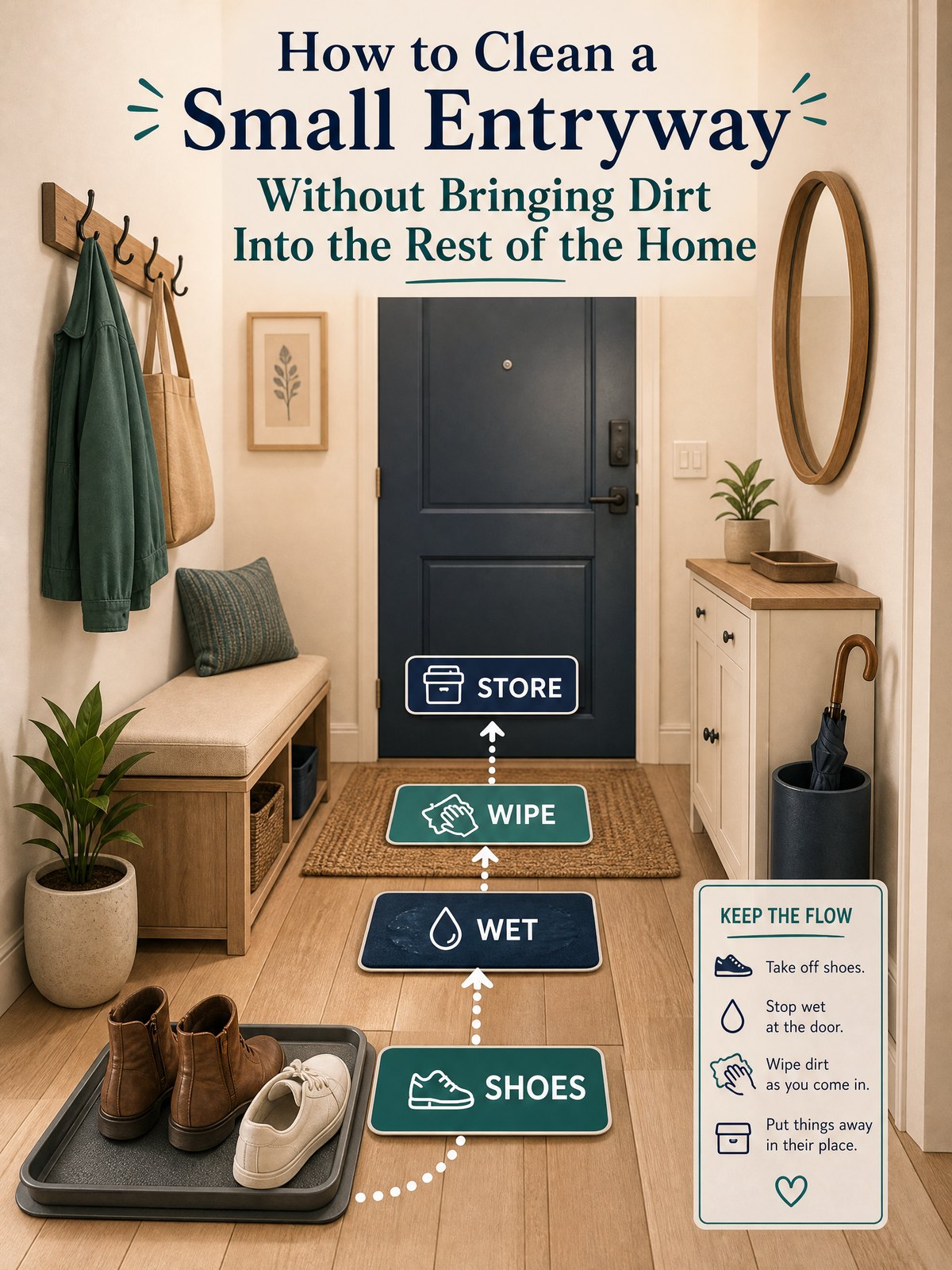
Small entryways are bottlenecks: they collect shoes, wet umbrellas, and the visible scrape of city grime. The real challenge is keeping that mess confined so the rest of the home feels clean between full cleanings.
This article gives a simple routine you can set up in an afternoon — a shoe habit, two layers of mats, and a quick-sweep timing tied to how people actually use the door — labeled where a choice is a practical option or personal planning approach.
Start with the real constraint
Most small entries have limited floor area and competing needs: storage, a place to drop keys, and a path that must stay clear. Because space is tight, every object you add changes traffic patterns and where dirt lands.
Remember the basic cleaning distinction: CDC distinguishes cleaning with soap and water from disinfecting, and says cleaning alone is sufficient in most situations unless illness-related circumstances make disinfection appropriate. Use that guidance when deciding whether to sweep and wipe or to bring in stronger products; always follow the product label and your lease for any shared or restricted building areas.
At-a-glance plan
| Trigger | Action | Quick timing | Decision signal |
|---|---|---|---|
| Arrive home | Remove shoes at the door and place on a tray or in a slim rack (practical option) | 30–60 seconds | Anyone entering with outdoor shoes |
| High-traffic moments (kids arriving, groceries) | Quick double-mat check and spot sweep of debris path (personal planning approach) | 1–2 minutes | Visible dirt trail or wet footprints |
| End of each day | Fast broom sweep or dustpan pickup; shake small mat outside if possible (practical option) | 2–3 minutes | Accumulating soil at threshold |
| Once a week | Wipe floors/mop or deep-clean mats following product label instructions (personal planning approach) | 10–20 minutes | Matted dirt or dampness that doesn’t lift with a sweep |
Build the system step by step
- Map traffic. Stand at the door and watch where feet go for a few arrivals and departures; note where dirt appears. This helps you place mats and a shoe station where they actually intercept dirt (personal planning approach).
- Choose a layered mat setup. Put a coarse scraper mat outside the door if you can and an absorbent mat inside. If an outside mat isn’t allowed where you live, use a larger inside scraper (practical option).
- Create a one-step shoe habit. Use a slim shoe tray or vertical rack that keeps the walking line clear and makes shoe removal fast. Label this a household rule for guests so the habit spreads.
- Add a fast-clean kit. Keep a small broom/dustpan, handheld vacuum, and microfiber cloth near the entry. Store cleaning supplies following product labels and your lease rules (personal planning approach).
- Set timing triggers. Tie a two-minute sweep to high-traffic times (after school drop-off, weekend errands) and a weekly deeper clean to a regular day. Treat this schedule as a flexible guideline rather than a strict rule.
Those five steps create a system that contains dirt at the door rather than pushing it into hallways and living spaces. The mapping step avoids guesswork: it tells you whether a large inside mat, a vertical rack, or a small bench is more effective in your specific doorway. Label choices in the plan as “practical option” or “personal planning approach” where they depend on lifestyle or building rules.
Trade-offs to consider
There is no single perfect setup; each choice trades off space, convenience, and maintenance.
- Strict no-shoes policy: reduces tracked dirt but may be uncomfortable for guests — consider a guest slipper or quick explanation as a practical option.
- Large absorbent mats: catch more moisture and fine dust but take more effort to clean weekly (personal planning approach).
- Closed shoe storage: keeps the area tidy but can trap odors; follow manufacturer instructions for vents and cleaning and verify any restrictions in your lease.
Keep it workable
Maintenance beats perfection. Commit to the quick actions you will actually do: if you know you will sweep only on weekdays, plan a slightly larger mat or an easier-to-empty dustpan. Keep cleaning supplies labeled and stored per product directions and building rules, and refresh the system after a month to tweak mat placement or the shoe tray location based on real traffic.
FAQ
Do I need to disinfect the entry every time someone comes in?
Not usually: CDC distinguishes cleaning with soap and water from disinfecting, and says cleaning alone is sufficient in most situations unless illness-related circumstances make disinfection appropriate; use disinfectants only when a specific health concern warrants it and always follow the product label.
What if I don’t have room for two mats?
Try a single larger scraper mat inside the door as a practical option and place a small absorbent mat directly where people stand. Consider vertical shoe storage to free floor space, and treat these as personal planning approaches you can test and adjust.
How do I handle wet or muddy shoes without making a mess?
Designate a wipe-and-dry spot: remove excess mud outside if possible, then place shoes on a tray or washable mat; if soaking is frequent, keep a towel for quick drying and follow any building rules about washing or storing wet items in common areas.
Start by observing how your household actually uses the entry for two days, then install the mat and shoe station in the highest-traffic spot you identified. Reassess after a week and make one small change at a time to keep the routine sustainable.
Sources and fact-checking
This guide provides practical editorial guidance. Requirements and safe choices can depend on the product, lease, local rules, and individual situation.
- U.S. Centers for Disease Control and Prevention — Cleaning and Disinfecting — CDC distinguishes cleaning with soap and water from disinfecting, and says cleaning alone is sufficient in most situations unless illness-related circumstances make disinfection appropriate.
Fact-checked against the linked official resources on August 27, 2026.