
Adhesive Shower Shelf for Renters: Surface and Load Check
An adhesive shower shelf is renter-friendly only when the exact mounting pad matches the wall surface and the installed shelf can be removed without an unapproved repair.
The shelf listing may emphasize capacity, but the weak point is often the surface, grout line, coating, edge seal, or installation process. A clean-looking tile wall can still be textured, porous, loose, cracked, recently sealed, or unsuitable for pressure-sensitive adhesive.
Treat the shelf, adhesive strip, wall finish, and stored bottles as one system. Measure the shower, read the lease, and verify the exact instructions before opening the mounting package.
Decide in this order before comparing style
A useful shelf solves one daily reach problem without creating a falling-object, moisture, or move-out problem.
- Identify the wall material and finish, including grout, texture, coatings, and damaged areas.
- Ask for written approval when the installation or removal could affect building-owned surfaces.
- List the exact bottles and tools the shelf must hold, then use their full wet weight.
- Check the manufacturer’s cleaning, drying, application, cure-time, and removal directions.
- Keep the shelf away from shower controls, grab areas, doors, and the user’s normal movement path.
- Choose open drainage and accessible surfaces that can be cleaned and dried.
Compare adhesive shelf decisions
Use product instructions and the actual bathroom, not a generic load claim.
| Decision | Measure or verify | Why it matters | Do not assume |
|---|---|---|---|
| Wall surface | Tile type, texture, grout, coating, cracks, repairs | Adhesives require compatible, sound surfaces | All tile and glass accept the same pad |
| Shelf load | Shelf, bottles, wet washcloths, refill sizes | Water and larger replacement bottles add weight | A marketing maximum applies to every wall |
| Placement | Door swing, controls, shower stream, head and shoulder path | A released shelf can fall where people stand | Any empty corner is safe |
| Removal | Heat, solvent, pull direction, residue, paint or sealant risk | Move-out damage can exceed the shelf price | “Removable” means damage-free on every finish |
If the product does not name your surface or the wall has loose tile, failed grout, peeling coating, or active moisture damage, choose a different storage method.
Identify the surface before choosing the adhesive
Distinguish glazed tile, stone, fiberglass, acrylic surround, glass, painted wall, and grout. Photograph the proposed area in good light and compare it with the manufacturer’s compatible-surface list. Do not bridge grout lines unless the instructions specifically allow that installation.
The broader renter-friendly bathroom storage plan can help determine whether a freestanding or over-door option would avoid the surface question entirely.
Calculate a realistic wet load
Weigh the normal contents together, including full refill bottles rather than nearly empty containers. Add the shelf’s own weight and consider that a washcloth or sponge becomes heavier when saturated. Do not test the shelf by pulling on it or loading beyond the stated limit.
Store the heaviest bottle closest to the supported wall and avoid tall unstable containers that can tip into the tub. Keep glass, razors, medicine, and electrical devices out of an exposed shower shelf.
Follow the preparation and cure sequence exactly
Surface cleaners can leave residue, while incompatible solvents can damage finishes. Use only the preparation method named by the shelf maker and let the area dry completely. Do not substitute a household adhesive or add extra tape unless the manufacturer approves it.
Cure time means the shelf remains unloaded and protected from shower spray for the stated period. A product that does not fit the household’s shower schedule may not be practical, even if its dimensions are right.
Plan drainage, ventilation, and cleaning access
EPA guidance emphasizes moisture control and bathroom ventilation. Choose a shelf that allows water to drain and leaves enough clearance to wipe the wall, shelf underside, corners, and attachment edges. A dense basket packed against the wall can hide soap residue and recurring dampness.
Combine the shelf with the renter-friendly bathroom cleaning routine so bottles are periodically removed and the attachment is inspected rather than permanently buried behind products.
Keep movement and controls clear
Stand in the shower and simulate reaching for shampoo, turning controls, opening doors or curtains, and washing hair. The shelf should not become a handhold, shoulder obstacle, or sharp edge near the normal stance.
Do not cover an inspection panel, block a window, interfere with a grab bar, or narrow access to a required control. If the only available location creates a collision, use a portable caddy or another zone from the small-space bathroom storage guide.
Inspect early and remove at the first failure sign
Check the pad edges, shelf level, coating, fasteners, and wall surface after the first shower, first week, and regular cleanings. Unload the shelf if it shifts, tilts, peels, rusts, or makes a cracking sound.
At move-out, follow the product removal instructions rather than prying with a metal tool. Document the surface before and after removal and stop if the finish begins to lift.
Know when a shelf is the wrong solution
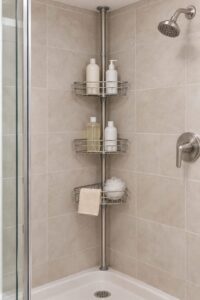
Choose a portable shower tote, freestanding corner unit, or approved tension system when the only available wall is damaged, textured, repeatedly wet behind the pad, or too small for full adhesive contact. A smaller storage list may also solve the problem without mounting anything.
Do not use an adhesive shelf to cover a maintenance issue. Recurring leaks, loose tile, failed caulk, soft wall material, or staining should be documented and reported through the appropriate building process before storage is added.
Run a no-load placement test first
A cardboard model and a dry installation rehearsal reveal most fit problems.
- Cut cardboard to the shelf width, depth, and height.
- Tape the model temporarily outside the wet area without covering grout or damaged surfaces.
- Open every shower door or curtain and operate all controls.
- Place the intended bottles nearby and confirm hand clearance.
- Review the exact installation and removal instructions before using the real adhesive.
If the model crowds the user or the approved surface is too small for the full mounting pad, select a smaller or non-adhesive product.
Common buying mistakes
- Buying from the advertised load number without checking the wall surface.
- Applying over grout, residue, loose tile, sealant, or a damaged coating.
- Loading the shelf before the full cure period.
- Storing glass, medicine, razors, or electrical devices on an exposed wet shelf.
- Ignoring peeling edges, rust, tilt, or trapped moisture during cleaning.
Frequently asked questions
Will an adhesive shower shelf damage rental tile?
It may leave residue or affect coatings, grout, sealant, repaired tile, or fragile surfaces. Check the lease, exact surface, product instructions, and removal method before installation.
How much weight can an adhesive shower shelf hold?
Use the exact product rating only on a compatible, properly prepared surface. Include the shelf and full wet contents, and never treat a marketing maximum as universal.
Can I mount the shelf across a grout line?
Only if the manufacturer explicitly permits it for that mounting pad. A grout line can interrupt contact and may have different porosity or condition from the tile.
What should I do if one corner starts peeling?
Unload and remove the shelf according to the instructions. Do not press it back under load or add unapproved adhesive over a failing attachment.
Sources and fact-checking
This guide was checked against current primary guidance. Product dimensions, load limits, compatible surfaces, mounting instructions, care directions, warranties, and return terms still need to be verified on the exact item before purchase.
- U.S. Environmental Protection Agency — Mold, Moisture and Your Home — supports moisture control, ventilation, and fully drying damp materials
- U.S. Fire Administration — Home Fire Escape Plans — supports keeping doors, windows, and travel routes usable and unobstructed



댓글 0
첫 댓글을 남겨보세요.