
How to Plan a Safer Laundry Area in a Small Apartment
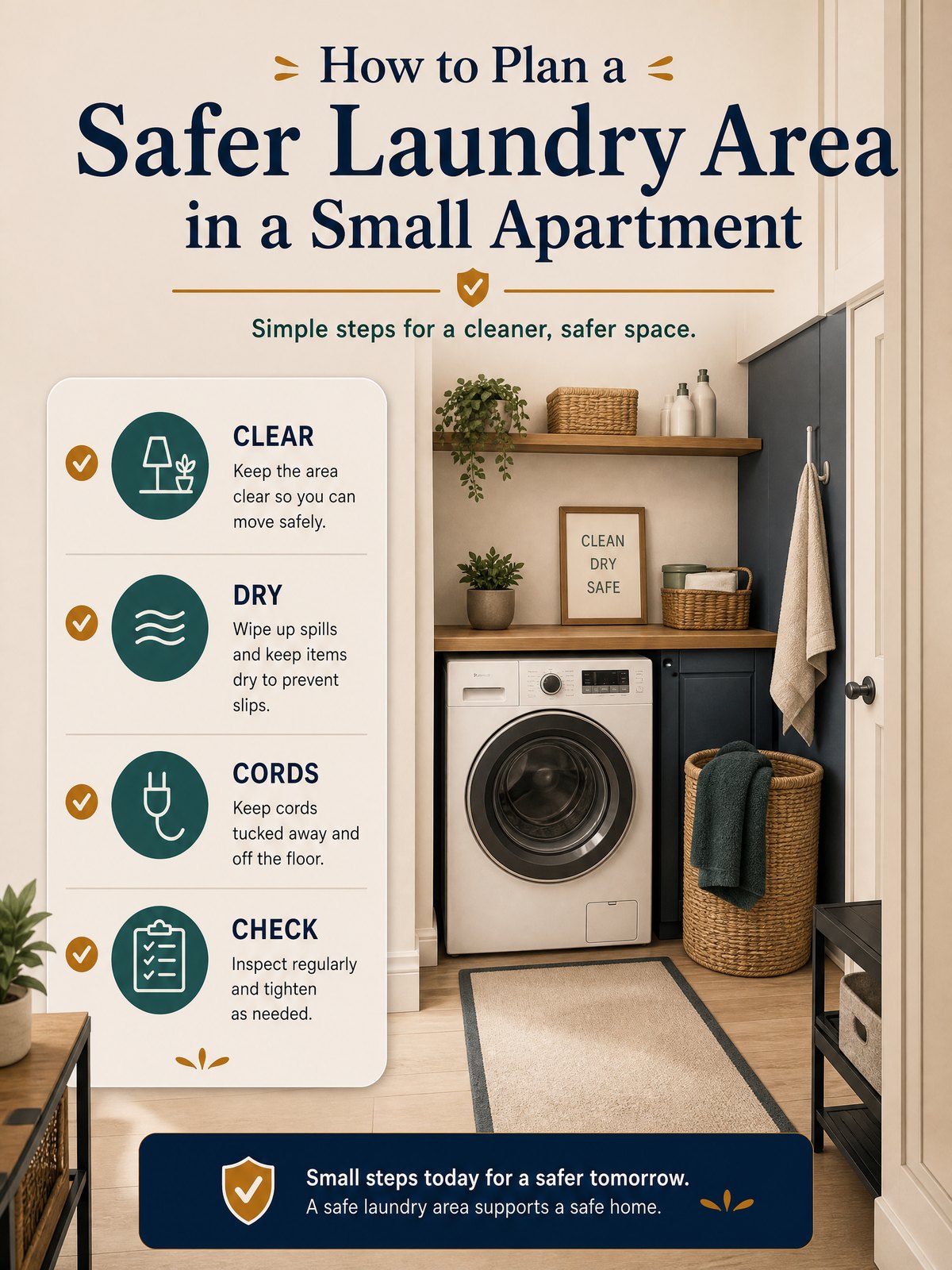
Living in a small apartment often means laundry happens in a tight corner or shared hallway. Crowded spaces, overloaded machines, and blocked exits increase the chance of spills, trips, and appliance wear.
This article shows how to plan a safer laundry area using three practical controls: follow equipment instructions, plan loads and settings carefully, and keep a clear, unobstructed path around appliances. Where rules or requirements apply, follow your lease, product label, manufacturer instructions, and local authority guidance.
Start with the real constraint
The main limit in a small-apartment laundry area is space. That affects what you can store near the washer or dryer, where you can stand while loading and unloading, and how easily you can reach utility shutoffs. In many units the laundry alcove was not designed for modern stackable loads, vent systems, or large baskets.
Design choices should respect the appliance manual and the building rules. ENERGY STAR advises matching loads and settings to the machine, using cold-water cycles when appropriate, and following manufacturer maintenance instructions. Follow those manufacturer instructions and any laundry-room rules in your lease or building policy.
At-a-glance plan
| Task | When | Decision signal | Time/Notes |
|---|---|---|---|
| Read appliance manuals and post quick reminders | Before first use and after maintenance | If the manual shows capacity or venting limits | 10–20 minutes; keep manuals near machine or bookmarked digitally |
| Sort and size loads | Each laundry session | Washer drum looks 2/3 full or less (practical option) | 5–10 minutes; smaller loads reduce jams and imbalance risk |
| Clear path and landing area | Weekly check and after moving items | Any obstruction within reach of the washer/dryer door | 5 minutes; keep a single basket and avoid stacked items in the walkway |
| Secure tall items and loose shelving | After installation and after any reconfiguration | Wobble, tilt, or unsecured top-heavy items (follow CPSC guidance) | 10–30 minutes; anchor where allowed by lease or use stable, low storage (question to verify locally) |
Build the system step by step
- Read and follow the appliance manuals: place a printed copy or a bookmarked PDF where you can find it. Note manufacturer-recommended load sizes and venting or clearance instructions.
- Create a simple sorting routine: keep one collapsible basket for colors, one for delicates, and a small bin for lint and small items. Labeling is a practical option to speed sorting in tight spaces.
- Plan each load to match the machine: choose settings and load sizes you can manage without stuffing the drum. ENERGY STAR advises matching loads and settings to the machine and using cold-water cycles when appropriate.
- Clear the door zone and create a landing area: leave space to open the washer or dryer fully and transfer clothes without stepping into the hallway. A flat, narrow folding shelf or a wall-mounted hook for a single basket is a personal planning approach for tight footprints.
- Address tipping and clutter: secure tall or top-heavy furniture near the laundry area and avoid placing climb-attracting items on top. The U.S. Consumer Product Safety Commission advises following manufacturer instructions, securing TVs and top-heavy furniture where appropriate, and keeping climb-attracting items away from the top of furniture.
After you install the basics, try a week of deliberate practice: run only loads you can handle in the space, check for proper venting and drainage after each cycle, and adjust where items are stored until the routine flows without blocking the walkway. If any official instruction contradicts your approach, follow the manufacturer or building rule.
Trade-offs to consider
Small spaces force compromises. Be explicit about which convenience you trade for safety.
- Space vs. storage: keeping entry areas clear may mean fewer cleaning supplies stored nearby; consider a small caddy stored elsewhere as a practical option.
- Speed vs. machine health: running larger, faster loads saves time but may stress the machine; matching loads to the washer is the safer choice recommended by ENERGY STAR.
- Aesthetics vs. access: decorative shelving above a washer can look tidy but may block service access—choose low-profile solutions or follow manufacturer clearance guidance as a personal planning approach.
Keep it workable
Maintenance makes a small laundry area stay safe. Wipe the washer and dryer seals after each use, empty lint traps regularly, and run any manufacturer-recommended cleaning cycles. Schedule a monthly check for leaks, vent obstructions, and noise that signals imbalance. For building-provided hookups or shared rooms, follow your lease and building notices for allowed modifications and whom to contact for repairs.
FAQ
How full should I load a small-capacity washer?
A practical rule is to avoid stuffing the drum: leave room for clothes to move so the washer can balance. ENERGY STAR recommends matching loads and settings to the machine; if the manual specifies capacity or load guidelines, follow those manufacturer instructions.
Can I keep detergent and bleach in the laundry alcove?
Store chemicals in sealed containers away from heat and out of reach of children. Storing cleaning supplies in the immediate door zone can create trip hazards; keeping them in a small wall cabinet or a caddy you remove during washing is a practical option. Always follow product labels for safe storage and disposal.
Do I need to anchor shelves and furniture near the washer?
Securing tall or top-heavy furniture is recommended where items could tip; the U.S. Consumer Product Safety Commission advises following manufacturer instructions and securing such items where appropriate. If your lease or building rules restrict anchors, ask property management for approved options (question to verify locally).
Try the at-a-glance plan for two weeks and adjust one element at a time until the workflow fits your space and schedule. If unsure about appliance installation or structural changes, consult the manufacturer instructions and your property manager before making changes.
Sources and fact-checking
This guide provides practical editorial guidance. Requirements and safe choices can depend on the product, lease, local rules, and individual situation.
- ENERGY STAR — Clothes Washers — ENERGY STAR advises matching loads and settings to the machine, using cold-water cycles when appropriate, and following manufacturer maintenance instructions.
- U.S. Consumer Product Safety Commission — Anchor It! — CPSC advises following manufacturer instructions, securing TVs and top-heavy furniture where appropriate, and keeping climb-attracting items away from the top of furniture.
Fact-checked against the linked official resources on August 27, 2026.