A Small Home Safety Reset: Storage, Cords, Documents, and Cleaning Products
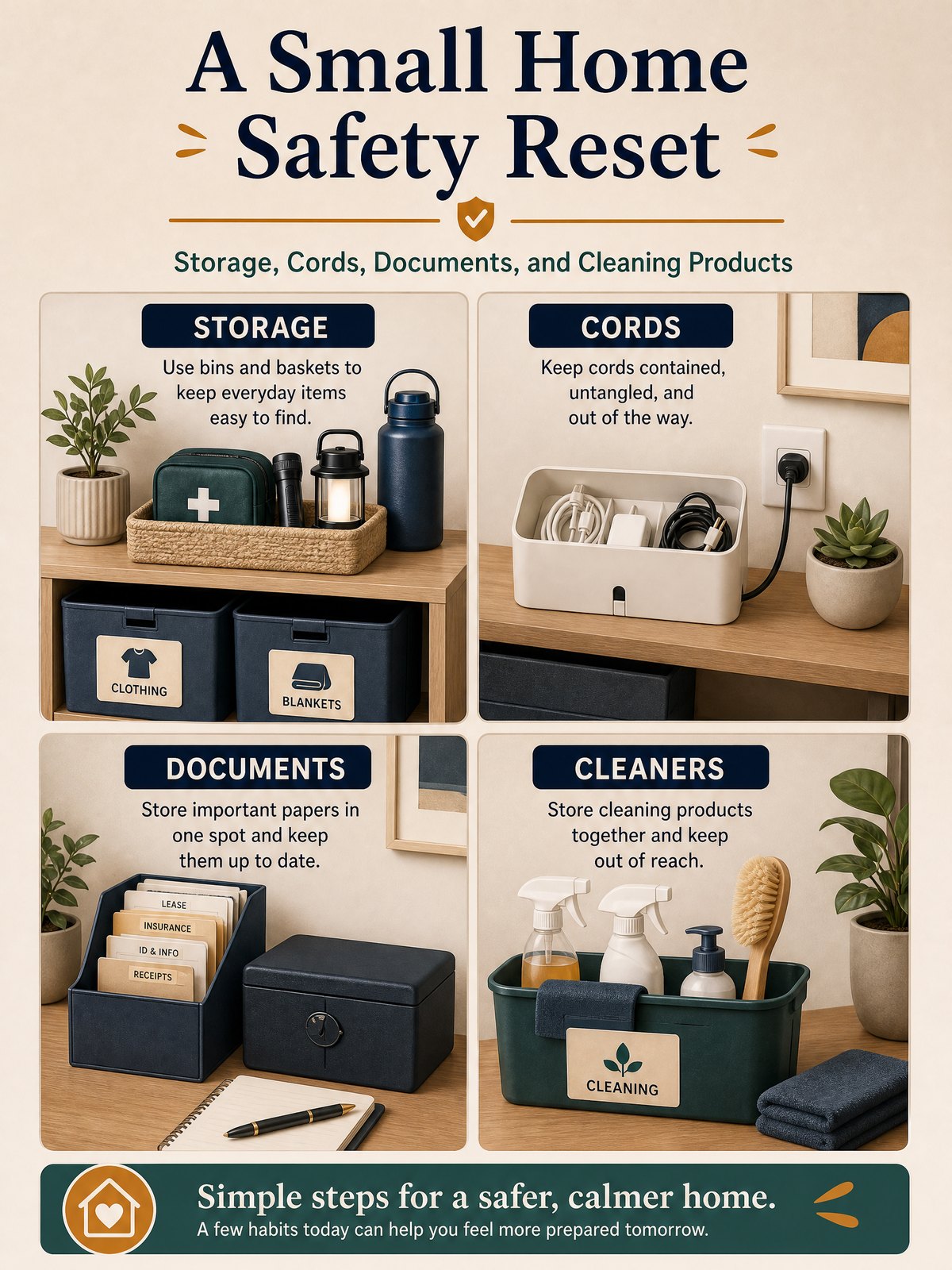
Clutter in a small home does more than look messy: it can block safe movement, hide hazards, and make it hard to follow product labels or reach important documents in an emergency. This article focuses on four problem areas—storage, cords, documents, and cleaning products—and shows how modest, repeatable changes improve access and follow the safety information supplied with products.
Follow manufacturer instructions, your lease, and local authorities where applicable; the guidance below combines required actions cited from official sources with practical options you can adapt to your layout and landlord rules.
Start with the real constraint
Small spaces are defined by competing needs: storage, circulation, and appliance placement all share the same square footage. The most important constraint is access—if a doorway, stair, electrical panel, or exit route is narrowed by stored items, you’re reducing safety and raising the chance a label or instruction goes unread when it matters.
Another hard constraint is product instructions and disposal rules. The U.S. Consumer Product Safety Commission advises following manufacturer instructions, securing TVs and top-heavy furniture where appropriate, and keeping climb-attracting items away from the top of furniture. The U.S. Environmental Protection Agency notes that products such as paints, cleaners, oils, batteries, and pesticides can need special disposal care, and advises following labels and local collection guidance. Ready.gov advises organizing critical household, insurance, financial, and medical records before an emergency and safeguarding them in a secure accessible location.
At-a-glance plan
| Area | Decision signal | Immediate action | Follow-up timing |
|---|---|---|---|
| Entry and egress paths | Doorways or hallway widths reduced by boxes or shoes | Clear items to a staging spot and keep only daily-use footwear out | Weekly check and after deliveries |
| Top-heavy furniture and TVs | Furniture wobbles or has tempting items on top | Follow manufacturer instructions and secure or remove climb-attracting items | Inspect anchors and items quarterly |
| Cords and power strips | Visible cord clusters, taped runs across walkways, or overloaded strips | Re-route cords to baseboards, reduce daisy-chaining as a practical option | Monthly visual check and when adding devices |
| Cleaning and hazardous products | Mixed household chemicals in busy areas or expired containers | Store by type, follow product labels, and plan for local hazardous-waste collection | Review contents twice a year and before moving out |
Build the system step by step
- Map critical access lines. Walk every exit, the route to the breaker/fuse box, and the path from the kitchen to the door. Note anything that impedes those routes.
- Prioritize quick-safety fixes. Remove tripping items from hallways, relocate frequently used items to reachable shelves, and clear floor space under windows and around doors.
- Secure top-heavy items per instructions. Where appropriate, follow manufacturer instructions and secure TVs and top-heavy furniture; remove climb-attracting items from furniture tops as the CPSC recommends.
- Sort and label hazard groups. Group paints, pesticides, automotive fluids, and batteries, then follow the product label and local collection guidance for storage and disposal as the EPA advises.
- Create an accessible document system. Gather insurance, financial, and medical records and keep them in a secure, accessible location following the Ready.gov approach; consider a waterproof pouch or a locked drawer depending on your situation.
These steps move from immediate safety (clear floor space) to medium-term compliance (anchoring and following product labels) and finish with planning (records and disposal). When a step touches landlord responsibilities, building code, or legal storage limits, verify requirements with your lease and local authorities before changing fixtures or installing permanent anchors.
Trade-offs to consider
Every small-home improvement asks you to trade convenience, cost, and longevity. Be explicit about which you accept so the system stays usable.
- Convenience vs. neat storage: keeping items within reach may reduce clutter but could keep a surface visually busy—choose quick-access containers that still preserve clear pathways as a personal planning approach.
- Temporary solutions vs. permanent fixes: taping down cords is fast but a temporary option; installing cable channels or anchoring furniture follows manufacturer instructions but may require landlord approval.
- Space for documents vs. security: a bedside drawer is convenient but less secure than a locked, fire-resistant box; decide what level of access and protection suits your household.
Keep it workable
Maintenance is what keeps safety intact. Put a five-minute weekly check on your calendar to walk entryways, glance at cords and power strips, confirm hazardous products remain in designated storage, and verify anchors or straps still hold tight. When you buy a new product that could be hazardous, read the label immediately and add disposal notes to your calendar if local collection is required. If you rent, check your lease before making changes such as drilling for anchors and follow landlord procedures for permanent modifications.
FAQ
How do I anchor a TV or dresser in a rental?
Follow manufacturer instructions for anchors and securing hardware; you should also check your lease and talk with your landlord about allowable methods. The CPSC advises following manufacturer instructions, securing TVs and top-heavy furniture where appropriate, and keeping climb-attracting items away from the top of furniture.
Where should I store old paint and cleaners?
Keep them in a cool, well-ventilated place away from living areas and heat sources as a practical option, and follow the product label for storage guidance; the EPA notes that products such as paints, cleaners, oils, batteries, and pesticides can need special disposal care, and advises following labels and local collection guidance.
What’s the simplest way to protect important records?
Gather critical household, insurance, financial, and medical records and keep them together in a secure, accessible spot so you can reach them quickly; Ready.gov advises organizing these records before an emergency and safeguarding them in a secure accessible location. Consider a small locked box or a waterproof pouch as a practical option depending on your space.
Start with one 30-minute session: clear an entry path and inspect one piece of top-heavy furniture. Build from there using the table and checklist above.
Repeat the quick check each week to keep small changes from becoming safety problems, and consult product labels, your lease, or local authorities when a change may have legal or technical implications.
Sources and fact-checking
This guide provides practical editorial guidance. Requirements and safe choices can depend on the product, lease, local rules, and individual situation.
- U.S. Consumer Product Safety Commission — Anchor It! — CPSC advises following manufacturer instructions, securing TVs and top-heavy furniture where appropriate, and keeping climb-attracting items away from the top of furniture.
- U.S. Environmental Protection Agency — Household Hazardous Waste — EPA notes that products such as paints, cleaners, oils, batteries, and pesticides can need special disposal care, and advises following labels and local collection guidance.
- Ready.gov — Financial Preparedness — Ready.gov advises organizing critical household, insurance, financial, and medical records before an emergency and safeguarding them in a secure accessible location.
Fact-checked against the linked official resources on August 27, 2026.