A Small-Apartment Food Safety Check After a Power Outage
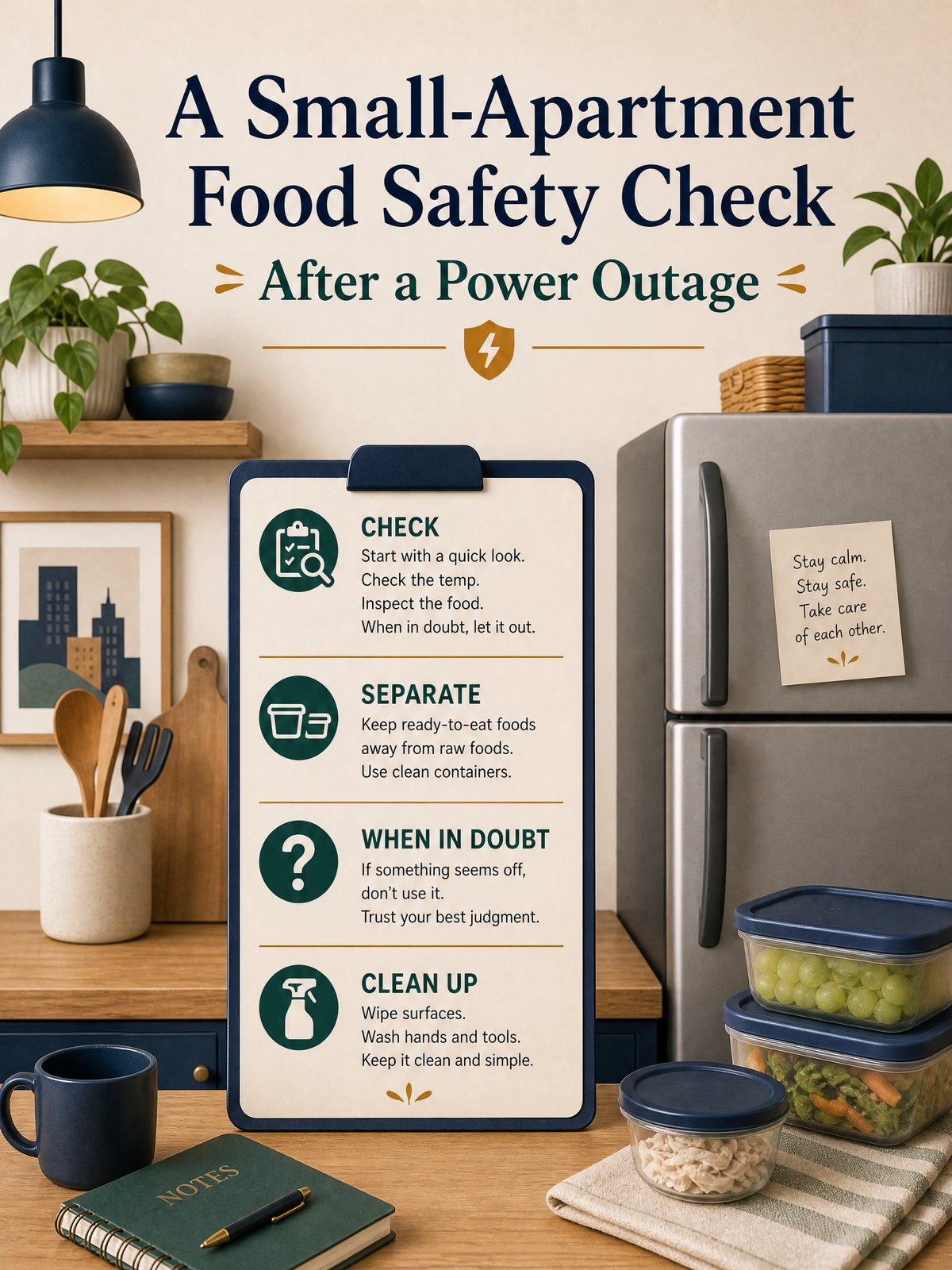
A power outage in a small apartment puts you into a tight decision window: are the items in your fridge and freezer safe, or must you throw them away? This article focuses on using the federal item-specific chart rather than relying on smell or taste.
You’ll get a compact, apartment-friendly checklist and a simple routine you can use the moment power fails, plus practical planning options that fit limited storage and no garage. Where a rule depends on product labels, lease terms, or local authority, I’ll flag that explicitly.
Start with the real constraint
The core operational constraint is time and uncertainty: you don’t know how long power will be out, and opening doors speeds warming. FoodSafety.gov’s central advice for outages is clear and simple — keep refrigerator and freezer doors closed during an outage and consult its item-specific safety chart rather than tasting food to judge safety.
Because you live in a small space, your ability to move food or store ice is limited. That makes the decision pathway less about improvising long-term preservation and more about preserving useful information (when did the outage start?) and following the official item guidance to decide what to keep.
At-a-glance plan
| Step | Decision signal / timing | Immediate action |
|---|---|---|
| Mark the outage start | As soon as you notice the power is off | Write the time on a note and tape it to the fridge; keep doors closed unless necessary |
| Reduce door openings | Throughout the outage | Only open when needed; plan one person to retrieve items to minimize air exchange |
| Check the item-specific chart | Before deciding to taste or eat any refrigerated food | Use FoodSafety.gov’s chart to make item-specific keep/discard decisions |
| Use short-term options if needed | If you can safely move items or access ice/insulation | Consider coolers or insulated bags as a practical option; follow product labels and local rules |
Build the system step by step
- When power goes out, note the time on a visible sticker or a piece of tape stuck to the refrigerator door so you can track how long items have been without power.
- Keep the refrigerator and freezer doors closed. This is the single most important step recommended by FoodSafety.gov; it slows warming and preserves cold as long as possible.
- Only open doors for essential retrieval and do it fast. Think ahead before opening: gather what you need in one motion rather than multiple short visits.
- Before you eat anything, consult FoodSafety.gov’s item-specific chart. Do not rely on smell or taste to judge safety; the chart is the federal guidance for item-level decisions.
- If you have limited options to relocate food (neighbor, small cooler, or insulated bag), treat that as a practical option and verify any shared arrangements with your landlord, neighbors, and local rules before moving substantial quantities.
These steps are designed to fit apartment realities: tracking, preserving cold, minimizing cold loss, and deferring to the official chart when making discard decisions. Where I suggest moving food or using coolers, consider those measures as practical options or personal planning approaches rather than official mandates.
Trade-offs to consider
In a small apartment you’ll balance food preservation against space, cost, and convenience. Here are three trade-offs to weigh quickly during an outage:
- Saving space versus moving food: using a neighbor’s cooler can buy time but requires coordination and permission; verify this in advance as a personal planning approach.
- Opening the fridge to inspect food versus preserving internal cold: frequent checks make you feel informed but speed warming; prioritize marking the outage and checking the federal chart over repeated visual inspections.
- Spending money on short-term solutions versus discarding: buying ice or a small cooler is a practical option if it prevents waste, but confirm whether that cost makes sense for the quantity and type of food affected.
Keep it workable
Maintain a small outage kit for apartment life: a roll of masking tape and a marker, a compact cooler or insulated bag as a personal planning approach, and a note with the FoodSafety.gov outage chart link stored on your phone. Periodically refresh ice packs or check that any borrowed coolers are ready. If your lease or building rules restrict shared storage or use of common spaces, follow those terms and verify options with management before relying on them.
FAQ
Can I tell if food is bad by smelling or tasting it?
No. FoodSafety.gov advises consulting its item-specific safety chart rather than tasting food to judge safety; relying on smell or taste is not a federal-recommended method.
Should I open the fridge to check what’s inside during an outage?
Limit openings. FoodSafety.gov’s advice emphasizes keeping refrigerator and freezer doors closed during an outage; open only when necessary and do it quickly to reduce warming.
Is moving food to a neighbor or temporary cooler allowed?
Moving items to a neighbor or to a cooler is a practical option but also a personal planning approach—confirm any shared arrangements with your landlord and neighbors and follow product labels and local rules before relocating perishable food.
Next steps: when power returns, consult FoodSafety.gov’s item-specific chart before deciding to consume refrigerated or frozen items. Keep a simple outage kit taped near the fridge so you can act quickly next time.
Sources and fact-checking
This guide provides practical editorial guidance. Requirements and safe choices can depend on the product, lease, local rules, and individual situation.
- FoodSafety.gov — Food Safety During Power Outage — FoodSafety.gov advises keeping refrigerator and freezer doors closed during an outage and consulting its item-specific safety chart rather than tasting food to judge safety.
Fact-checked against the linked official resources on August 27, 2026.