Spring Decluttering Checklist for a Small Apartment
Small apartments can feel cluttered quickly, especially after a season of sweaters, guest-stuff, and carryover items. This two-paragraph plan gives you a compact, room-by-room sequence you can follow in one weekend or spread across several short sessions: inspect each item, make one of a few simple decisions, and move on.
The goal is progress, not perfection: each check is a quick inspect-then-decide step that reduces uncertainty and creates momentum. Read the trade-offs below, then use the numbered checklist to work through your rooms in order.
How to use this checklist
Work room by room and limit each single check to one to three minutes. For each item look, feel, or try it briefly, then decide: keep, donate/sell, repair, recycle, or store. Use boxes or bags labeled Keep, Donate, Repair, Recycle, Store to avoid second-guessing.
Quick decision rules
If you haven’t used an item in the past year and it holds no strong sentimental value, favor donate or recycle. If storing will hide the item and make daily life harder, favor donating or repurposing instead.
Living room — 1 to 6
- Inspect throw blankets: keep favorites, store seasonal ones, donate worn or extra duplicates.
- Inspect decorative pillows: keep up to two for everyday, store others or donate mismatched sets.
- Inspect coffee table clutter: sort magazines/books into Keep or Donate; limit to a small stack.
- Inspect electronics and cords: test quickly, label cords to keep, recycle broken items responsibly.
- Inspect remote controls and chargers: consolidate duplicates, store spares, discard dead chargers.
- Inspect extra seating items (folding chairs, poufs): keep one or two, store or donate the rest.
Related guide: The Weekend Apartment Reset: A Room-by-Room Plan for Less Clutter
Kitchen — 7 to 12
- Inspect single-purpose gadgets: if you’ve never used it, donate or sell it.
- Inspect mismatched dishware: keep a functional everyday set, box extras for storage or donate.
- Inspect utensils and cutlery drawer: remove duplicates and bent pieces; keep essentials.
- Inspect pantry cans and jars: toss expired food, relocate off-season items to Store box.
- Inspect cleaning supplies: consolidate and discard near-empty or old chemicals safely.
- Inspect small appliances: if rarely used, consider lending, storing, or donating.
Bedroom — 13 to 18
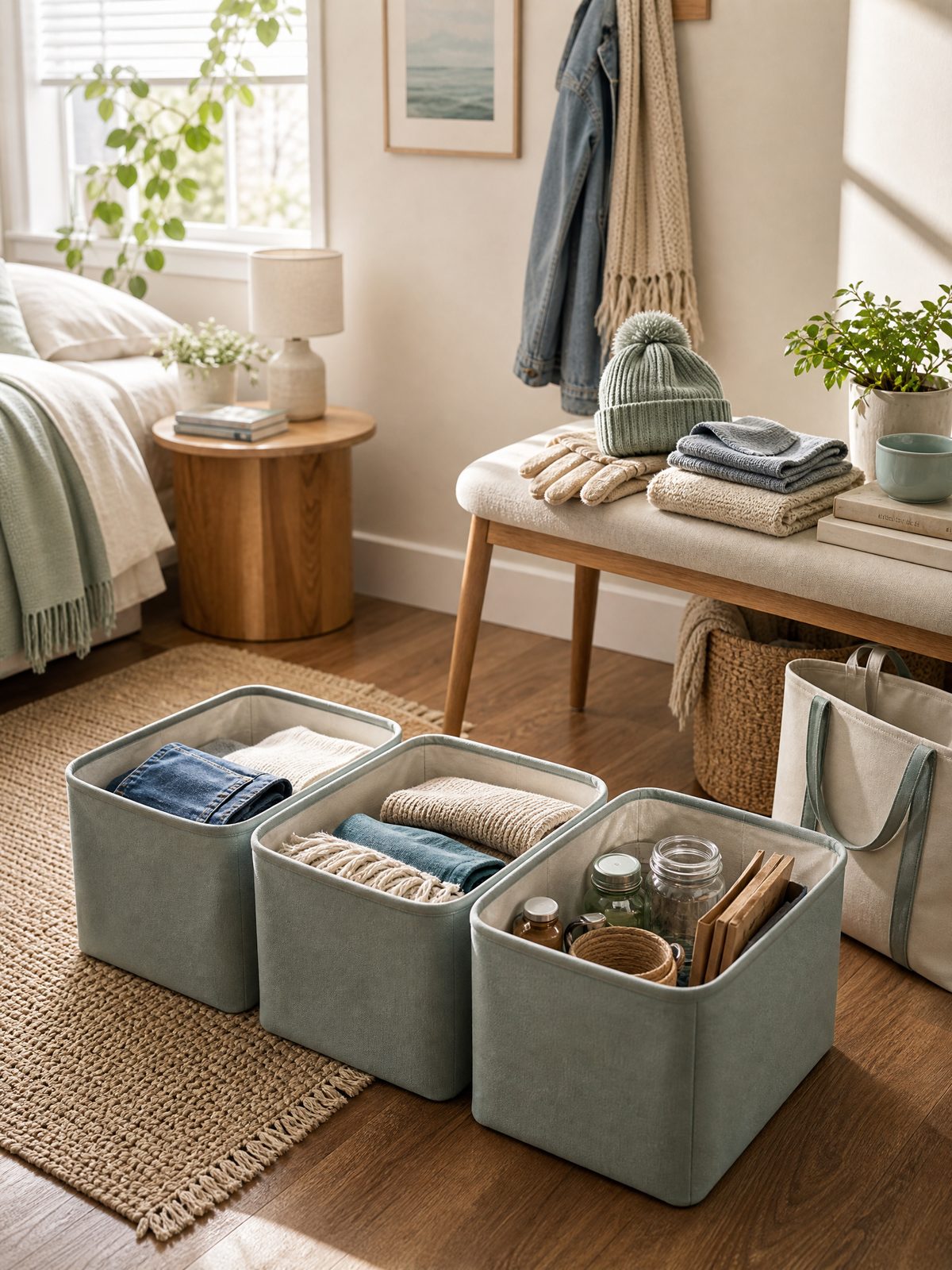
- Inspect clothing by season: move spring/summer to accessible spots and box winter items.
- Inspect shoes: try on pairs; donate uncomfortable or unworn ones.
- Inspect bedside surfaces: keep one lamp, one book, and essentials only.
- Inspect under-bed storage: pull everything out; decide keep/store/donate for each bin.
- Inspect jewelry and accessories: keep daily items visible, store or discard tangled costume jewelry.
- Inspect linens: keep two sets per bed, donate worn or mismatched sheets and towels.
Bathroom — 19 to 22
- Inspect skincare and cosmetics: toss expired products and consolidate duplicates.
- Inspect shower items: remove empty bottles and put rarely-used treatments in Store.
- Inspect medicine cabinet: safely discard old medications and organize current items.
- Inspect towels and bath mats: keep what’s fluffy and functional; donate or repurpose the rest.
Entry, Closet & Storage — 23 to 26
- Inspect coats and jackets: keep seasonal outerwear accessible; donate extra or damaged pieces.
- Inspect bags and backpacks: test zippers, store off-season bags, donate rarely used ones.
- Inspect keys and wallets: declutter duplicate keychains and expired cards.
- Inspect miscellaneous boxes: open, sort contents into Keep/Donate/Store immediately.
Related guide: How to Store Summer Gear in a Small Apartment
Laundry, Misc & Final Pass — 27 to 30
- Inspect laundry basket items: fold and put away or move to Donate if you haven’t worn them in months.
- Inspect hobby and paper clutter: scan or photograph important papers, shred or recycle the rest.
- Inspect sentimental boxes: limit to one small box per person; be selective and label clearly.
- Final pass: walk each room, carry out the Donate/Recycle/Trash bags immediately to avoid re-cluttering.
Trade-offs and realistic process
Trade-offs are part of small-space living: keeping everything makes the apartment feel crowded; donating something useful can be an emotional decision. Prioritize items that help daily life or bring clear joy. Expect imperfect outcomes and focus on small wins—an empty drawer or a cleared tabletop is progress.
At-a-glance reference
| Item type | Where to store | Trade-off |
|---|---|---|
| Seasonal clothing | Under-bed bins or top closet shelf | Frees closet space but adds retrieval time |
| Extra kitchenware | Stacking pantry bins | Accessible for hosting, consumes shelf space |
| Sentimental items | One labeled keepsake box | Protects memories, but still takes space |
| Occasional tools | Small wall-mounted rack or toolbox | Saves floor space, requires install or maintenance |
Clear next step
Choose one 60- to 90-minute block this weekend and do the first three checks in the living room, then take your Donate/Recycle bags out. That single completed session resets momentum and makes the rest easier. Repeat short sessions across the week until the 30 checks are done.
How long should each check take?
Aim for one to three minutes per check. The point is quick decisions—not deep sorting. If an item needs more time, label it Repair or Review and move it to a designated box to handle later.
What if I live with roommates or a partner?
Agree on shared rules ahead of time: who handles common areas, where donated items go, and what qualifies as sentimental. Work together on one room to build cooperation and keep the process fair.
Can I donate items from an apartment?
Yes. Keep donated items boxed and out of the way, then drop them at a donation center or schedule a pickup when you have a full box—don’t let donations sit and create more clutter.
Sources and fact-checking
This article provides practical editorial guidance. Safety, cleaning, disposal, rental, and product decisions can depend on the item, its instructions, and local requirements.
- U.S. Environmental Protection Agency — Household Hazardous Waste — For cleaners, paint, batteries, oils, pesticides, or other potentially hazardous leftovers, follow the product label and local collection guidance.
Fact-checked against the linked official resources on August 27, 2026.