The Weekend Apartment Reset: A Room-by-Room Plan for Less Clutter
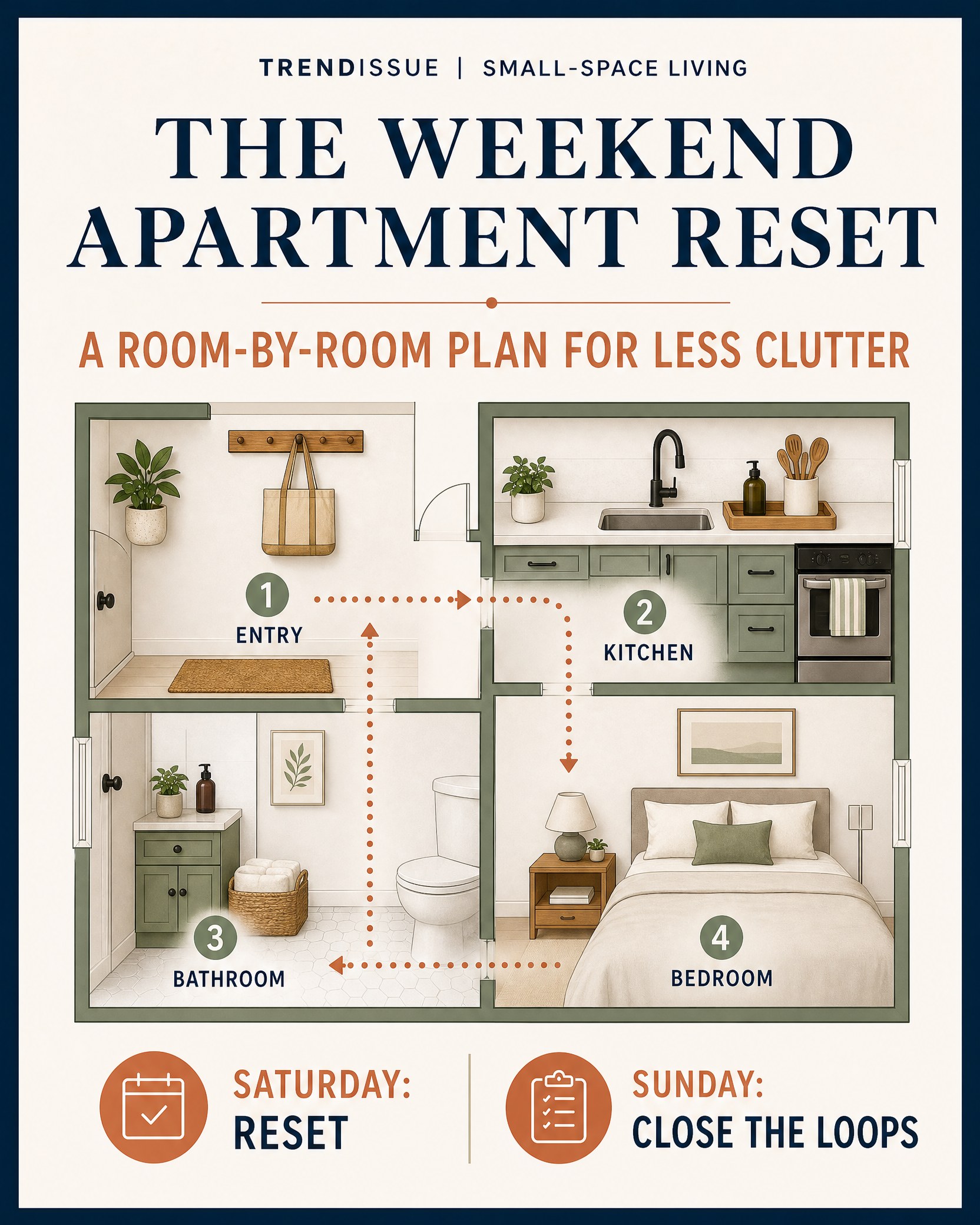
When an apartment feels cluttered, it is tempting to pull everything out and begin a full-scale overhaul. That approach often creates more stress than progress. A better weekend reset focuses on the places that affect your everyday life: the entry, kitchen, bathroom, bedroom, and main living area.
This plan is designed for a realistic weekend. It assumes you have normal household responsibilities, limited floor space for sorting, and a goal of improving function—not producing a flawless home. Start with a few bags or boxes for donations and recycling, basic cleaning supplies, and a timer.
A successful reset leaves each room easier to use than it was on Friday night.
Set Up Your Reset Before You Start
Choose a donation bag, a recycling bag or box, a trash bag, and one “belongs elsewhere” basket. The basket prevents you from stopping each time you find an item that belongs in another room. You will return its contents during a later pass.
Take ten minutes to clear your calendar as much as possible. Set a beginning and ending time for each work block, and schedule breaks, meals, and a stopping point. Organization takes longer when every decision is made while tired.
At-a-glance reference
| Time block | Focus | Definition of done |
|---|---|---|
| Saturday morning | Entryway and kitchen | Clear walking path; functional counter and sink; daily essentials have a home |
| Saturday afternoon | Bathroom and bedroom | Clear counters; laundry contained; bedside and clothing routines simplified |
| Sunday morning | Living area and papers | Seating usable; surfaces reset; active papers grouped in one location |
| Sunday afternoon | Whole-home closeout | Donation/recycling exits planned; misplaced items returned; next-week routine chosen |
Saturday Morning: Reset the Entryway First
The entryway is where clutter enters the home. Even a small landing space can hold shoes, bags, mail, keys, pet supplies, and packages. Begin by removing obvious trash, recycling, and items that belong in another room.
Then define a compact drop zone. It may be a hook for a bag, a tray for keys, a basket for outgoing items, and a shoe boundary. You do not need a large hall cabinet. You need one reliable place for the things that otherwise migrate across the kitchen counter.
Keep only the shoes and outerwear currently in rotation near the door. Store off-season pieces elsewhere. If everyone in the home has a bag or coat, give each person a clear location. The system should be simple enough to use when you walk in tired.
Reset the Kitchen for Tomorrow, Not for a Magazine Photo
Next, make the sink and one section of counter functional. Put away clean dishes, load or wash dirty dishes, and discard expired food you find during a quick pantry review. Do not reorganize every cabinet unless that is the room’s main problem.
Use a one-touch rule for obvious items: mail goes to the paper station, shoes go to the entryway, and small appliances go to their regular homes. Create one short countertop list—perhaps coffee maker, knife block, and a cooking-oil tray—and remove anything else that has landed there by accident.
If food storage containers are a major frustration, match lids to containers and keep only the pieces you can use. Place the most-used containers where they can be reached without moving a stack of unrelated items. For a deeper approach, see How to Organize a Small Kitchen Without Buying More Storage.
Saturday Afternoon: Make the Bathroom Easy to Reset Daily
Small bathrooms look cluttered quickly because most surfaces are visible. Clear the counter first, keeping only the products used every day. Check dates on cosmetics and medications, and follow local or product-specific directions for safe disposal rather than flushing or throwing away items without checking.
Group daily personal-care items in a small caddy, tray, or drawer section. Store backups together in one defined place. Keep cleaning products in their original containers and away from children and pets as appropriate. The goal is to make the counter easy to wipe down in under a minute.
Fresh towels, a clear sink, and a contained laundry basket create a strong visual reset even if every cabinet is not perfect. You can refine storage later; start by removing the friction that makes the room feel messy each morning.
Reset the Bedroom Around Sleep and Getting Dressed
A bedroom becomes less restful when it stores paperwork, laundry, packages, and random household overflow. Begin by clearing the floor and bedside surface. Put dirty clothing in a hamper, hang or fold clean clothing, and make the bed if that helps you see the room more clearly.
Use the bedside area for items that support sleep: a light, book, water, medication needed at night, and charger. Relocate work papers, extra dishes, and unrelated storage to their proper zones. If under-bed space is available, reserve it for contained, infrequently used soft goods or seasonal items—not loose objects that are hard to clean around.
A reset does not require an empty closet. It requires the clothes you wear regularly to be accessible and the rest to have a deliberate storage plan.
Sunday Morning: Reclaim the Living Area
Start with the floor and seating. Remove items from the sofa and coffee table that belong elsewhere. Fold blankets, return remotes to one container, and choose a small number of decorative objects that you actually enjoy seeing.
If the living room doubles as a work area, create an end-of-day transition. Use a lidded box, drawer, or portable bag for laptop accessories and papers. At the end of a work session, return work items to that container so the room can become a place for rest again.
Books, hobby supplies, and media items need boundaries. A shelf, basket, or cabinet is a useful boundary because it shows when the category is full. When it is full, choose what to keep rather than adding another overflow pile.
Create a Single Paper Station
Paper spreads when each room has its own pile. Choose one location for incoming mail, active documents, and items requiring action. A simple setup uses three folders or trays: act, file, and recycle/shred.
Open mail near that station. Recycle obvious junk mail immediately. Put bills or forms that need attention in the action tray and give them a calendar date. Personal documents should be stored securely; shred sensitive records when they are no longer needed. If you are unsure how long a legal, tax, or medical document should be retained, consult the relevant professional guidance rather than relying on a generic organization rule.
Sunday Afternoon: Close the Loops
Before the weekend ends, return the items in your “belongs elsewhere” basket. Take out trash and recycling. Put donation items in your car, near the door, or schedule a pickup. A donation bag that remains inside the apartment for weeks is still clutter.
For electronics, batteries, paint, or other materials with specialized disposal needs, pause rather than guessing. The U.S. Environmental Protection Agency advises checking local programs because accepted materials and procedures vary. It also notes that many batteries should not go into household garbage or curbside recycling. [1]
Finally, walk through the apartment as if you were arriving home. Is there a clear path? Can you prepare a simple meal? Can you find tomorrow’s essentials? If yes, the reset worked.
Choose One Maintenance Habit for Next Week
Do not create a long list of strict rules after a weekend reset. Choose one small habit that protects the improvement. A good option is a 10-minute closing routine: clear the sink, reset the drop zone, return one item from the living room, and prepare a donation/recycling exit if needed.
If your main problem is clothing, choose a five-minute laundry habit instead. If papers pile up, schedule a weekly session at the paper station. The best maintenance routine is the one that matches the point where clutter actually begins.
Frequently Asked Questions
What if I cannot finish the entire apartment in a weekend?
Finish the entryway, kitchen, bathroom, and sleeping area first. These rooms create the most immediate daily relief. Make a short list of the next two rooms or zones, then schedule them for another day rather than leaving the whole home in a halfway state.
Should I buy bins before the reset?
Use bags, boxes, and containers you already have for the first pass. Once you see what remains and where it naturally belongs, you can measure and select any storage tool that solves a specific problem.
How do I reset an apartment with roommates?
Start with your own belongings and shared areas you have agreed to handle. For shared items, use a brief conversation and clear zones rather than moving another person’s possessions without permission.
Your Next Step
Put four bags or boxes by the door and spend the next 20 minutes on the entryway. Once that space is working, create a more permanent landing place with How to Create a Drop Zone in a Small Entryway.
References
[1] U.S. Environmental Protection Agency, “How Do I Recycle Common Recyclables”
Sources and fact-checking
This article provides practical editorial guidance. Safety, cleaning, disposal, rental, and product decisions can depend on the item, its instructions, and local requirements.
- U.S. Centers for Disease Control and Prevention — Cleaning and Disinfecting — For everyday home cleaning, use product-label directions; disinfecting may be appropriate when illness circumstances call for it.
Fact-checked against the linked official resources on August 27, 2026.