How to Prepare a Small Apartment for Winter Without Overstocking Supplies
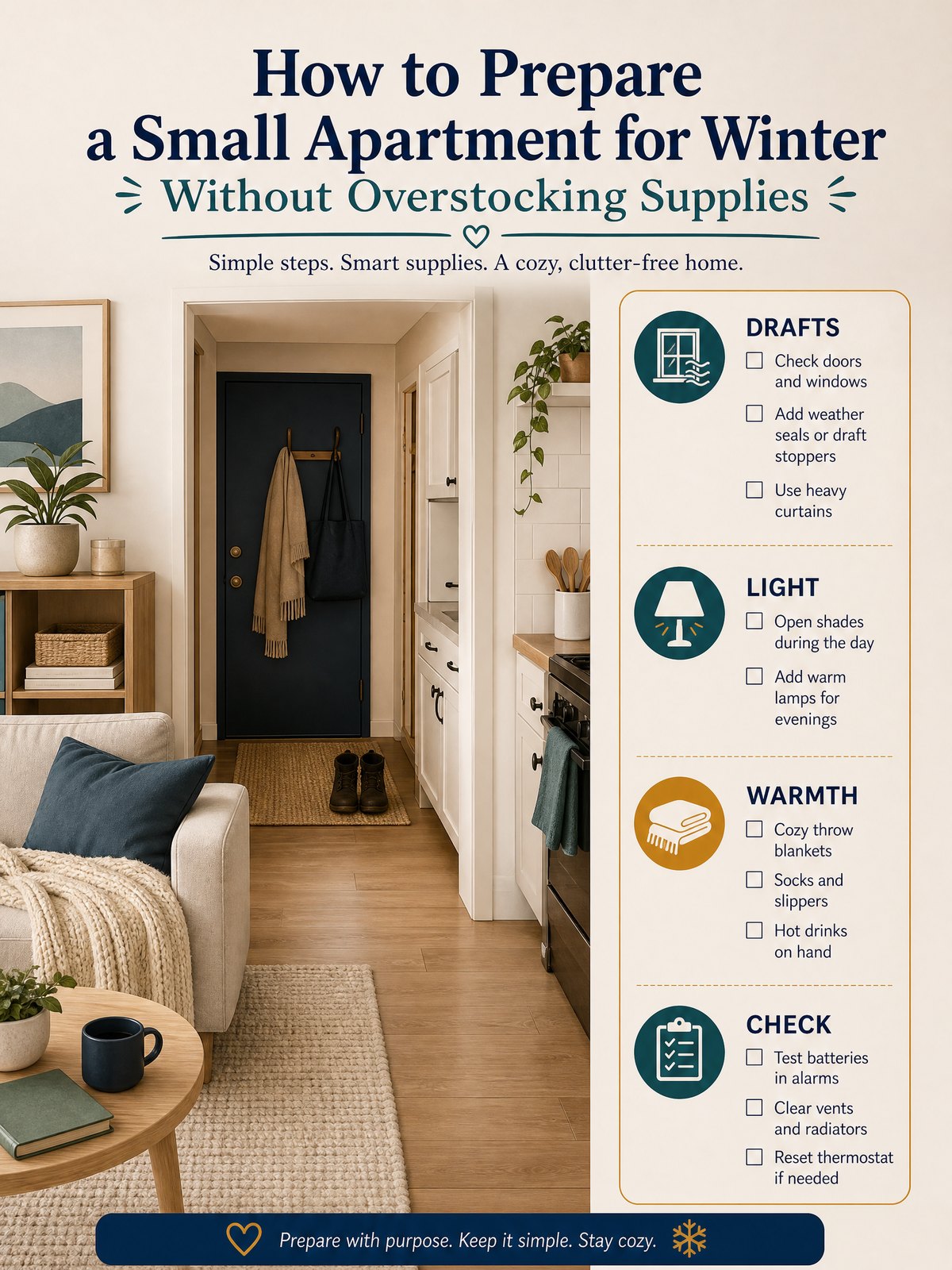
Winter in a small apartment often pushes renters toward one of two unhelpful choices: quietly hoarding more supplies than the space can safely hold, or running out of basics when a storm or short outage arrives. Both lead to stress; the first creates cramped living conditions and potential safety or lease issues, the second leaves you unprepared when simple contingencies occur.
This article shows a different approach: build a compact, documented essentials plan that fits the space you have. You will get a short checklist-style table, step-by-step setup, practical trade-offs, maintenance tips, and answers to common questions so you can be prepared for winter without overstocking.
Start with the real constraint
The hard limit in a small apartment is tangible: floor space, closet capacity, and safe places to store weight. Treat those as fixed constraints when you plan. Rather than aiming for a fixed number of days of supplies, design what can reasonably live in the spaces you can safely use.
Before you change furniture or attach heavy items, remember to follow your lease and appliance or product labels; when anchoring furniture, follow manufacturer instructions and building rules. The U.S. Consumer Product Safety Commission advises following manufacturer instructions, securing TVs and top-heavy furniture where appropriate, and keeping climb-attracting items away from the top of furniture. That guidance is a practical safety baseline to cross-check with your landlord and product documentation.
At-a-glance plan
| Task | When to act | Decision signal | Compact storage spot |
|---|---|---|---|
| Inventory essentials | Start now; update monthly | Missing one key item or visibility of clutter | Under-bed drawer or single wardrobe shelf |
| Choose compact, multipurpose supplies | As you restock | Space runs under 30% free in chosen area (practical option) | Stackable bins or luggage-sized tote |
| Assemble a small emergency kit | Before first freeze or storm season | Weather advisory or local winter alert (verify locally) | Kitchen cabinet above sink or closet corner |
| Document and secure records | Immediately; keep duplicates | Lease, insurance, or medical papers not readily accessible | Fire-resistant or waterproof document sleeve in a dedicated drawer |
Build the system step by step
- Take a quick inventory: list what you already have and where it is stored. Include food, warm clothing, a flashlight, batteries, basic tools, and medication you rely on.
- Pick compact, multipurpose items: choose supplies that serve more than one need (for example, a single insulated blanket, a compact multi-tool, or a camp stove that fits small storage). Label this selection a practical option based on space and budget.
- Create a dedicated kit for immediate access: one easily reachable tote with the things you will need in the first 24–48 hours of a minor winter event—water, ready-to-eat meals you can heat without power if possible, light source, and phone chargers.
- Document and protect critical records: Ready.gov advises organizing critical household, insurance, financial, and medical records before an emergency and safeguarding them in a secure accessible location. Keep one set of originals in a safe spot and a copy digitally if you can; follow your lease for allowed storage and building safety rules.
- Secure furnishings where needed: as a practical safety step, check tall or top-heavy furniture for stability. The CPSC advises following manufacturer instructions, securing TVs and top-heavy furniture where appropriate, and keeping climb-attracting items away from the top of furniture; verify any anchoring choices with your landlord and product instructions.
These steps are meant to be done in a single afternoon for setup, then in short bursts for maintenance. Label storage containers, keep a single visible kit for immediate needs, and keep the rest compact and out of the main living flow so daily life stays comfortable.
Trade-offs to consider
Every compact plan accepts trade-offs between convenience, cost, and space; be intentional about which you choose.
- Space vs convenience: keeping only a short-term kit makes immediate access quick but means you may need to restock sooner after an event (a practical option to assess with housemates).
- Cost vs portability: smaller, higher-quality items cost more but are easier to store and often pack better for evacuation if needed.
- Visibility vs discretion: keeping supplies in plain sight makes them usable quickly but can make a rental look cluttered; choose subtle storage for shared spaces.
Keep it workable
Pick maintenance tasks you will actually do: a brief monthly glance at the inventory list, rotating perishable items on a practical timeline you set, and checking that documents remain accessible. Put one recurring reminder in your phone calendar for a 15-minute check each month; if household members change, run the checklist with them so everyone knows where essentials live.
FAQ
How much food should I store in a studio or one-bedroom?
As a practical option, many renters aim for a small kit that covers 24–72 hours of no-shopping convenience, plus a few extra shelf-stable meals tucked away if space permits; tailor the number to the space you have and what you can safely store.
Can I anchor furniture in a rented apartment?
Check your lease and talk to your landlord or building manager before drilling or making permanent changes. Where allowed, follow manufacturer instructions and the CPSC advice to secure top-heavy items and keep climb-attracting objects off tops of furniture.
How should I protect important papers?
Ready.gov advises organizing critical household, insurance, financial, and medical records before an emergency and safeguarding them in a secure accessible location. Keep one accessible hard-copy set, consider a waterproof sleeve or small fire-resistant box if permitted by your lease, and maintain a digital copy stored securely (verify local rules and building policies as needed).
Choose one small area as your official essentials zone and make that the place you check each month. Start by making the inventory list today and placing a labeled tote in that spot—those two actions cut wasted buying and reduce clutter.
Sources and fact-checking
This guide provides practical editorial guidance. Requirements and safe choices can depend on the product, lease, local rules, and individual situation.
- Ready.gov — Financial Preparedness — Ready.gov advises organizing critical household, insurance, financial, and medical records before an emergency and safeguarding them in a secure accessible location.
- U.S. Consumer Product Safety Commission — Anchor It! — CPSC advises following manufacturer instructions, securing TVs and top-heavy furniture where appropriate, and keeping climb-attracting items away from the top of furniture.
Fact-checked against the linked official resources on August 27, 2026.