
Smoke Alarm Mounting Bracket Compatibility: Do Not Mix Alarm Parts
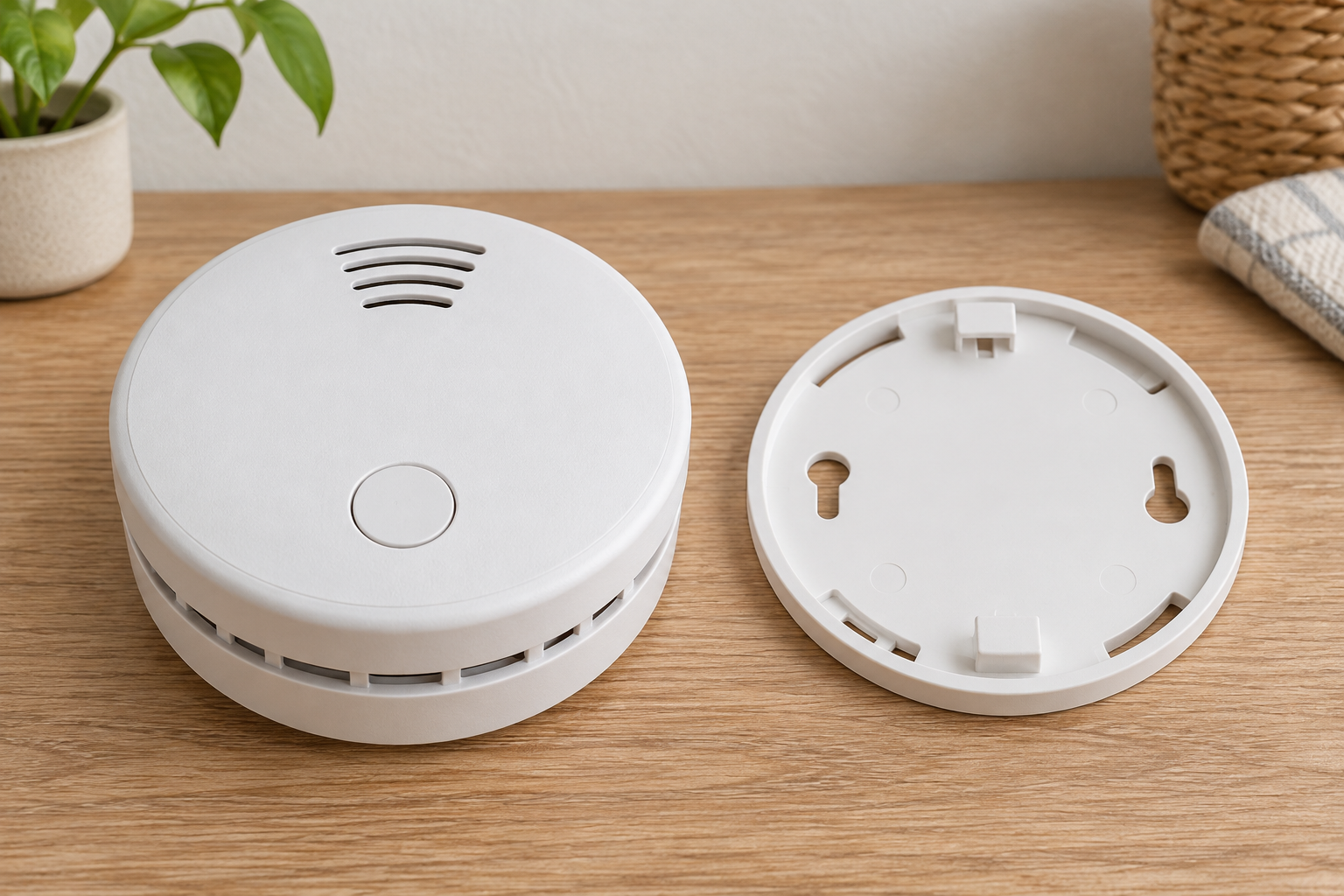
Smoke alarm mounting bracket compatibility is model-specific. A new alarm should be mounted with the bracket and power connection approved for that exact alarm, not with a leftover ring or a convenient hardwired connector. This is a model-specific decision, not a substitute for a manufacturer’s instructions, local requirements, or qualified help. Keep the product label and its current US documentation together while you decide.
Identify the alarm before touching the bracket
Read the model number and power type on the existing alarm, then obtain the current manual for that exact US model. A mounting ring can look universal while its twist-lock tabs, slot pattern, and clearance are not. A bracket supplied with a different alarm can fail to hold it correctly or can hide a mismatch until a critical moment.
The official First Alert SMI100 battery-alarm manual says not to install that battery unit over an electrical junction box. Treat the exact alarm packaging, manual, and manufacturer support as the source of bracket compatibility. Do not use a photo comparison or a retailer listing as proof.
| Existing condition | What to verify | Decision |
|---|---|---|
| Battery alarm on bracket | Exact alarm and supplied bracket match | Use only the parts specified for that model |
| Hardwired alarm at ceiling box | Exact model, power system, and connector approval | Do not improvise an adapter or splice; use only a manufacturer-listed adapter for the exact harness, replacement alarm, and compatible system to make a new alarm fit |
| Bracket missing or damaged | Manufacturer replacement availability | Get the correct replacement or replace per manufacturer guidance |
| Rental alarm or common-area system | Who owns and services it | Notify building management rather than modifying it |
Keep hardwired connectors out of a “close enough” swap
A hardwired alarm is not made compatible merely because its plug appears to mate with another harness. Do not cut, splice, or modify an old connector. Do not use an adapter unless the manufacturer documents that exact adapter, old harness, and new alarm as compatible and listed for the intended interconnection. Do not change electrical-box wiring based on a consumer article. The cited First Alert manual warns that only AC-powered units are intended for installation over electrical boxes; a battery unit does not become suitable there because a bracket is available.
If a hardwired unit needs replacement, use the manufacturer’s published compatibility information or arrange qualified service. Interconnection, local requirements, and building wiring add constraints that cannot be inferred from the color or shape of a connector.
Let the building manager handle rental equipment
For a rental, report a missing, chirping, expired, damaged, or incompatible alarm to the building manager promptly and retain the written request. Do not remove or replace a building-provided hardwired alarm unless the lease, manager, and local process permit it. The maintenance request guide can help document the issue and date without turning it into a DIY electrical task.
Keep the model number, location, and a clear photograph for the manager. The renter emergency documents guide is a sensible place to keep the confirmation once the matter is resolved.
Use a stop list instead of forcing the fit
Stop and contact the manufacturer, manager, or qualified professional when the alarm will not twist securely onto its own bracket; the bracket is cracked; the connector differs; the ceiling box is exposed; the alarm is past its replacement date; or a test indicates a problem. Do not pad, tape, glue, or modify an alarm to make it stay in place. Those changes are not a verified mounting method.
Check the replacement date and condition too
A bracket fit does not establish that an alarm is still within its service life or suitable for the location. Read the manufacturer’s replacement information, label, and test instructions for the exact model. Do not paint an alarm, cover its openings, or place it where dust, steam, or airflow conditions conflict with its instructions. A physical fit is only one part of a functioning detection system.
When an alarm is removed temporarily for authorized service, keep its parts together and prevent another person from treating an unmounted alarm as installed protection. Restore or replace equipment through the approved process without leaving an electrical box, connector, or mounting surface exposed. Building fire-alarm systems and interconnected household alarms may have requirements beyond a consumer battery unit.
Record the information someone else will need
For each alarm issue, write down the room, model, serial or date information if available, power type, and symptom. Photograph the label and bracket without disturbing wiring. This lets manufacturer support or a building manager identify the correct replacement path and reduces the temptation to use a mismatched part. It also creates a useful record when a rental changes hands.
Respond to alarms and faults as safety events
Do not silence, remove, or disable an alarm simply because it is inconvenient or has a recurring signal. Follow the exact alarm instructions and obtain prompt help for an unexplained warning or malfunction. If you believe there is smoke, fire, carbon monoxide, or another emergency, leave the area as appropriate and contact emergency services. This article addresses compatibility, not emergency diagnosis.
FAQ
Can I reuse the old smoke alarm bracket?
Only when the new alarm’s manufacturer explicitly says that exact bracket is compatible. Similar shape is not enough.
Can I plug a new hardwired alarm into an old connector?
Do not assume so. Use the manufacturer’s approved compatibility information or qualified service.
Can I put a battery alarm over a junction box?
The cited First Alert guidance says no. Follow the exact product manual and local requirements.
What should renters do with a failed building alarm?
Notify the building manager promptly and document the request rather than modifying shared or hardwired equipment.
Check the exact model in safety notices
Before replacing a smoke alarm, search CPSC notices by brand and model and compare any serial, lot, or date range with its label. Follow a matching notice’s remedy and arrange working replacement coverage promptly. Renters should involve building management rather than leave required alarm protection disabled. Use CPSC Recalls & Product Safety Warnings. No search result is a guarantee of safety.
Sources and fact-checking
Checked against the official sources below on November 27, 2026. This is research-based guidance, not a claim of hands-on product testing.


댓글 0
첫 댓글을 남겨보세요.