The Apartment Utility Closet: What to Store and What to Keep Accessible
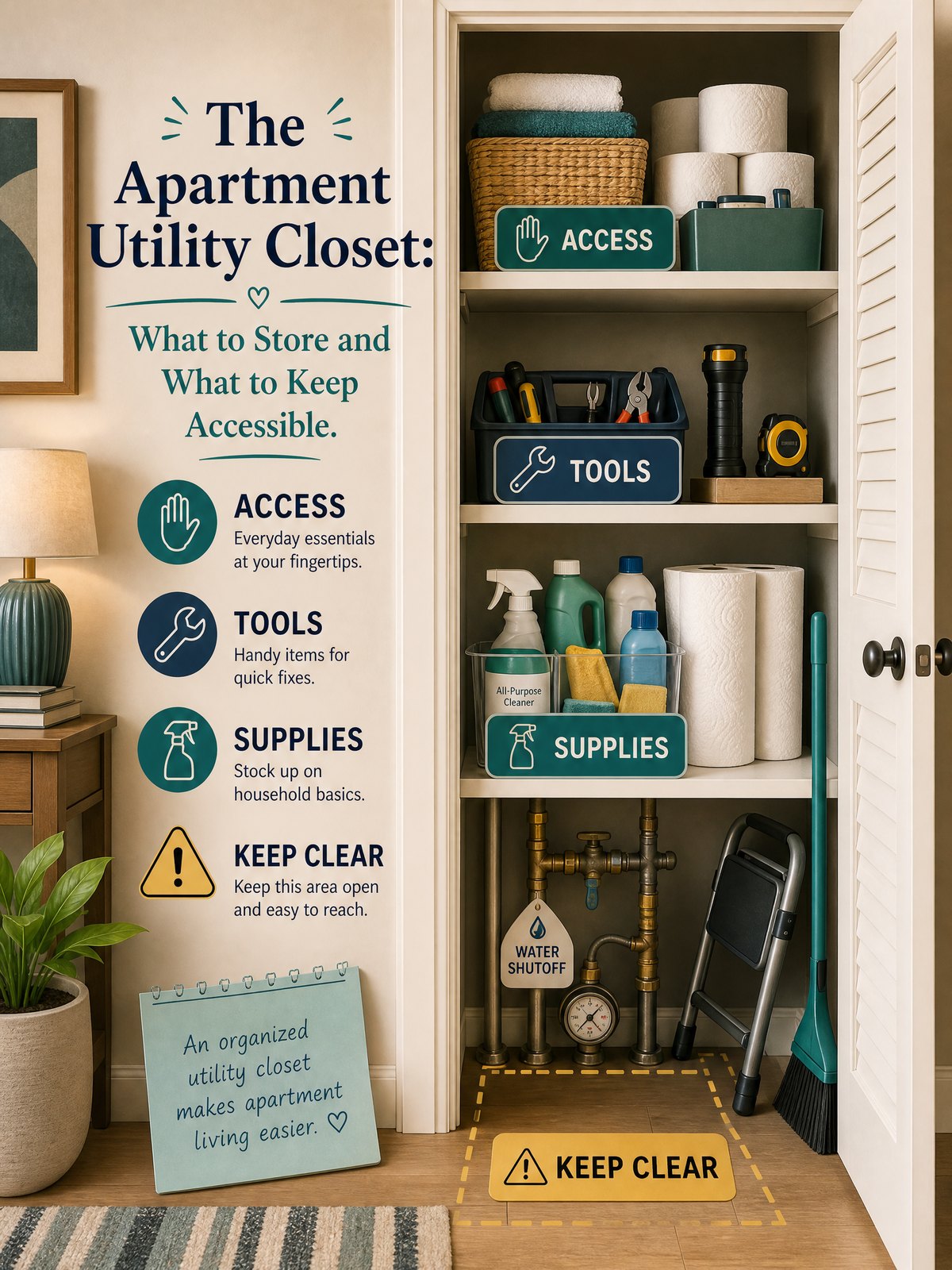
Small apartment utility closets can be deceptively busy: they often house the water heater, HVAC access, breaker subpanel, and shelves of household supplies. The common problems are blocking equipment, mixing hazardous products with daily items, and losing access when a quick shutoff or service call is needed.
This article shows a compact, renter-friendly approach: designate a clear access zone, store only appropriate items inside the closet, and keep hazardous or disposal-sensitive products labeled and reachable for proper handling. Follow your lease, product labels, manufacturer instructions, and local authority guidance as needed.
Start with the real constraint
The primary constraint in any utility closet is access to built-in equipment and service points. Doors, vents, shutoffs, and inspection panels must not be blocked because a technician or building staff may need immediate, unobstructed access. If your lease or building rules specify minimum clearance or access procedures, follow those first.
Second, ventilation and heat-producing equipment matter. Some appliances require air flow around them or need manufacturers’ clearances for safety and warranty reasons. CPSC advises following manufacturer instructions, securing TVs and top-heavy furniture where appropriate, and keeping climb-attracting items away from the top of furniture; similarly, follow any appliance labels and manufacturers’ instructions for required clearances or other constraints.
At-a-glance plan
| Step | When to do it | Decision signal | Immediate action |
|---|---|---|---|
| Clear the access zone | One session (30–60 minutes) | If anything blocks a panel, vent, or valve | Move items to temporary staging, mark clearance boundary |
| Sort and segregate | During the same session | If chemical or flammable products are present | Separate hazardous items to labeled container or box for disposal planning |
| Create storage rules | Immediately after sorting | If shelves or bins are overloaded | Limit what remains to service-friendly items and relabel shelves |
| Mark and maintain | Weekly for first month, then monthly | If items start creeping into access zone | Return or remove noncompliant items; update labels |
Build the system step by step
- Remove everything from the closet and set items on a sheet or floor space so you can see what you have.
- Identify built-in equipment, panels, vents, and shutoffs; photograph and note their locations for quick reference.
- Sort items into three piles: safe-to-store (tool kit, light bulbs), relocation-needed (seasonal items that belong elsewhere), and hazardous/disposal (paints, batteries, certain cleaners or oils).
- Return only the safe-to-store pile, keeping a marked access zone in front of equipment. Use clear labels on shelves and an obvious floor marker like a strip of colored tape to show the boundary.
- Create a short checklist for emergencies and maintenance visits: keys to access, photo of shutoffs, and contact info; keep this checklist laminated or in a plastic sleeve inside the closet door.
After these steps you should have a visible, repeatable system: an access zone that stays clear, a short list of items allowed in the closet, and a plan to remove or responsibly dispose of anything that doesn’t belong. For disposal planning, remember that EPA notes that products such as paints, cleaners, oils, batteries, and pesticides can need special disposal care, and advises following labels and local collection guidance.
Trade-offs to consider
Every small-closet plan balances storage capacity against safety and accessibility. Choose a balance that meets your priorities and the rules in your building.
- Storage vs. access: more stored items may save trips but increase the chance of blocked panels — a personal planning approach is to reserve only lightweight, nonhazardous items.
- Convenience vs. regulation: storing paint or solvents might be convenient but could conflict with building rules or disposal guidance — verify locally before keeping them inside the closet.
- Rigid marks vs. flexible use: strict markings keep access clear but reduce temporary staging space — use a staging box outside the closet when you need short-term storage.
Keep it workable
Maintenance is what keeps a good system from unraveling. Check the access zone weekly for the first month, then monthly afterward. After any service visit or season change, quickly return items to their labeled places and remove anything that slipped into the access area. If your lease or building manager requires periodic inspections, follow that schedule and keep your photos and checklist up to date for faster compliance.
FAQ
Can I store paint, solvent, or old motor oil in the utility closet?
These items often need special disposal or storage rules; EPA notes that products such as paints, cleaners, oils, batteries, and pesticides can need special disposal care, and advises following labels and local collection guidance. If you’re unsure, treat them as disposal candidates and verify locally whether they belong in your closet as a practical option.
How much clearance should I leave around a water heater or furnace?
Follow the appliance label and manufacturer instructions first. If the label is missing and you have no conflicting landlord rules, a practical option is to leave a simple kept-clear area that allows a person to stand and reach panels without moving stored items, and to photograph the setup for reference before service visits.
Is it okay to hang shelves or anchor items inside the closet?
Installing shelves or anchors may be allowed by your lease but could require landlord approval; always follow your lease and, when anchoring furniture elsewhere, note that CPSC advises following manufacturer instructions, securing TVs and top-heavy furniture where appropriate, and keeping climb-attracting items away from the top of furniture.
Next step: pick one weekend session to apply the at-a-glance plan and set your access zone. Keep a simple one-line checklist on the closet door so the rules are easy to follow.
Sources and fact-checking
This guide provides practical editorial guidance. Requirements and safe choices can depend on the product, lease, local rules, and individual situation.
- U.S. Consumer Product Safety Commission — Anchor It! — CPSC advises following manufacturer instructions, securing TVs and top-heavy furniture where appropriate, and keeping climb-attracting items away from the top of furniture.
- U.S. Environmental Protection Agency — Household Hazardous Waste — EPA notes that products such as paints, cleaners, oils, batteries, and pesticides can need special disposal care, and advises following labels and local collection guidance.
Fact-checked against the linked official resources on August 27, 2026.