
Sink Plunger vs Toilet Plunger: Match the Seal to the Drain
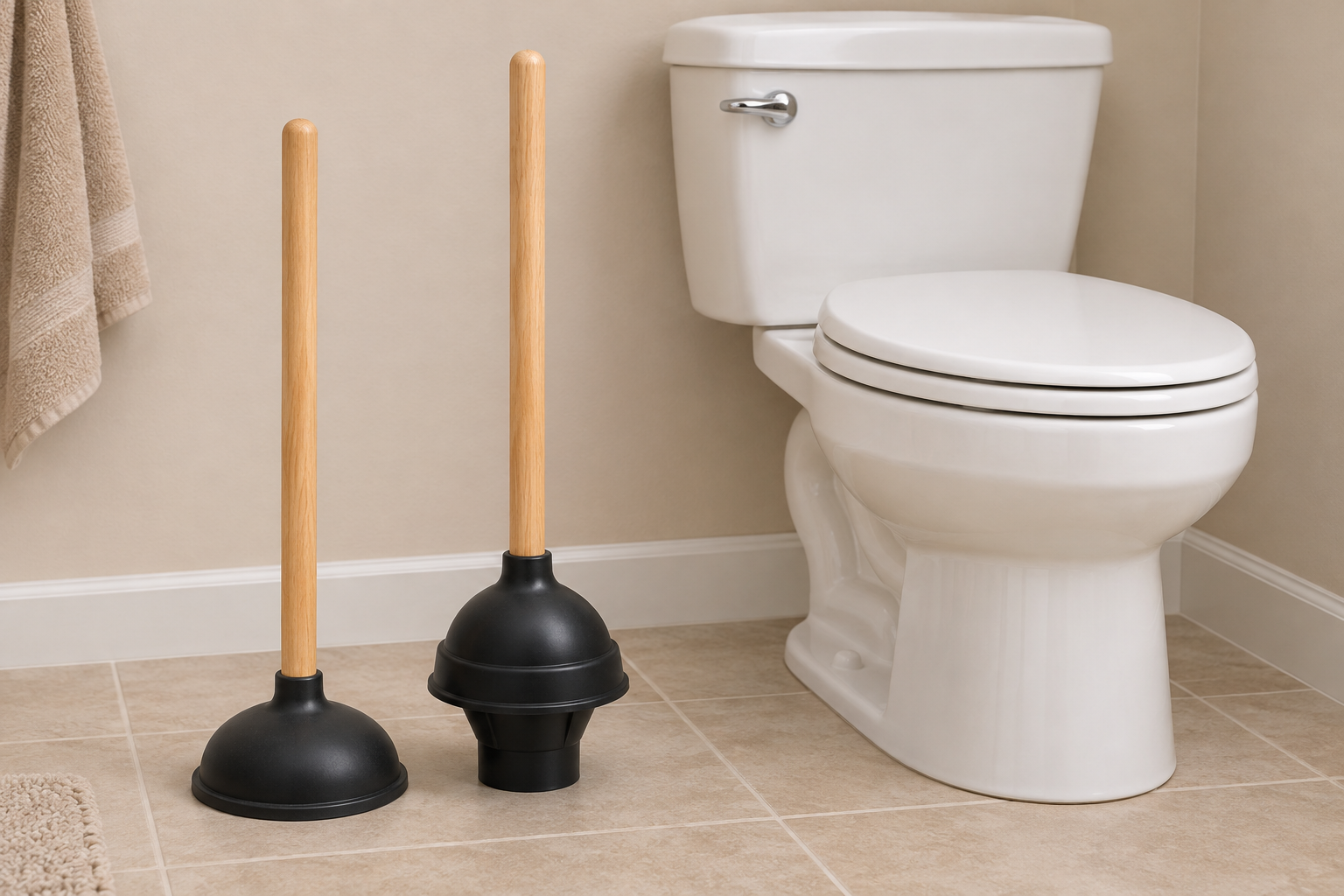
Sink plunger vs toilet plunger is a shape-and-location decision, not a question of which tool looks stronger. Choose a flat cup plunger for a flat sink, tub, or shower drain. Choose a flange toilet plunger for a toilet bowl outlet because its extra rubber sleeve is made to seal inside the outlet. A poor seal is a reason to stop and reassess, not to plunge harder.
Korky’s current manufacturer guidance makes the distinction plainly: a cup-style sink plunger is for flat drains, while a flange or beehive toilet plunger is designed to seal inside round or elongated toilet bowl outlets. This article covers those conventional uses. It does not promise that either shape clears every clog.
Pick the head that can seal where the clog is
| Tool shape | Best match | Why that match matters | Limit to respect |
|---|---|---|---|
| Flat cup plunger | Flat drains in sinks, tubs, and showers | The flat rim is intended to seal against a flat surface around the drain. | It is not the recommended choice for a curved toilet bowl outlet. |
| Flange toilet plunger | Toilet bowl outlet | The extra rubber flange is intended to seal inside the outlet. | A flange still needs to fit and seal; it is not a universal clog cure. |
| Beehive-style toilet plunger | Toilet bowl outlet when a maker describes it for that use | Korky groups beehive and flange styles as toilet tools. | Read the model’s fit claims and instructions rather than treating the name as a guarantee. |
Use a cup plunger on a flat drain
The ordinary cup plunger has a broad, flat rubber cup. Korky identifies this sink-plunger style as the tool for flat drains, including sinks and tubs. A shower drain can present the same flat-surface problem, but layout, drain cover, and stopper design can affect whether a seal is possible. Remove only parts your fixture instructions say are removable. Do not jam the cup under a fixed grate or pry at plumbing.
Keep a cup plunger dedicated to non-toilet drains. This is a practical sanitation boundary, especially for a kitchen sink tool. A cup plunger may be the right shape for a sink yet still be the wrong first response when a chemical drain product has already been used or when water is close to spilling. If a chemical drain cleaner may remain in the drain, do not plunge. Follow the cleaner label and tell building maintenance or a plumber what was used.
Use a flange plunger for the toilet outlet
A flange plunger has an extra rubber sleeve below the cup. That sleeve is the feature intended to reach into and seal around the toilet’s outlet. Korky specifically warns that a flat cup can seal on flat surfaces but cannot make a good seal in a curved toilet bowl. Without that seal, hard pumping can mean poor pressure control and more splashing rather than a better chance of clearing the blockage.
For a toilet, begin with a bowl level that leaves room to work. Korky instructs users to put the plunger in at about a 45-degree angle so the plunger head fills with water, a step intended to limit splashing in a nearly full bowl. Center the flange at the outlet, bring the handle upright, and make a seal before applying controlled push-and-pull strokes. Do not flush repeatedly while the bowl is blocked or rising.
Do not judge a toilet by bowl length alone
Round and elongated describe the bowl shape a shopper sees from above; the outlet is the part a plunger must seal. Korky describes flange and beehive styles as intended for round or elongated outlets, but the useful test at home is whether the head makes a stable seal at your actual outlet. A plunger marketed for toilets is an appropriate category to start with, not a promise of fit on every fixture or of success with every obstruction.
If a toilet plunger does not seal, pause. Check whether the flange is folded incorrectly, whether the head is centered, and whether the bowl is too full for controlled work. Do not solve a bad seal by adding chemicals, covering the toilet with improvised plastic, or using violent strokes. Those shortcuts can increase the chance of a dirty-water splash and do not change the underlying fit problem.
Separate the tools and store them for the next decision
Keeping two clearly separate tools is often easier than trying to make one cup do every job. Assign the cup plunger to sink, tub, and shower drains. Assign the flange plunger to the toilet only. Put each upright in a holder or tray that contains drips, and clean the holder according to its material instructions. Keep either tool out of reach of children and away from stored towels or toiletries that could be contaminated by a damp head.
In a tight bathroom, storage should not block the toilet shutoff valve or interfere with removing the tank lid. The fit checklist in this article on toilet tank lid clearance for shelves can help keep that access clear. For the broader storage decision, see under-sink storage ideas for cleaning supplies, which focuses on accessible, separate storage around plumbing.
Know when plunging is the wrong move
Stop and call a plumber or building maintenance when sewer gas is noticeable, wastewater backs up through more than one fixture, water is rising toward overflow, or the issue keeps returning. Korky specifically advises ventilation and professional guidance if there is a sewer-gas smell. In a rental, report a recurring toilet or drain backup promptly under the building’s procedure.
Also stop if an object such as a toy or phone is visibly lodged. Korky notes that plunging is not always the right solution in that situation. Follow safe local guidance and get professional help if the item cannot be removed without force. Never mix drain-cleaning chemicals. If cleaner may remain in a blocked drain, stop rather than plunge; tell building maintenance or a plumber what was used. The goal is a measured response, not a promise that a household plunger fixes every clog.
Before buying, check the head material, handle storage height, and whether a holder is included. These are convenience details, not substitutes for the basic seal decision. A clean, dedicated tool that you can reach without moving bathroom furniture is more likely to be available when a minor backup begins.
FAQs
Can I use a cup plunger on a toilet?
It is not the recommended tool. Korky says the flat cup is for flat drains and may not seal well in a curved toilet bowl.
Can a flange plunger be used on a sink?
Use the maker’s instructions for that plunger. For a standard flat sink drain, a dedicated cup plunger is the clearer shape match.
What if the toilet water is rising?
Do not keep flushing. Stop before an overflow, follow your building’s emergency procedure if relevant, and seek plumbing help if the water cannot be controlled.
Should I use a plunger after a chemical drain cleaner?
No. If chemical drain cleaner may be in a blocked drain, do not plunge. Follow the product label and tell the plumber or building maintenance what you used.
Sources and fact-checking
Fact-checked November 28, 2026 against Korky’s official U.S. plunger comparison and toilet-plunging guidance. The article describes shape applications and safety limits, not a guarantee that a plunger will remove any particular clog.
SC Johnson Professional Drano Max Gel safety sheet: manufacturer precautions against plunging during or after use, checked November 28, 2026.


댓글 0
첫 댓글을 남겨보세요.