
Fabric Shaver Cleaning Instructions: Power Down Before You Brush
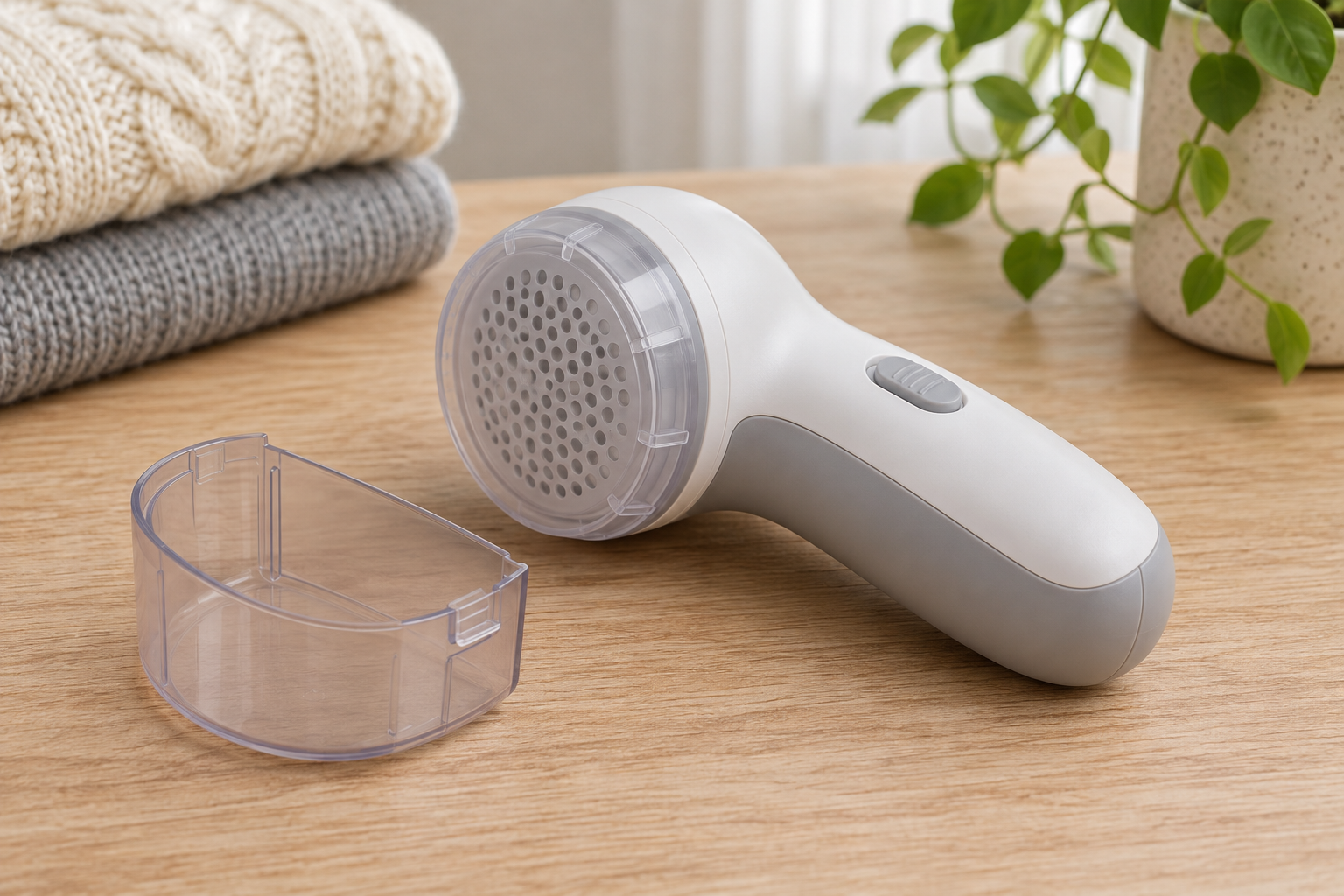
Fabric shaver cleaning instructions begin with a simple safety decision: turn the tool off, then remove its batteries or disconnect its power before you take off the collector, guard, or shaving head. Empty the lint collector first. For a deeper clean, follow the sequence in the manual for your exact model rather than assuming every removable part comes off the same way.
This guide uses the current U.S. Conair CLS1 fabric shaver instruction booklet as a concrete battery-powered example. It is useful for the order of operations, not a substitute for your own manual. Cordless rechargeable and corded fabric shavers can have different parts and power-isolation steps.
Make the power safe before you approach the head
A fabric shaver is small, but the shaving head contains sharp blades. Set the switch to off. On the Conair CLS1, remove both AA batteries before cleaning the shaver or shaver head. Do that before turning the head, lifting a guard, or brushing lint from the cutting area. On a rechargeable shaver, disconnecting the charging cable does not disable the built-in battery. Follow that model’s cleaning instructions; do not open the head unless the manufacturer explains how to do so safely. Do not clean a shaver while it is running, and do not press the switch while the head is open.
Work on a dry, stable table with good light. Keep the appliance away from a sink or wet laundry. Conair says its CLS1 appliance must not contact water and must not be used on damp textiles. That is a model-specific warning, but it is a strong reason not to rinse an electric shaver unless the manual expressly permits it.
Choose the light clean or the head clean
| What you see | First action | What not to assume |
|---|---|---|
| Collector has lint after use | Switch off and empty the collector by its intended release path. | Do not force a collector that slides, lifts, or twists differently on another model. |
| Tool slows or stops | Check the collector before treating the batteries as the problem. | Do not invent a blade-replacement schedule or open the head while powered. |
| Lint remains near the head | Isolate power, then use the manual’s disassembly and brush instructions. | Do not touch the blade or rinse the head without explicit approval. |
| Outside casing looks dusty | Use only the exterior-care method stated by the maker. | Do not let liquid enter the housing or battery compartment. |
Empty the lint collector before it is packed tight
For the CLS1, Conair directs the owner to slide the fuzz collector downward and out, empty it, then slide it straight back in until it audibly engages. That last confirmation matters: a collector that is not seated correctly is not ready for the next use. Hold the removed collector over a trash can instead of carrying loose lint across a room.
Conair says to empty the collector regularly and before it is overfilled because an overfilled collector can make the unit slow down or stop. If that happens, check and empty the collector before replacing batteries. This is troubleshooting for that model, not a promise that a full collector is the only reason any fabric shaver stops.
Open the Conair CLS1 head only for a deeper dry clean
After the batteries are out, Conair’s sequence is to remove the adjustable distance ring, turn the shaver head counterclockwise to remove it, and brush away residual fuzz with a small cleaning brush. The manual cautions that the blades are extremely sharp and can be damaged easily. Treat the brush as the tool that moves lint. Do not use fingers to pick at the blades, scrape them with metal, or test sharpness.
When the dry brushing is done, reattach the shaver head and refit the distance ring. Confirm that the distance ring is properly engaged before storing the appliance. The CLS1 manual says its ring’s recess should engage the lug on the shaver body so the ring does not twist during adjustment. Other shavers may use a different guard or locking method, so do not transfer that fit test to a different brand.
Keep water out unless your own manual says otherwise
A tempting shortcut is to rinse lint from a collector or head. Avoid that shortcut with this Conair example: its instructions call for a brush for the inside and only say the casing may be wiped with a slightly dampened cloth if necessary. A slightly damp cloth for the casing is not permission to wash the head, soak the tool, or wet the battery compartment.
Let any exterior moisture dry fully before reinstalling batteries or putting the shaver away. Store the tool and its brush where they will stay dry and where the head will not be crushed by heavier items. If a part will not reattach, the head looks damaged, or the manual does not show how to remove it, stop rather than improvising.
Use the fabric check before the cleanup routine
Cleaning is only half of maintenance. The Conair booklet says to put the item on an even surface, use light passes without pressure, and test an inconspicuous area with the distance ring at its highest setting. It warns that structured textiles and very soft materials such as Angora wool can be damaged. That makes a fabric test more useful than trying to remove every pill aggressively.
For a closet-wide reset, pair this small repair step with a seasonal clothes storage system so items are cleaned and fully dry before they are put away. If you are comparing safe maintenance steps across small appliances, the separate guidance on isolating power before vacuum brush-roll cleaning reinforces the same principle: use the exact manual before opening a powered tool.
When to stop and check the manual
Stop if the model is rechargeable or corded and you cannot identify its required power-disconnection step. Stop if the head does not release with the method shown in its manual, a blade is bent, a guard is cracked, or the collector no longer stays secured. The Conair CLS1 manual does not state a calendar replacement interval for blades, batteries, or the collector. Do not make one up. Look up the model number and ask the manufacturer about parts or service when the condition, not a guessed interval, calls for it.
FAQs
Should I empty a fabric shaver after every use?
Empty it whenever lint is collecting and before it becomes overfilled. The Conair CLS1 manual specifically says to empty it regularly and before overfilling.
Can I clean a fabric shaver with water?
Only if the manual for that exact model permits it. The Conair CLS1 says not to let the appliance contact water and directs dry brushing for the head.
Why did my battery fabric shaver slow down?
For the Conair CLS1, check and empty the fuzz collector before replacing batteries. Other models may have different troubleshooting steps.
Do fabric-shaver blades need replacement on a set schedule?
Not from the CLS1 manual. Check your model’s manual or manufacturer support for compatible parts instead of following a made-up interval.
Sources and fact-checking
Fact-checked November 28, 2026 against the official U.S. Conair CLS1 instruction booklet and Conair’s U.S. instruction-booklet directory. Product-specific instructions in this article are limited to the CLS1 manual; other models require their own manual.


댓글 0
첫 댓글을 남겨보세요.