
How to Store Seasonal Cleaning Supplies Without Creating a Hazard
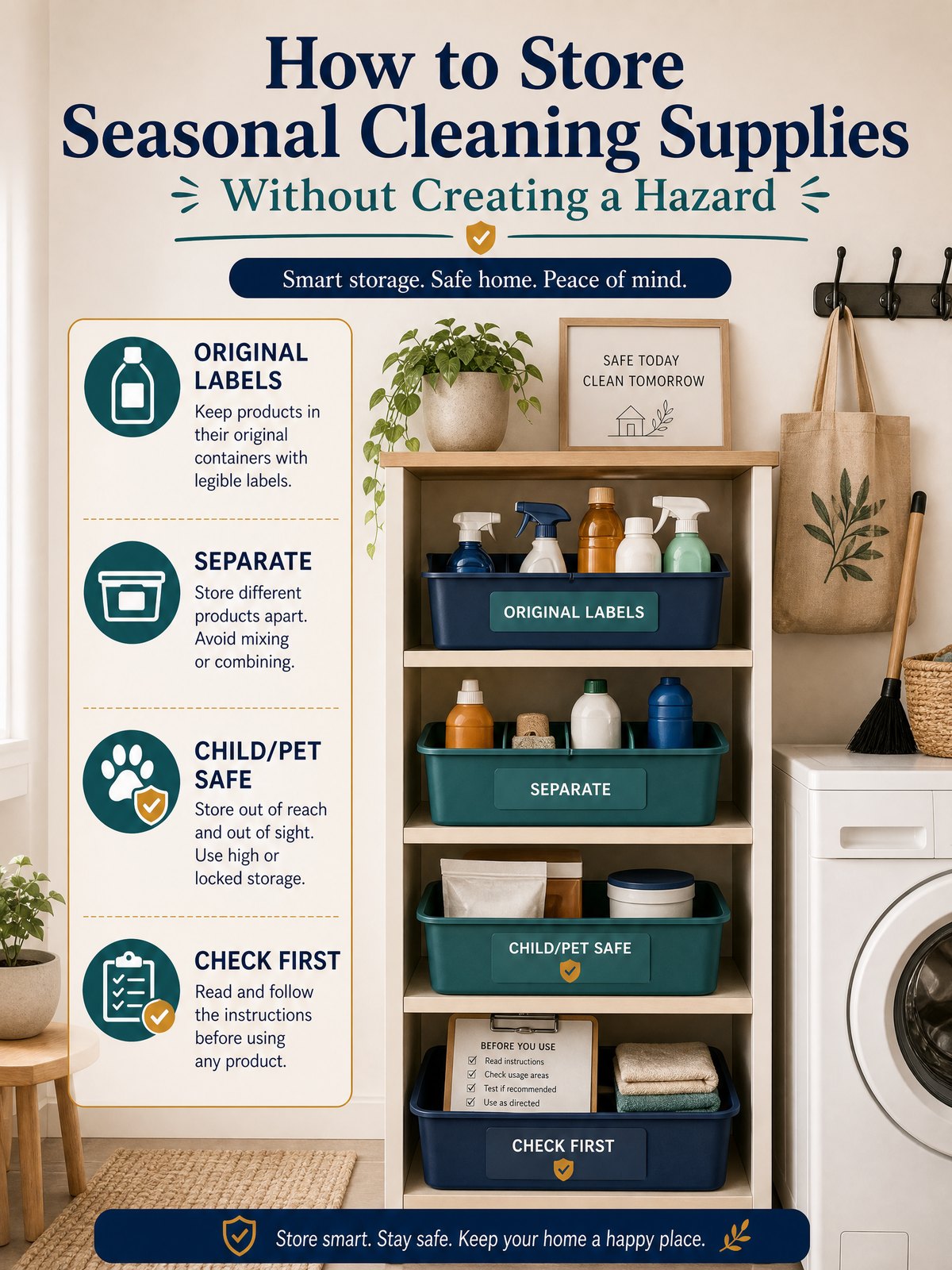
Seasonal cleaning often means digging out sprays, concentrated liquids, and dusty bottles from whatever corner of the apartment you could spare. Those containers can leak, confuse guests, or pile up until you run out of space or forget what’s usable.
This article shows a compact, renter-friendly system to keep cleaning supplies labeled, stored safely, and trimmed seasonally, and points you to local disposal options for products you no longer need. Follow product labels, your lease, and local collection guidance as you apply these steps.
Start with the real constraint
The practical limit for any small home is not square footage but safe storage: many cleaning products are formulated with chemicals that, according to the U.S. Environmental Protection Agency, can require special disposal care. The EPA specifically notes products such as paints, cleaners, oils, batteries, and pesticides and advises following labels and local collection guidance.
Another real constraint is renter rules. Your lease may restrict where you can store certain items (balconies, shared closets, or mechanical rooms can be off-limits). Before you rearrange a cabinet or install hooks, check your lease and follow any manufacturer instructions for flammables, compressed containers, or other regulated items.
At-a-glance plan
| Task | When to act | Decision signal | Short-term storage spot |
|---|---|---|---|
| Quick inventory and label check | Start of seasonal clean (30–60 minutes) | Missing label, damaged container, or odd smell = consider disposal | Clear tote near an exit for sorting |
| Set aside items for local disposal | Same day or next municipal collection | Product labeled hazardous, paint, old pesticides, or unknown mix | Labeled box for HHW drop-off (do not mix materials) |
| Group compatible cleaners | During re-storage (15–30 minutes) | Keep non-mixing groups apart (e.g., acids separate from bleaches) — practical option | Plastic bin per group on a high shelf or locked cabinet |
| Edit quantities for next season | End of seasonal clean (10–20 minutes) | Duplicate product types or items you never use = donate or dispose (verify locally) | Donate box or disposal box labeled with date |
Build the system step by step
- Gather and sort: Collect all cleaning supplies into one place and group by type (sprays, concentrated liquids, powders, aerosols). Keep incompatible types apart. When in doubt, follow the product label and separate unknowns for disposal.
- Label and inventory: For each item, confirm the product name and use-by or manufacture details and write a simple label if the original is unreadable. A short, dated inventory list on your phone or a paper list taped inside the bin helps seasonal checks.
- Decide: Keep, donate, or dispose. If a container is damaged, leaking, or the label is gone, mark it for disposal. For usable items you won’t use, consider donating—verify with the recipient—and for hazardous categories follow local disposal guidance and the EPA’s advice.
- Choose storage that meets constraints: Pick a single, predictable place that fits your lease and safety needs—an upper closet shelf, a lockable cabinet, or a top shelf in a utility room. Use bins to keep groups from tipping and to contain small leaks as a practical option.
- Plan the calendar: Set a short annual or seasonal reminder to review inventory, discard what’s expired, and adjust the quantities you keep. Note local HHW collection dates so you can drop off items you’ve set aside.
Following these steps creates a repeatable cycle: collect and check, label and decide, store safely, and schedule disposal or donation. Remember to follow your lease, product label, and local authority instructions when handling or transporting items for disposal.
Trade-offs to consider
Every storage decision balances convenience, cost, and risk; pick the compromise that fits your living situation and comfort level while following required rules and labels.
- Accessibility vs. safety: Storing supplies on a high shelf keeps them out of reach but makes access harder for frequent use — practical option to use smaller daily-use kits at lower levels.
- Consolidation vs. separation: Combining similar cleaners into one bin saves space but increases the impact of a spill; separate groups reduce cross-contamination but take more space.
- Minimalism vs. preparedness: Keeping only what you use reduces disposal needs, while keeping extra of a specialty cleaner may avoid an emergency purchase — a personal planning approach.
Keep it workable
Make a short, seasonal habit part of your cleaning routine: set a phone reminder for a 30–60 minute check, swap out expired products, refresh labels, and move items marked for disposal to a separate bin near the exit. Keep a small, marked disposal box for items destined for the next HHW event so they don’t drift back into regular storage.
FAQ
Can I keep half-used spray bottles?
If the product label is readable and the sprayer works, you can keep a half-used bottle as a practical option; if the label is missing, the container is degraded, or the product smells off, mark it for disposal and follow your local collection guidance and the product label for safe handling.
Where should I take old paint, pesticides, or solvents?
The U.S. Environmental Protection Agency notes that products such as paints, cleaners, oils, batteries, and pesticides can need special disposal care and advises following product labels and local collection guidance. Check your municipality’s household hazardous waste (HHW) program for drop-off details or special collection events.
Is it okay to store cleaning supplies in a shared laundry room?
That can be fine if your lease and the building rules allow it; verify lease restrictions and manufacturer instructions for any flammable or pressurized containers. As a practical option, keep supplies in sealed bins, labeled clearly, and away from heat sources or appliances.
Next, do a fast inventory: find the one cabinet or tote you’ll use and list everything in it. Then check local HHW collection dates and plan to drop off anything you marked for disposal.
Sources and fact-checking
This guide provides practical editorial guidance. Requirements and safe choices can depend on the product, lease, local rules, and individual situation.
- U.S. Environmental Protection Agency — Household Hazardous Waste — EPA notes that products such as paints, cleaners, oils, batteries, and pesticides can need special disposal care, and advises following labels and local collection guidance.
Fact-checked against the linked official resources on August 27, 2026.