How to Make a Small Rental Living Room Easier to Reset Every Day
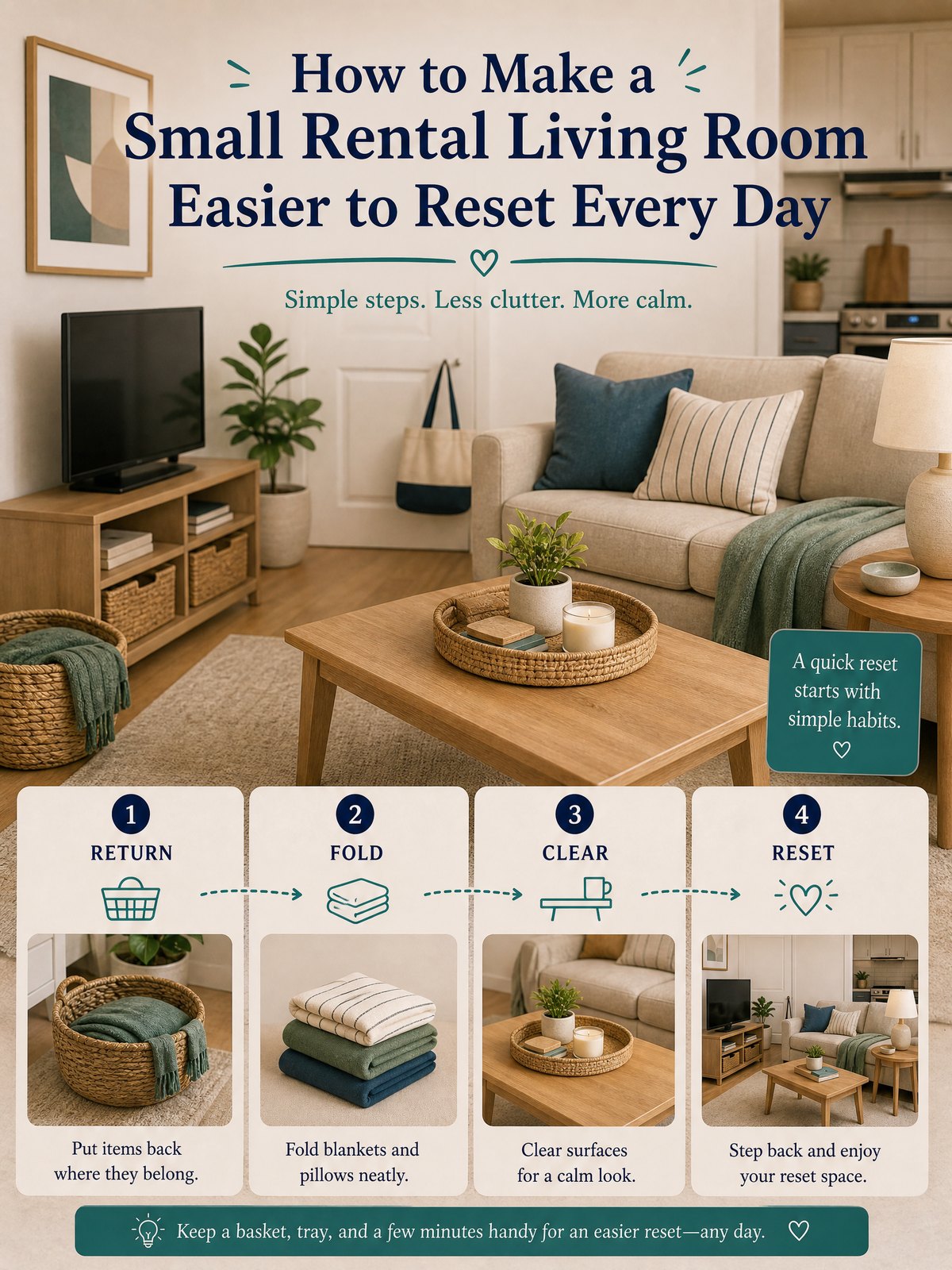
Small rental living rooms often feel messy because there are too many places where things can land: the coffee table, an end table, the arm of the sofa, a couch cushion. That visual clutter makes a daily tidy feel like starting over every evening.
This article explains a simple, renter-friendly approach: limit the number of furniture surfaces that accept daily items, and give the most commonly misplaced things one consistent return place. You’ll get a short plan, step-by-step setup, and practical trade-offs so the system actually fits apartment life.
Start with the real constraint
The real constraint in a small rental living room is physical surface area. When there are five usable tops in a 10-by-12-foot space, items spread out across them and you lose the mental cue to put things away. Reducing the number of active surfaces reduces the places your mind and hands can drop items, so it’s easier to reset quickly.
Another constraint is what you can or cannot change because you rent. Before adding hardware, drilling, or anchors, check your lease and ask permission if required. For safety steps that involve securing furniture or electronics, follow the product label and manufacturer instructions and verify any local rules or landlord requirements.
At-a-glance plan
| Step | What to do | When to do it | Decision signal |
|---|---|---|---|
| 1. Survey surfaces | Note every tabletop, shelf, and arm surface you currently use for daily items. | One 10–15 minute session. | If an item lands there more than twice this week, it’s an active spot. |
| 2. Close off extras | Remove a small table or put a tray/basket on it to discourage use. | Do during setup; inexpensive and reversible. | Choose surfaces to keep based on convenience and traffic patterns. |
| 3. Create return place | Assign a single, visible spot for keys, phone, glasses, and remotes. | Set it up now; use it daily when arriving and leaving. | Items should be found within 3 seconds from the main door or couch. |
| 4. Five-minute reset | Each evening, return items to their spots and clear any stray surfaces. | Nightly, right after dinner or before TV time. | If the living room takes under five minutes to clear, the system works. |
Build the system step by step
- Audit your room: Spend one session walking around with a notebook. Write down where the common items land (keys, mail, remotes, chargers, glasses). Notice patterns: are items clustering by entrance, by seating, or by the TV area?
- Choose two active surfaces: Keep one surface near the entry (or the main route into the living room) for an entry tray, and one low table for daily use while seated. Close off other surfaces by removing small tables, putting a cloth over them, or placing a decorative object that discourages casual use.
- Designate one consistent return place: Pick a single bowl, tray, low basket, or shallow box where keys, wallet, phone, and glasses always go. Place chargers or a cable catch nearby if you need to charge nightly. Make this spot visible from the main seating area so it becomes an obvious habit cue.
- Add containment for loose stuff: Use a small basket or vertical file for incoming mail and bill envelopes, and a slim remote caddy by the couch. Keep the containment items lightweight and moveable so you can store them in a closet or under a bed when guests visit or if your lease limits permanent fixtures.
- Institutionalize a short reset routine: Commit to a five-minute evening reset that includes emptying the baskets into storage, returning items to the consistent return place, and clearing tabletops. Time it by a song or the last five minutes of an evening show to make it habitual.
These steps create a minimal-touch system suitable for a rented space: nothing structural needs to change, and most containment options are portable. If you choose to attach hooks, shelves, or anchors, check your lease and follow manufacturer instructions and any local rules. For furniture anchoring or securing electronics you should confirm the correct hardware and follow the supplied instructions.
Trade-offs to consider
Any system that reduces usable surface area will require a bit more discipline and occasional movement of items. Consider these trade-offs before closing off surfaces:
- Less display space means fewer decorative items out all the time, which can make the room feel plainer.
- Concentrating items in one spot can feel restrictive if you often entertain and need temporary places for guests’ belongings.
- Using baskets and trays trades convenient spread-out access for quick retrieval from a single container, which can add a small step when you need something away from the return spot.
Keep it workable
Make the routine realistically short. Most people can do a five-minute daily tidy and a 10–20 minute weekly reset. Keep replacement or overflow containers accessible—store an extra basket in a nearby closet so you’re not tempted to use another tabletop. Revisit the system after two weeks: if one surface is consistently overloaded, adjust which surface is active or add a second small containment that’s still easy to reset. Always follow your lease and product labels when making changes that attach to walls or furniture.
FAQ
What counts as a “consistent return place”?
A consistent return place is a single, dedicated spot where you always put certain daily items: keys, wallet, phone, glasses, and often remotes. It should be visible from where you enter the room and within easy reach of the usual seating so putting things there is effortless. Keep the container simple and portable so you can move it if needed.
Can I use free-standing hooks or shelves in a rental?
Free-standing hooks, leaning shelves, and over-the-door organizers are good renter-friendly options because they don’t require drilling. If you decide to install hardware, check your lease and ask your landlord if required. For anchoring furniture or securing TVs, follow the product label and manufacturer instructions and verify local requirements or landlord rules.
How do I stop mail and papers from spilling onto surfaces?
Create a slim incoming-mail station: a vertical file or narrow basket near the return place and a quick rule—open and triage mail twice a week. Put urgent items on top, shred or recycle junk immediately, and store bills or forms in a labeled folder. Treat the mail container like any other surface: if it’s overflowing, the five-minute reset should include a quick paper tidy and filing.
Pick one surface to keep and set a single return spot for your daily essentials tonight. Try the five-minute reset for seven consecutive evenings and tweak which surface stays active based on how easily items get returned.
Sources and fact-checking
This guide provides practical editorial guidance. Requirements and safe choices can depend on the product, lease, local rules, and individual situation.
- U.S. Consumer Product Safety Commission — Anchor It! — CPSC advises following manufacturer instructions, securing TVs and top-heavy furniture where appropriate, and keeping climb-attracting items away from the top of furniture.
Fact-checked against the linked official resources on August 27, 2026.