A Renter Emergency Contact List That Is Easy to Find When You Need It
When something goes wrong—a burst pipe, a break-in, or a sudden medical need—renters often scramble to find the right phone numbers, policy numbers, or building contacts. That delay costs time and increases stress; a concise, easy-to-find renter emergency contact list removes the guessing.
This article walks you through making a one-page home information sheet that puts building management, household contacts, and insurance details where you and anyone helping you can find them quickly. The approach focuses on clarity and access while keeping landlord rules, privacy, and insurer instructions in mind.
Start with the real constraint
Most renters don’t have a folder of official paperwork within arm’s reach during a sudden problem. Keys, receipts, and policy documents are often scattered across email, apps, and paper—so the real constraint isn’t what to record, it’s how to make the right few items discoverable in the moment.
Ready.gov advises organizing critical household, insurance, financial, and medical records before an emergency and safeguarding them in a secure accessible location. Use that principle: choose a single, visible format for your renter emergency contact list so it can be found by you, visitors, or first responders if needed. When your situation touches your lease, building rules, or safety systems, follow your lease and any local authority or manufacturer instructions.
At-a-glance plan
| When/Trigger | Immediate Action | Primary Contact | Where to find details |
|---|---|---|---|
| Imminent danger (fire, active break-in) | Call 911; then notify building security or manager | 911; building security/front desk phone | Top of sheet and fridge-facing copy |
| Major leak or electrical hazard | Shut main water/electric if safe; call building maintenance | On-site maintenance or landlord contact | Emergency numbers section and landlord contact card |
| Property damage or theft but no immediate danger | Document, call insurance agent or claims line | Renter’s insurance claims phone and policy number | Insurance block on sheet and a digital backup link |
| Planning or paperwork needed (move, renewal) | Schedule time; contact landlord or property manager | Property manager, lease admin, and neighbor rep | Contacts list and lease file location noted on sheet |
Build the system step by step
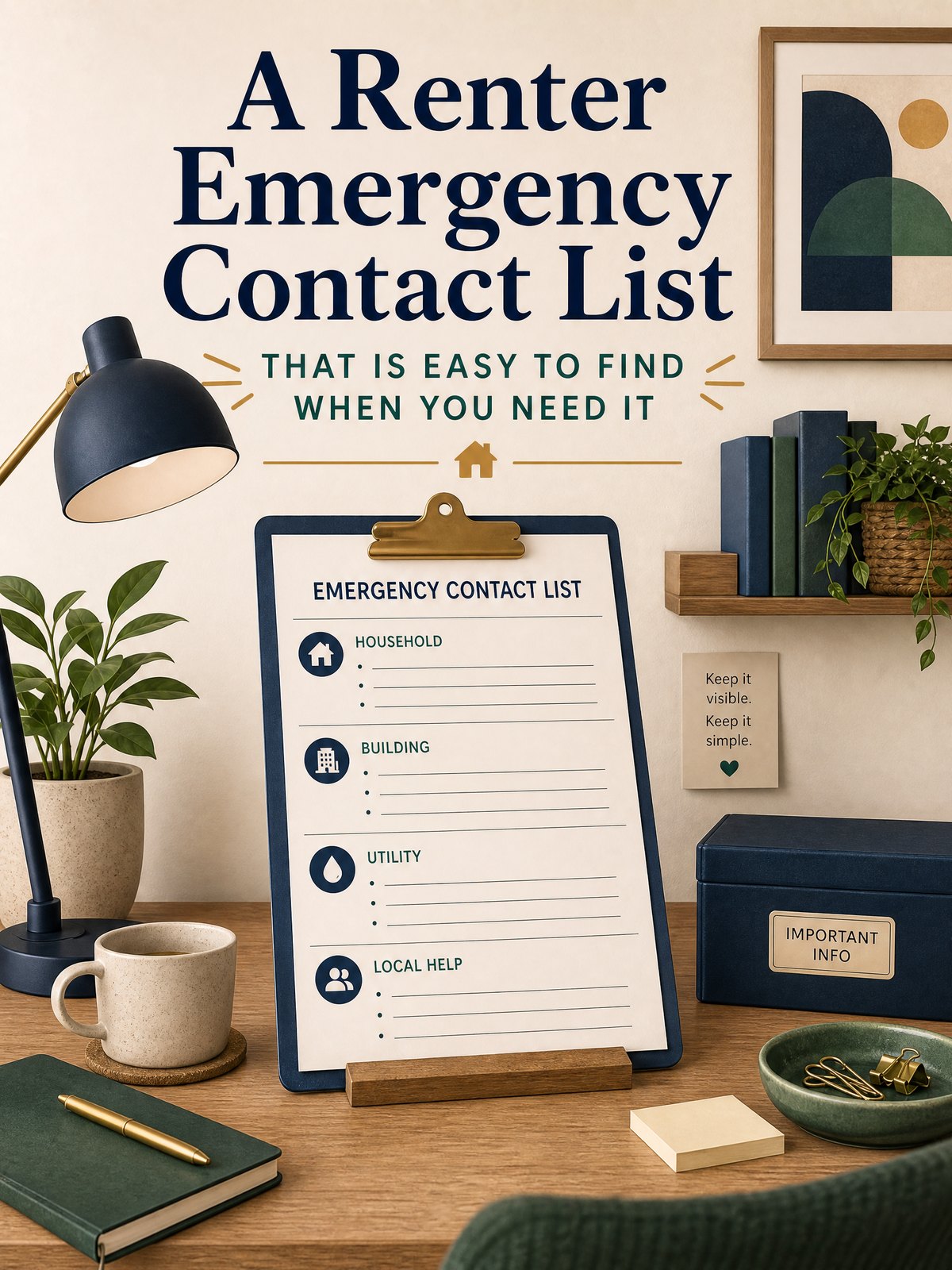
- Choose one compact format: a single printed page (front only) and a matching digital copy in a cloud folder. Label the printout clearly as “Home Info Sheet” and place it somewhere visible like the fridge or a key hook. This is a practical option for quick access.
- List the essential categories: 911 and local emergency, building manager or landlord, on-site maintenance, renter insurance and claims number, household emergency contact(s), and where your lease and key documents are stored. When details are controlled by the landlord or building, follow your lease and building rules for sharing or storing keys and access codes.
- Add short, clear entries only—name, role, phone number, and one line describing when to call them. Keep policy numbers or passcodes abbreviated so the reader knows where to find the full record in your secure folder (digital or locked physical). This is a personal planning approach to limit clutter.
- Create a digital backup: scan the page and save it in a password-protected cloud folder and email a copy to one trusted contact. Mark the file with the building name and apartment number so it’s searchable. Verify with your insurer or document custodian how they accept digital claims information.
- Prepare an emergency copy for a trusted neighbor or family member who can act on your behalf if you’re away. Confirm with them what you expect them to do and where they can find your keys or digital access; this should align with your lease permissions and local rules.
These steps produce a small, repeatable system: one visible page for instant reference, a secure digital copy for full details, and an informed person who can act if you cannot. Label anything that requires official action—insurance claims, lease disputes, or health matters—so others know to follow insurer instructions, the lease, or local authorities.
Trade-offs to consider
Designing the sheet requires balancing quick readability with privacy and landlord rules.
- Privacy vs. speed: including policy numbers on the main sheet is fast but exposes sensitive data; a practical option is to list only the contact and note where the full number is stored.
- Physical visibility vs. theft risk: keeping a printed sheet on the fridge is handy but could reveal contacts to visitors; a personal planning approach is to laminate one visible copy and keep a locked file with originals.
- Self-reliance vs. delegating: naming a neighbor or family member to act helps in emergencies but requires trust and verifying any actions against your lease and insurer requirements.
Keep it workable
Schedule a 10-minute check every six months to confirm phone numbers and policy renewals; update the printed sheet and the cloud copy at the same time. After any move, major repair, or insurance change, update the sheet immediately. If your building or insurer has specific claim or contact procedures, follow those instructions rather than improvising.
FAQ
Where should I keep the printed sheet?
Keep a single printed copy in a consistent visible spot—many renters use the fridge or a small frame near the front door—and store a second copy in a locked drawer. This is a practical option that balances discoverability with control; if your lease restricts posting items in common areas, follow your lease.
Who should I give the digital copy to?
Share the digital backup with one trusted contact such as a family member or close neighbor who agrees to help if needed, and keep it in a password-protected cloud folder. Verify with your insurer or building manager what documentation they accept if they need to act for you.
How often do I need to update the sheet?
Review it at least every six months and after any change to your landlord, insurer, or household contacts; set a calendar reminder. Treat updates to lease terms, insurance coverage, or emergency procedures as prompts to revise the sheet immediately and follow the insurer’s or landlord’s official guidance for claims or access.
Start by drafting the single-page sheet today and placing a printed copy on your fridge. Then set one calendar reminder to check it in six months and add the secure digital backup.
Sources and fact-checking
This guide provides practical editorial guidance. Requirements and safe choices can depend on the product, lease, local rules, and individual situation.
- Ready.gov — Financial Preparedness — Ready.gov advises organizing critical household, insurance, financial, and medical records before an emergency and safeguarding them in a secure accessible location.
Fact-checked against the linked official resources on August 27, 2026.