
Plug In Under Cabinet Lighting for Renters: Fit and Cords
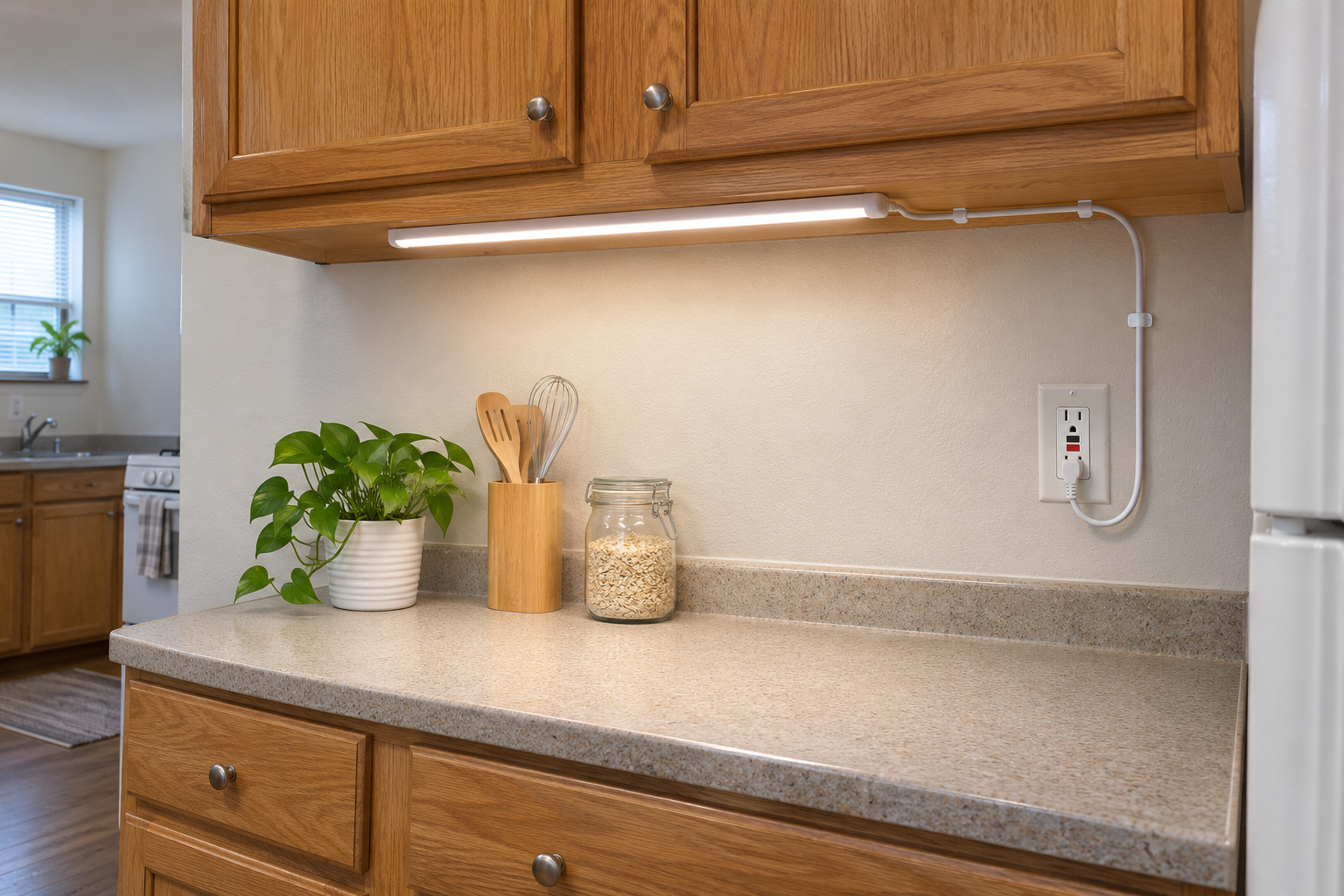
Plug in under cabinet lighting for renters can work when the fixture fits the usable cabinet underside, its mounting method is allowed, and its supplied cord reaches an appropriate outlet along a protected route. Plug-in power avoids a hardwired lighting project, but it does not automatically mean no drilling, no surface damage or no installation work.
Start at the outlet and work backward to the light. That simple change prevents a common buying mistake: choosing a bar that looks perfect under the cabinet, then discovering its plug can reach the receptacle only by crossing the sink or hanging over the counter.
Draw the power route before measuring the light
Identify the receptacle you plan to use and the other appliances that need it. Check that the plug and any power adapter can fit without preventing normal access. Do not remove grounding features, alter blades or force an incompatible plug into place.
Measure the real path the cord must follow, including vertical travel and turns. A diagonal measurement from outlet to fixture is not enough when the cord needs to follow a cabinet edge. Include the adapter’s body and the location where the cable exits it.
Keep the route away from cooking heat, water exposure, sharp edges and moving doors or drawers. If the only available path requires pinching the cord, stretching it taut or letting it dangle into a work area, choose a different location or lighting approach.
The CPSC extension-cord safety publication says extension cords should be temporary and warns about damage, overload and overheating. A permanent kitchen layout that depends on an improvised extension is a reason to reconsider the product, not a detail to hide behind the toaster.
Measure the flat underside, not the cabinet face
Look underneath the upper cabinet. Face-frame lips, braces, hinges and uneven finishes can reduce the flat mounting area. Measure the usable width and depth, and note the drop from the underside to the bottom of the front lip.
Compare the complete fixture dimensions, including end connectors, switches and cable bends. A bar may physically fit but leave no room to connect its power cable. Check whether an adjacent cabinet door can open fully and whether a removable shelf or appliance below will interfere.
Consider your normal viewing position. A fixture hidden behind the front lip may look tidy while still producing glare from a seated dining position. You can use a nonpowered paper outline to check the footprint, but do not test electrical equipment in a mounting arrangement its instructions do not permit.
| Light format | Potential rental use | Check before choosing |
|---|---|---|
| Plug-in bar | A defined stretch of counter | Body length, end connectors, switch access and mounting hardware |
| Linked bars | Several adjacent cabinet sections | Approved linking parts, maximum configuration and routes between cabinets |
| Plug-in puck system | Separate pools of light | Each mounting point plus cable and adapter storage |
| Battery or rechargeable alternative | No satisfactory outlet route | Charging access, maintenance and suitability for the task |
Separate removable mounting from plug-in power
Read the installation manual before buying. Some plug-in fixtures use screws, brackets or clips. Others may permit a specified adhesive method. Do not assume that any light can be attached with a generic removable strip because the fixture is lightweight.
Check the lease or ask the property manager about attaching hardware to the cabinet underside. Adhesive can also affect paint, laminate or unfinished wood. Permission to use adhesive does not guarantee clean removal, and a product’s mounting instructions do not override the lease.
If the approved method is incompatible with the cabinet or tenancy rules, choose a different fixture. Do not substitute household tape, hang the light by its cord or omit a bracket to keep the installation reversible.
The renter cabinet organization guide can help you assess the surrounding cabinet space before adding accessories. Keep lights and wiring separate from hinges, organizer hooks and objects that move each time a door opens.
Read the exact electrical and linking specifications
The GE plug-in undercabinet bar product page illustrates why the model matters. Its listed variants use 120-volt power, are not outdoor rated and are marked not dimmable. Those details should not be generalized to every GE product or every plug-in light.
Before choosing a system, confirm input requirements, included power supply, cord length and whether the model permits linking. Use only the linking parts and configuration the manufacturer approves. A connector that appears to fit is not evidence that two product families are compatible.
Check how the light is switched. A small button behind a cabinet lip may be difficult to reach, and a touch control may not suit every placement. If you want a dimmer or smart plug, confirm compatibility instead of assuming any light will behave correctly with an added control.
Compare actual light-output and color-setting information for the precise variant, but avoid treating a marketing lifetime as a promise of service life in your kitchen. This guide does not rank brightness or durability from untested product claims.
Finish the cord route without concealing a problem
Use cord-support methods permitted for the fixture and suitable for the surface. Leave enough flexibility for connections without creating a hanging loop. Do not crush insulation or modify a cord to obtain a cleaner-looking installation.
CPSC warns against altering extension cords and against using damaged ones. Its advice also cautions against routing extensions through doorways or under carpets and furniture. These are extension-cord rules, not permission to use an extension as permanent cabinet wiring.
For the fixture’s own cable, follow its installation instructions and keep connections accessible for inspection. If a supplied cord is too short, ask whether the manufacturer offers an approved alternative. Do not splice it, cut off a plug or hide an unauthorized join behind a cabinet panel.
The cord organizer planning guide provides a useful route-first approach, although kitchen heat and moisture require their own product-specific checks. Tidy-looking wiring is not a substitute for appropriate wiring.
Check the setup during ordinary kitchen use
After installation according to the manual, operate nearby doors and drawers and confirm they do not touch the light or cable. Make sure the adapter remains accessible and the cord is not pulled by moving a countertop appliance.
Include the fixture and cord in normal visual checks. Stop using equipment with damaged insulation, loose connections or other concerning changes and seek appropriate advice. Follow the manufacturer’s cleaning directions and disconnect power as instructed before cleaning or adjusting the unit.
FAQ
Does plug-in lighting mean I can install it without screws?
No. Plug-in describes the power connection. Check the mounting instructions and rental permission separately.
Can I connect bars from different brands?
Only if the manufacturers explicitly approve that combination. Similar-looking connectors do not establish electrical compatibility.
Is a damp rating permission to place it over a sink?
Not by itself. Check the exact fixture’s installation limitations, location requirements and applicable electrical rules. Do not infer splash protection from one label word.
What if the supplied cord cannot reach the outlet?
Look for an approved manufacturer option, move the fixture, or choose another lighting type. Do not alter the cord or design a permanent setup around an improvised extension.
Sources and fact-checking
Reviewed November 19, 2026. GE Lighting’s official fixture specifications support the model-specific electrical and linking examples. CPSC publication 5032 supports the extension-cord cautions. No installation, brightness comparison, surface-removal test or lifetime test was performed for this article.



댓글 0
첫 댓글을 남겨보세요.