
Small Room Dehumidifier: Capacity, Drainage, and Noise Checks
A small room dehumidifier should be selected by moisture load and tested water-removal capacity, not by a marketplace square-foot claim alone. Confirm the room’s humidity pattern, temperature, drainage route, bucket handling, and noise before deciding whether a compact thermoelectric unit or a compressor model is the right tool.
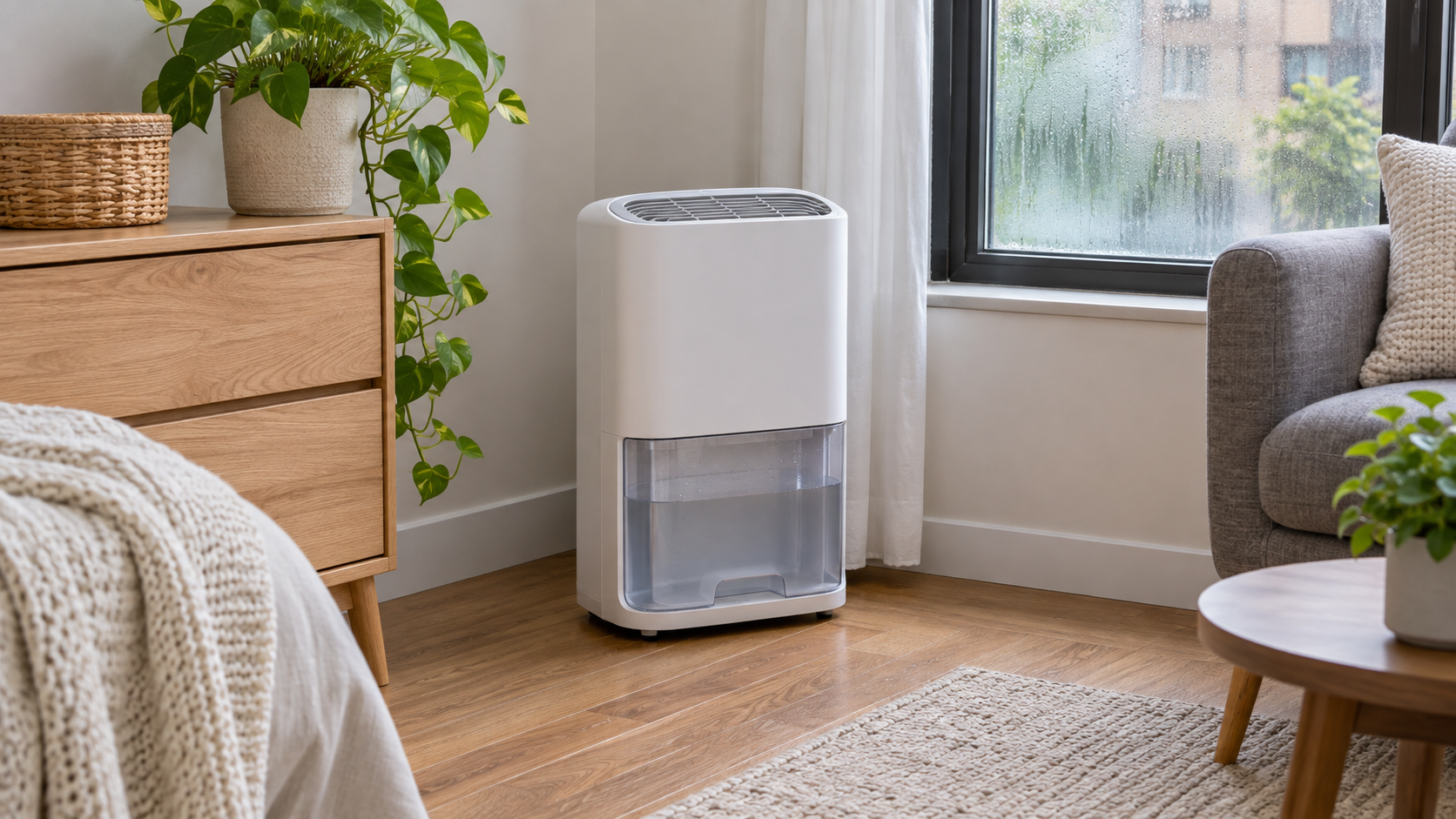
This guide is for bedrooms, bathrooms, laundry nooks, and other small apartment spaces. Persistent leaks, wet building materials, or visible mold require source correction and may need professional or landlord attention; a portable appliance does not repair the cause.
Identify the moisture problem before comparing machines
Use a hygrometer and observe the room across several days. Note condensation, musty odor, damp textiles, laundry drying, shower steam, and whether the room is warm or cool. ENERGY STAR sizes portable dehumidifiers in pints removed per 24 hours and bases recommendations on both area and how damp the space is without dehumidification.
Very small thermoelectric products are quiet and compact, but their daily extraction can be dramatically lower than a rated portable compressor dehumidifier. Compare the stated extraction under specified temperature and humidity conditions, not only tank volume. A large tank does not mean the machine removes a large amount of water per day.
| Type or feature | Useful for | Main tradeoff | Verify before buying |
|---|---|---|---|
| Thermoelectric compact unit | Closet, small bathroom, or light condensation in warm conditions | Low extraction and performance drops in cooler air | Test conditions, daily ounces or pints, and realistic room claim |
| Compressor dehumidifier | Higher moisture loads and measurable daily water removal | Heavier, louder, warmer exhaust air | DOE-rated pints per day and low-temperature behavior |
| Bucket collection | Rooms without an accessible drain | Must be carried and emptied | Full-bucket weight, handle, splash control, auto shutoff |
| Gravity hose drainage | Longer unattended operation near a suitable drain | Needs continuous downward slope | Hose fit, drain height, leak protection, and renter permission |
Nine buying checks for a small room dehumidifier
1. Measure humidity and room conditions
Do not buy only because a room feels stuffy. Track relative humidity, temperature, and visible moisture. EPA advises controlling indoor moisture and fixing leaks because dampness can support mold growth. If one wall or ceiling remains wet, notify the property owner and address the water source; running a dehumidifier against an active leak can hide the symptom while damage continues.
2. Compare tested capacity, not tank size
Capacity is usually stated as pints removed in 24 hours under a standardized test. Tank volume only tells you how much water the container holds before emptying. A product with a 35-ounce tank may remove far less than 35 ounces per day under ordinary bedroom conditions. Look for the exact daily extraction rating and the temperature and humidity used to produce it.
3. Match technology to the moisture load
A thermoelectric unit may be acceptable for a small enclosed zone with mild moisture and warm air. A compressor model is generally the more realistic choice when you need substantial daily removal. Avoid assuming that every device marketed for hundreds of square feet performs like a DOE-rated portable dehumidifier. If the product does not publish a comparable pints-per-day rating, treat the claim as uncertain.
4. Check operating temperature
Compressor coils can frost in cool conditions, and thermoelectric collection also changes with temperature and humidity. ENERGY STAR advises checking models specified for lower-temperature operation when the space routinely falls below 65°F. A warm bedroom, unheated basement, and cold bathroom are not interchangeable use cases.
5. Plan drainage before unattended use
For a bucket, calculate the filled weight and check whether the handle supports a level carry to the sink. For a gravity hose, confirm that the drain is lower than the outlet for the entire route and that the hose cannot be kicked, pinched, or pulled loose. A pump offers more routing flexibility but adds cost, noise, and another component to maintain.
6. Price noise in the mode you need
A quiet rating at low fan speed is not useful if the appliance must run at high speed to control the room. Check sound specifications, compressor cycling, fan settings, and return policy. In a bedroom, also verify display dimming, timer behavior, and whether the unit resumes automatically after an outage.
7. Measure heat and airflow clearance
A dehumidifier moves room air and releases heat. Follow the manual’s wall and furniture clearance, keep the intake free of lint, and leave room to remove the filter and bucket. In a tiny room, added heat can be noticeable, so do not wedge the unit beside bedding or behind a curtain just to hide it.
8. Compare cleaning access
Inspect the bucket corners, float, filter, grille, drain port, and hose connection. Standing water and residue make a difficult-to-clean design a recurring problem. Confirm which parts are washable and whether the filter is reusable or replaceable. The best capacity is irrelevant if the bucket spills whenever you remove it.
9. Record the exact model and recall result
Search the exact brand and model in the CPSC recall database. Dehumidifier recalls have involved fire hazards, so a used appliance or an unfamiliar marketplace listing deserves careful identity checks. Match the model number and date code, not only the housing color or brand family.
A small-room moisture worksheet
- Symptoms: measured humidity, condensation location, odor, damp fabrics, and visible water source.
- Room: square footage, temperature range, closed or open door, and occupied hours.
- Capacity: standardized pints per day or clearly stated extraction under test conditions.
- Water handling: bucket size, full weight, sink route, hose slope, pump, and auto shutoff.
- Bedroom use: useful-speed noise, compressor cycling, display controls, and warm exhaust.
- Maintenance: filter access, bucket cleaning, drain-port care, manual, model, and recall search.
Use these related guides to solve the room-level problem instead of treating the dehumidifier as an isolated purchase.
- Folding Drying Rack: Apartment Footprint and Airflow Guide — reduce concentrated laundry moisture and plan airflow
- Small Room Humidifier: 8 Checks for Apartment Bedrooms — avoid buying opposite-function appliances without measuring humidity
- How to Handle a Spill in a Small Apartment — separate immediate cleanup from a persistent moisture problem
Test the room and machine during the return window
The first week should prove that the selected capacity, water handling, and sound are workable in the actual room.
- 1. Baseline: Record humidity and temperature before use and note when condensation or damp odor appears.
- 2. Placement test: Run the unit with manual-required clearance and verify that doors, drawers, bedding, and walkways remain usable.
- 3. Water check: Measure how much water is collected over a consistent period instead of judging by the sound of the fan.
- 4. Drain test: If using a hose or pump, supervise the first full cycle and inspect every connection for leakage.
- 5. Cleaning rehearsal: Remove the filter and bucket, empty them, wipe reachable surfaces, and confirm you can repeat the routine without spilling.
Common mistakes and tradeoffs
Buying the smallest shell: A tiny unit may be quiet but unable to handle the room’s moisture load.
Equating tank ounces with daily extraction: Storage capacity and water-removal performance are different specifications.
Ignoring the moisture source: Leaks, poor exhaust, and wet materials need correction; an appliance only manages airborne moisture.
Routing a hose uphill: Gravity drainage needs a continuous downward path and a secure termination.
Using a recalled used model: Match exact model and date information in CPSC notices before operating secondhand equipment.
Frequently asked questions
What size dehumidifier do I need for a small room?
Use the room condition and a standardized pints-per-day capacity. ENERGY STAR recommends more capacity as dampness moves from slightly damp to very damp or wet; do not rely on square feet alone.
Are mini thermoelectric dehumidifiers effective?
They can remove some moisture in small, warm, enclosed spaces, but their extraction is usually much lower than compressor units. Verify daily removal under stated test conditions and match expectations to the actual problem.
Can I run a dehumidifier in a bedroom overnight?
Follow the manual, provide required clearance, use an undamaged outlet, and make sure noise, heat, bucket shutoff, or drainage are suitable. Address any active leak separately.
Should I choose a bucket, hose, or pump?
Choose a bucket if emptying is easy and supervised. Choose gravity drainage only when a lower drain is available. A pump is useful for higher discharge points but adds complexity and requires its own maintenance checks.
Sources and fact-checking
- ENERGY STAR: Dehumidifiers
- U.S. EPA: A Brief Guide to Mold, Moisture and Your Home
- U.S. Consumer Product Safety Commission: Recalls & Product Safety Warnings
Fact-check completed November 16, 2026. Product specifications, prices, manuals, and recall status can change, so verify the exact model before purchase.



댓글 0
첫 댓글을 남겨보세요.