How to Handle a Spill in a Small Apartment: Clean First, Then Decide What Else Is Needed
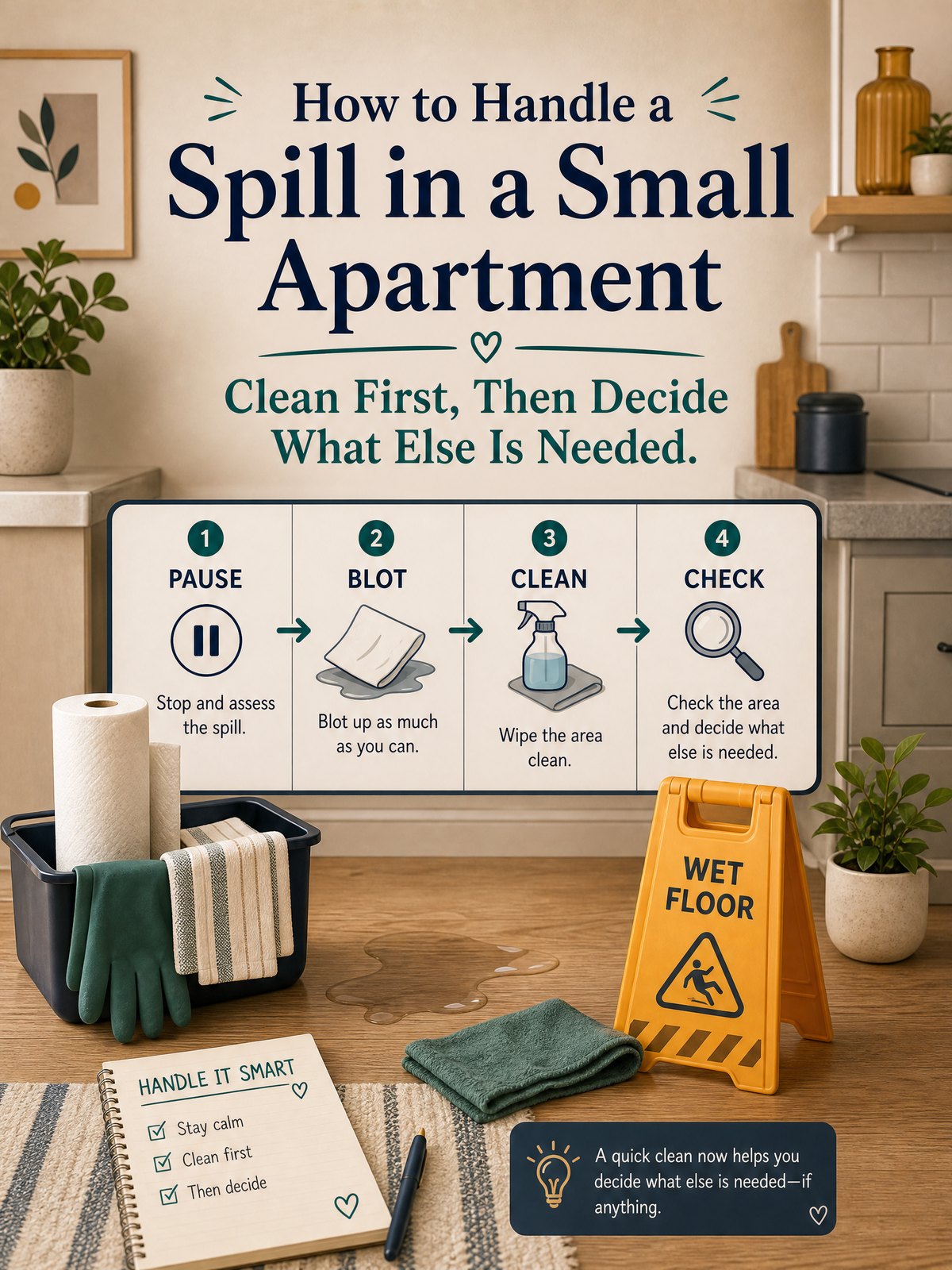
Spills happen in small apartments: a tipped coffee cup, a knocked-over bottle of salad dressing, a leaky paint can in the hall closet. You need a quick, safe sequence you can do with limited space and common supplies so the mess doesn’t become damage or a health hazard.
This article gives a clear two-stage approach: clean first (following product labels and common-sense safety), then decide whether you need additional steps such as disinfection or special disposal. Where official guidance applies, follow the product label, your lease, and local authority instructions.
Start with the real constraint
In a small apartment the real constraints are physical space, time, and storage for supplies. You may not have a full garage of tools or a separate laundry room, so your first priority is to stop spread and remove the bulk of the spill using what’s immediately at hand.
That means clearing people and pets from the area, containing the spill so it doesn’t track across floors or into HVAC vents, and then cleaning the surface. Follow the product label or manufacturer instructions for any cleaning product you use, and check your lease for rules about disposing of hazardous materials.
If the spill involves bodily fluids or an infectious illness is suspected, be aware that official cleaning vs. disinfection guidance can differ. CDC distinguishes cleaning with soap and water from disinfecting, and says cleaning alone is sufficient in most situations unless illness-related circumstances make disinfection appropriate.
At-a-glance plan
| Step | Quick timing | How to decide next | Tools/supplies |
|---|---|---|---|
| Contain and remove solids | 0–2 minutes | If sharp or chemical, stop and read product label before proceeding | Gloves, dustpan, sealable bag |
| Blot liquids and prevent tracking | 2–5 minutes | If stain or odor persists after blotting, prepare to clean thoroughly | Absorbent towels, paper towels, bucket |
| Clean with soap and water | 5–15 minutes | If spill was from food, beverage, or nonhazardous household product, cleaning often suffices | Mild detergent, warm water, scrub brush or cloth |
| Decide on disinfection/disposal | 5–10 minutes | Disinfect only if illness-related or label recommends; follow disposal instructions for hazardous items | Disinfectant (if needed), trash bags, local disposal information |
Build the system step by step
- Stop the spread: block off the area, remove pets and people, and ventilate if fumes or strong smells are present.
- Remove solids and sharps first: scoop or sweep solids into a sealable bag; for glass or needles follow manufacturer or building guidance and use a rigid container if available.
- Blot liquids, don’t rub: press absorbent material down to soak up as much liquid as possible, working from the outside in to avoid spreading the stain.
- Clean the surface with soap and water: use a mild detergent and warm water to remove residue; rinse and dry. This is the basic step that removes most soils and many microbes.
- Assess and act: if the spill involves an infectious bodily fluid, follow the appropriate disinfection steps per official guidance and product labels; if it involves chemicals, follow disposal instructions or local collection rules.
Those five steps create a repeatable routine that fits in small spaces: stop, remove, blot, clean, then assess. Keep basic supplies in a compact caddy so you can apply the routine quickly, and always read and follow labels and manufacturer instructions for cleaning products and any materials you’re disposing of.
Trade-offs to consider
No single approach fits every situation in a small apartment. You will balance speed, thoroughness, and what you can safely store or dispose of on-site.
- Speed vs. thoroughness: quick blotting prevents spreading, but thorough cleaning later ensures stains and odors don’t return.
- Storage vs. readiness: keeping a small spill kit ready takes space but saves time when a spill happens.
- Disinfection vs. chemical exposure: disinfecting can reduce risk in illness-related situations, but some disinfectants require ventilation and careful use—follow labels exactly.
Keep it workable
Maintain a compact spill kit: gloves, absorbent towels, a mild detergent, a scrub brush, a small dustpan, and sealed bags. Replace any single-use supplies after use, and once a season review whether you need a different cleaner or a local hazardous-waste drop-off for items you can’t throw away in regular trash. Follow product labels and local guidance for safe storage and disposal.
FAQ
Do I need to disinfect every spill?
No—CDC distinguishes cleaning with soap and water from disinfecting, and says cleaning alone is sufficient in most situations unless illness-related circumstances make disinfection appropriate. If someone who is ill has vomited or been sick on surfaces, check the product label for an appropriate disinfectant and follow instructions carefully.
What if the spill is paint, oil, or a stronger cleaner?
EPA notes that products such as paints, cleaners, oils, batteries, and pesticides can need special disposal care, and advises following labels and local collection guidance. For these materials, avoid pouring them down drains and confirm disposal options with your landlord or local waste authority.
Can I mix cleaning products to get a better result?
Mixing cleaners can create hazardous fumes or reduce effectiveness; this is why you should follow each product’s label and manufacturer instructions. As a practical option, use a simple soap-and-water clean first and only use other products if the label indicates they are safe for the surface and situation.
Next steps: put together a compact spill kit tailored to your apartment and post one short checklist in a visible place so everyone in your household knows the sequence. For questions about disposal or building rules, check your lease and contact local authorities or your building manager.
Sources and fact-checking
This guide provides practical editorial guidance. Requirements and safe choices can depend on the product, lease, local rules, and individual situation.
- U.S. Centers for Disease Control and Prevention — Cleaning and Disinfecting — CDC distinguishes cleaning with soap and water from disinfecting, and says cleaning alone is sufficient in most situations unless illness-related circumstances make disinfection appropriate.
- U.S. Environmental Protection Agency — Household Hazardous Waste — EPA notes that products such as paints, cleaners, oils, batteries, and pesticides can need special disposal care, and advises following labels and local collection guidance.
Fact-checked against the linked official resources on August 27, 2026.