Entryway Storage Ideas for Small Apartments: What to Buy First
Entryway storage ideas work best when they solve the first 30 seconds of arriving home: where your keys go, which shoes stay near the door, where a wet umbrella can dry, and how bags move out of the walkway. In a small apartment, the goal is not to fit a miniature mudroom into the hall. It is to give each daily essential one easy landing place while keeping the door, lock, and exit path clear.
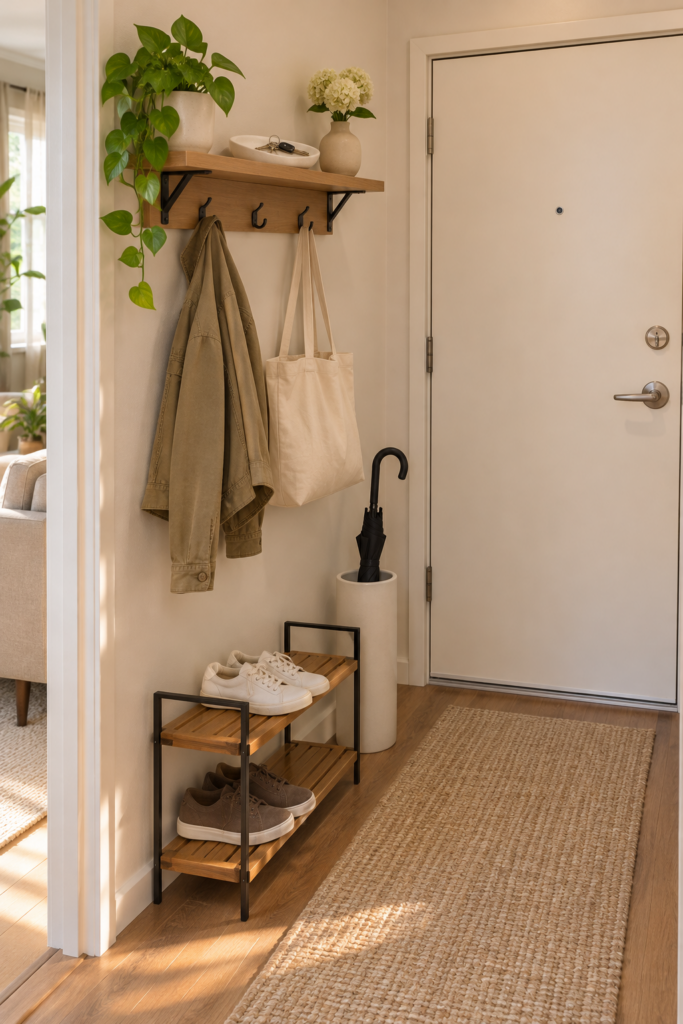
Start with what actually crosses the threshold each day, then choose the smallest organizer that handles that load. A wall shelf may be enough for one person. A shared apartment may need labeled hooks, a shallow shoe cabinet, and a separate place for outgoing items. Buying a large hall tree first often creates a new obstacle instead of fixing the routine.
Start with a seven-day entryway audit
Before shopping, place a temporary basket or cardboard box near the door for one week. Each time you come home, notice what you naturally set down. Most households discover a short list: keys, a wallet, one everyday bag, shoes, a coat, an umbrella, and perhaps dog-walking supplies. Mail may pass through the entryway, but it should not become permanent storage there.
At the end of the week, sort the items into three groups:
- Daily: items that leave the home most days, such as keys, a transit card, work bag, or dog leash.
- Weather-dependent: coats, umbrellas, hats, and seasonal shoes that need a temporary home.
- Transit items: returns, packages, library books, or donations that should leave on the next trip.
Everything else belongs deeper in the home. This is the same principle behind a compact small-entryway drop zone: the entrance should support movement, not become a long-term closet.
Measure the door before measuring furniture
Open the front door fully and watch the path your body, bags, and groceries take. Measure the wall depth only after you identify the door swing, switches, intercom, vents, baseboards, and any closet door that opens into the same area. Painter’s tape on the floor is useful for testing the footprint of a bench or cabinet before ordering it.
Do not trade emergency access for storage. The U.S. Fire Administration advises households to make sure doors and windows used for escape are not blocked. That makes a clear entry path a design requirement, not empty space waiting to be filled. A narrow organizer that works every day is more useful than a deeper cabinet that forces people to turn sideways at the door.
Compare entryway storage ideas by the job they perform
| Storage option | Best for | Check before buying | Main tradeoff |
|---|---|---|---|
| Small tray plus wall hooks | Keys, one bag, light jackets | Mounting method, hook load, door clearance | Limited capacity; visible clutter |
| Shallow shelf with hooks | Keys, sunglasses, mail in transit | Shelf depth, head clearance, wall type | Horizontal surface can collect extras |
| Open shoe rack | Fast access to everyday pairs | Shoe count, rack depth, cleaning access | Shoes remain visible |
| Slim shoe cabinet | Narrow halls and visual calm | Door style, baseboard gap, anchoring instructions | Some footwear may not fit |
| Bench with cubbies | Households that sit to change shoes | Seat stability and full walking clearance | Uses more floor area |
| Freestanding hall tree | Multiple coats, bags, and shoes | Ceiling height, base stability, manufacturer anchoring | Can overwhelm a tight entrance |
Choose the smallest useful system
For one person: a landing strip, not a furniture set
A tray for keys, two or three hooks, and space for two everyday pairs may be enough. If shoes are the main problem, use the detailed sizing questions in our shoe storage decision guide before adding a larger entryway unit.
For roommates: separate ownership from shared supplies
Give each person one hook or basket, then create a small shared zone for an umbrella, reusable shopping bags, or pet supplies. Avoid a single deep basket for everyone’s small items; it looks simple but turns every departure into a search. Initials on removable tags can work, but open visual zones are often easier to maintain than a complicated label system.
For families: control capacity instead of adding hooks forever
Assign a fixed number of active shoes and coats per person. When a hook is full, rotate something to a closet rather than installing another row. Place heavier items low. If you use a tall cabinet, hall tree, or unit with drawers, doors, or shelves, follow the manufacturer’s installation instructions and anchoring guidance. The U.S. Consumer Product Safety Commission recommends securing top-heavy furniture and keeping heavier items on lower shelves, especially where children may climb.
Build four zones that prevent pileups
- Carry zone: a hook or shelf for the bag and outer layer you will use again soon.
- Pocket zone: one shallow tray for keys, wallet, earbuds, or a transit card. Keep it small enough that it cannot become a junk drawer.
- Shoe zone: a rack, mat, or cabinet for the limited number of active pairs. Store off-season and occasional shoes elsewhere.
- Outgoing zone: one handled tote for returns, donations, and items that need to leave. Empty it during the next trip.
If papers are the problem, route them away from the front door. A compact home command center can hold action papers and schedules without turning the entryway into an inbox.
Renter-friendly does not mean risk-free
Adhesive hooks, over-door products, tension systems, and freestanding racks can reduce drilling, but each has limits. Check the product’s stated surface compatibility and load instructions. Test whether an over-door organizer interferes with closing, latching, weather stripping, or the peephole. Do not assume an adhesive product is safe for every paint finish, and do not hang a heavy bag from a hook designed for light accessories.
For wall-mounted shelves or cabinets, check your lease and ask the property manager when permission is unclear. If anchoring is required for safe use, a different low-profile product may be a better choice than skipping the anchoring step. Keep cords, loose straps, and tote handles from trailing into the path.
A practical buying order
Buy in the order of the problem, not the size of the product:
- Fix small-item loss first. Add a tray or small wall pocket for keys and wallet.
- Limit active shoes. Decide how many pairs need immediate access before choosing rack capacity.
- Add vertical storage. Use hooks or a shallow shelf only for items that truly leave the home often.
- Add seating only if it changes behavior. A bench earns its footprint when someone regularly sits to remove shoes.
- Choose a cabinet last. Enclosed storage can calm the view, but it requires careful measurements and may need anchoring.
After installation, run a three-day test. Carry in groceries, open every nearby door, and leave with your usual bag. If you bump the organizer or place items on the floor because the assigned spot is inconvenient, adjust the system before buying accessories.
Common entryway mistakes
- Buying for maximum capacity: extra capacity usually attracts off-season coats, duplicate bags, and shoes that are rarely worn.
- Ignoring the door swing: a cabinet can fit the wall measurement and still interfere with the actual arrival path.
- Using one basket for everything: mixed ownership and mixed destinations create daily searching.
- Making every item visible: open hooks are fast, but one closed or contained zone helps reduce visual noise.
- Skipping the weekly exit: returns and donations need a scheduled trip out, not a permanent tote by the door.
Five-minute weekly reset
Once a week, return off-season items to closets, remove old receipts, pair shoes, empty the outgoing tote, wipe the tray, and confirm that the door and walking path are clear. This reset is short because the system limits what may live there. If it takes much longer, the entryway is probably storing categories that belong elsewhere.
Frequently asked questions
What should be stored near the front door?
Store only high-frequency departure items: keys, a wallet, the current everyday bag, a small number of active shoes, and weather gear in season. Keep sensitive documents, medicines, and long-term storage elsewhere.
Which entryway storage idea is best for a narrow apartment?
A shallow shelf with hooks or a slim shoe cabinet usually uses less floor depth than a bench or hall tree. The best option is the one that clears the door swing, preserves a comfortable walking path, and holds your measured daily load.
Can renters install wall hooks and shelves?
Lease terms and wall materials vary. Check the product instructions and your lease, and ask the property manager if permission is unclear. Do not use an under-rated adhesive or skip required anchoring simply to avoid drilling.
How often should an entryway be reset?
A five-minute weekly reset is enough for many small homes. Add a seasonal rotation when weather changes so coats, boots, and umbrellas do not occupy the entry all year.
Sources and fact-checking
Safety guidance was checked on November 8, 2026. Product dimensions, attachment methods, wall compatibility, and load limits vary, so confirm the current manufacturer instructions for the exact organizer you buy.