Shoe Storage for Small Spaces: A Decision Guide for Everyday Pairs
Shoe storage for small spaces works best when you choose the system by location, shoe type, and daily behavior rather than advertised pair capacity. Measure the walking path first, keep only frequently worn pairs near the door, and move wet, bulky, or occasional footwear to a better-matched zone. The right setup should make shoes easy to return without narrowing an exit or turning the entry into a cleaning problem.
This decision guide compares open racks, slim cabinets, over-the-door organizers, benches, and rotation boxes. It also shows how to measure before buying, plan for damp footwear, and build a renter-conscious routine that remains manageable after the first week.
Start with the space, not the product
A product photo can make a shoe organizer look compact even when it is too deep for your hallway. Before shopping, mark the proposed footprint with painter’s tape or flattened cardboard. Open the front door fully, walk through while carrying groceries, and check whether another person can pass without stepping around the outline.
Measure three things: the usable width, the organizer depth, and the height available below switches, hooks, trim, or a thermostat. If the unit has doors or tilt-out drawers, include their open position. If it includes a bench, allow enough room to sit without blocking the door. A few minutes of measuring are more useful than a manufacturer’s pair-count claim because boots, high-tops, and wide shoes consume very different amounts of space.
Do not use an escape route as overflow storage. The U.S. Fire Administration advises keeping doorways and windows clear and removing clutter from walkways and stairs. In a narrow apartment, that means the safest storage capacity may be lower than the maximum number of pairs an organizer can hold.
Compare shoe storage for small spaces by trade-off
| Storage type | Best for | Main advantage | Watch for |
|---|---|---|---|
| Open low rack | Daily sneakers, flats, and commuting shoes | Fastest return habit and good airflow | Visible clutter, dust, and shoes extending beyond the shelf |
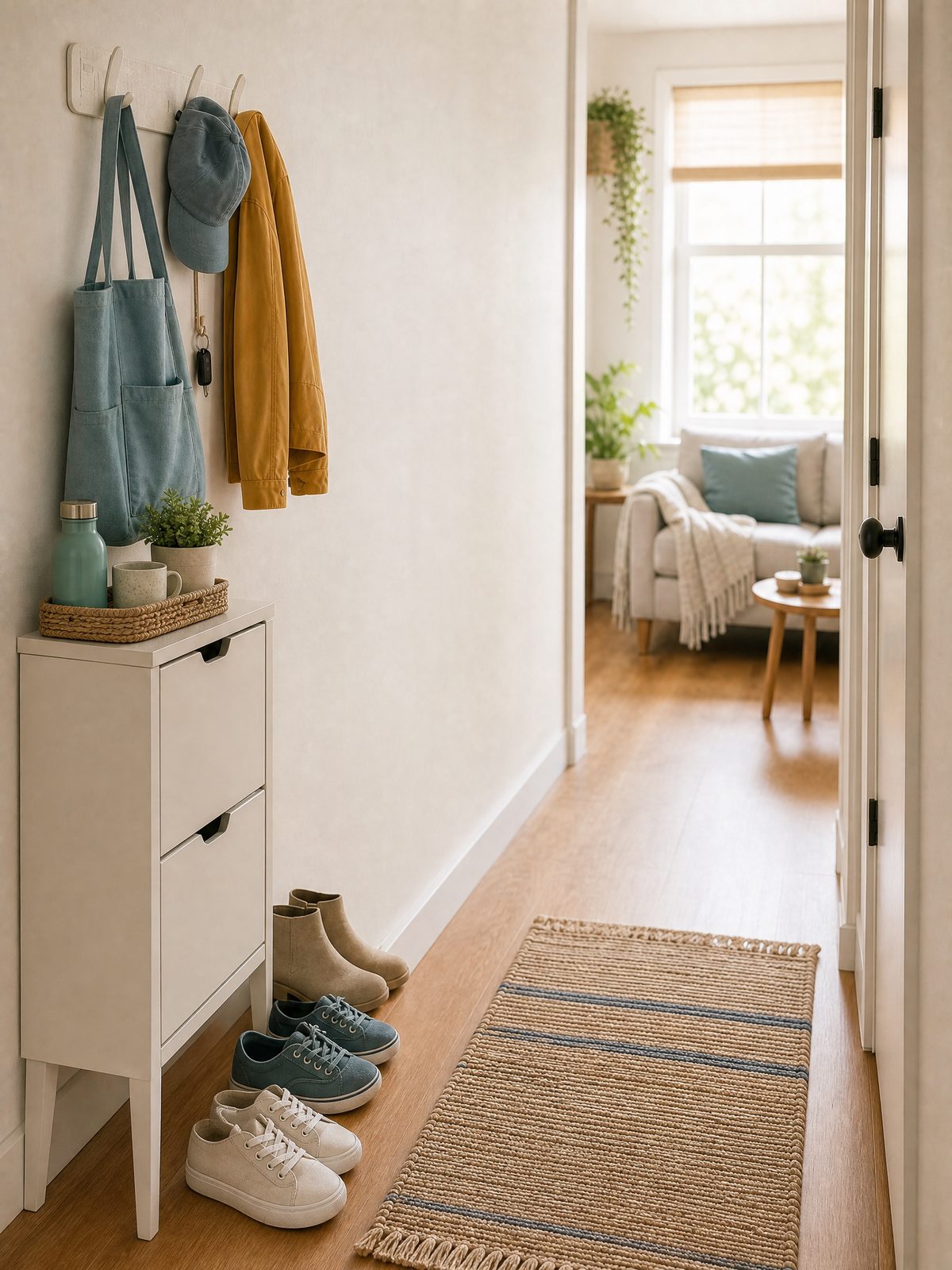
| Slim tilt-out cabinet | Narrow entries where a closed look matters | Uses shallow floor depth and hides everyday pairs | Interior compartments may not fit boots or large high-tops |
| Over-the-door organizer | Light shoes when floor space is unavailable | Uses vertical space and is often renter-friendly | Door clearance, hardware fit, noise, and pocket size |
| Bench with cubbies | Homes that need seating while putting on shoes | Combines a routine surface with storage | Usually deeper than a rack and easy to overload |
| Under-bed or closet box | Seasonal and occasional footwear | Removes low-use pairs from the entry | Needs dry, clean shoes and a simple inventory label |
| Tall vertical tower | Collections that cannot spread horizontally | High capacity on a small footprint | Stability, anchoring requirements, and hard-to-reach shelves |
Use a two-zone system instead of storing every pair by the door
The most practical small-home setup separates active storage from rotation storage. Active storage holds the shoes worn during the current week. Rotation storage holds formal, specialty, off-season, and backup pairs. This prevents the entryway organizer from becoming a miniature version of the entire closet.
Zone 1: active pairs
Give each person a defined slot, shelf section, or tray. The limit should come from the space, not an arbitrary rule. If a pair does not fit inside the assigned boundary, another pair must move to rotation storage. Keep the return action simple enough to do while tired: open shelves and low cubbies are easier than stacked boxes, while a tilt-out cabinet works when closing one drawer is realistic.
Zone 2: rotation pairs
Store clean, fully dry shoes in an under-bed container, closet shelf, or labeled bin. Group them by season or use, such as formal events, hiking, or winter weather, instead of by color. A short list inside the closet door can prevent duplicate purchases and make the seasonal swap faster. For a broader closet reset, see The Small Hall Closet Reset.
Plan separately for wet and dirty shoes
Wet footwear should not go directly into a closed cabinet or long-term box. Put it on a washable tray in a ventilated location, remove loose dirt, and let it dry according to the footwear manufacturer’s care instructions. The EPA’s residential moisture guidance emphasizes moisture control and recommends drying damp items promptly; it also notes that renters should report persistent leaks or moisture problems to the property owner or manager.
A tray is useful only if it is easy to clean and does not project into the walkway. Choose a size that captures the soles without encouraging a growing pile. If the entry is your main dirt-control zone, pair the shoe system with the cleaning sequence in How to Clean a Small Entryway Without Bringing Dirt Into the Rest of the Home. During snowy or rainy months, the seasonal plan in Winter Entryway Organization can help coordinate boots, coats, and wet gear without crowding the door.
Check stability before choosing vertical storage
A narrow, tall unit can save floor space, but its proportions also make stability important. Follow the manufacturer’s assembly and anchoring directions. The U.S. Consumer Product Safety Commission’s Anchor It! campaign recommends securing furniture with drawers, doors, and shelves to the wall to reduce tip-over risk. It also recommends keeping heavier items on lower shelves and avoiding tempting objects high on furniture where children may climb to reach them.
Renters should review the lease or ask management before drilling. Do not assume adhesive strips are an equivalent substitute for a manufacturer-required anchor. If proper anchoring is not allowed, choose a lower and wider organizer, reduce the loaded height, or use storage inside an existing closet instead. Product safety instructions and lease terms should guide the decision, not a social-media workaround.
A five-step buying and setup process
- Inventory by actual use. Put every pair in one place and separate weekly, seasonal, specialty, repair, donation, and discard groups. Do not buy an organizer until you know which pairs need immediate access.
- Measure the path and the product. Compare the organizer’s assembled exterior dimensions with your taped footprint. Include handles, doors, drawer swing, baseboards, and the largest shoes you plan to store.
- Choose the return action. Decide whether you will realistically place shoes on an open shelf, close a tilt drawer, hang them in a pocket, or carry them to a closet. The easiest repeatable action usually beats the highest theoretical capacity.
- Create a damp-shoe exception. Reserve a washable tray or ventilated drying location so wet footwear never gets pushed into closed storage by default.
- Test before expanding. Use the system for two weeks. If shoes still collect outside it, determine whether the problem is capacity, poor placement, difficult access, or too many active pairs before buying another organizer.
Common mistakes that waste space or money
- Buying by pair count alone: Product capacity often assumes compact shoes and may not reflect boots, high-tops, or larger sizes.
- Blocking the door swing: A cabinet can fit against the wall and still interfere with the front door, closet door, or safe movement.
- Using closed storage for damp shoes: A tidy exterior does not solve trapped moisture or odor.
- Choosing a tall unit without a safe anchoring plan: Vertical capacity is not worth an unstable setup.
- Making every pair equally accessible: Rare-use shoes consume the best storage while everyday pairs remain on the floor.
- Adding organizers instead of editing the collection: More containers can preserve clutter rather than improve the routine.
Keep the system working with a short reset
At the end of the day, return active shoes to their assigned positions and move damp pairs to the tray. Once a week, empty the tray, wipe the surrounding floor, and check whether any pair has entered the active zone without replacing another. At the start of a new season, move weather-specific footwear forward and return out-of-season pairs to rotation storage only after they are clean and dry.
If the organizer repeatedly overflows, do not immediately increase capacity. First ask which pairs were actually worn during the previous month, which need repair, and which are being kept for an unrealistic future use. A smaller, reliable system is often more useful than a larger organizer that narrows the apartment and becomes another surface for clutter.
FAQ
What is the best shoe storage for a very narrow entryway?
Start with the measured walking path. A shallow tilt-out cabinet or a low open rack may work, but the best choice is the one that stays fully outside the door swing and walking lane. If no floor footprint is safe, use rotation storage in a closet or under the bed instead of forcing furniture into the entry.
Are open shoe racks or closed cabinets better?
Open racks offer quick access and airflow, while closed cabinets reduce visual clutter. Choose open storage for a small daily rotation and closed storage for clean, dry footwear when the compartments fit your shoe types. Wet shoes need a separate ventilated drying location either way.
Can I use a tall shoe rack in a rental apartment?
Check the manufacturer’s anchoring instructions and your lease before buying. If the unit requires wall anchoring and management does not allow it, choose a lower, more stable organizer or use existing closet storage. Do not improvise a weaker anchoring method.
How many pairs should stay near the front door?
Keep only the pairs used regularly during the current week and set the limit by the organizer’s real footprint. Each pair should fit fully inside the assigned zone without narrowing the path. Move occasional and off-season footwear to rotation storage.
Sources and fact-checking
This guide was fact-checked on November 5, 2026. Product dimensions, anchoring requirements, lease terms, and local building rules vary, so confirm them for the specific home and organizer.
- U.S. Fire Administration: Hoarding and Fire Safety — supports keeping doorways, windows, walkways, and stairs clear.
- U.S. Environmental Protection Agency: A Brief Guide to Mold, Moisture and Your Home — supports prompt drying, moisture control, and renter reporting of persistent moisture problems.
- U.S. Consumer Product Safety Commission: Anchor It! — supports following anchoring guidance for furniture with drawers, doors, and shelves.