Nightstand Organization for Small Bedrooms: What to Keep
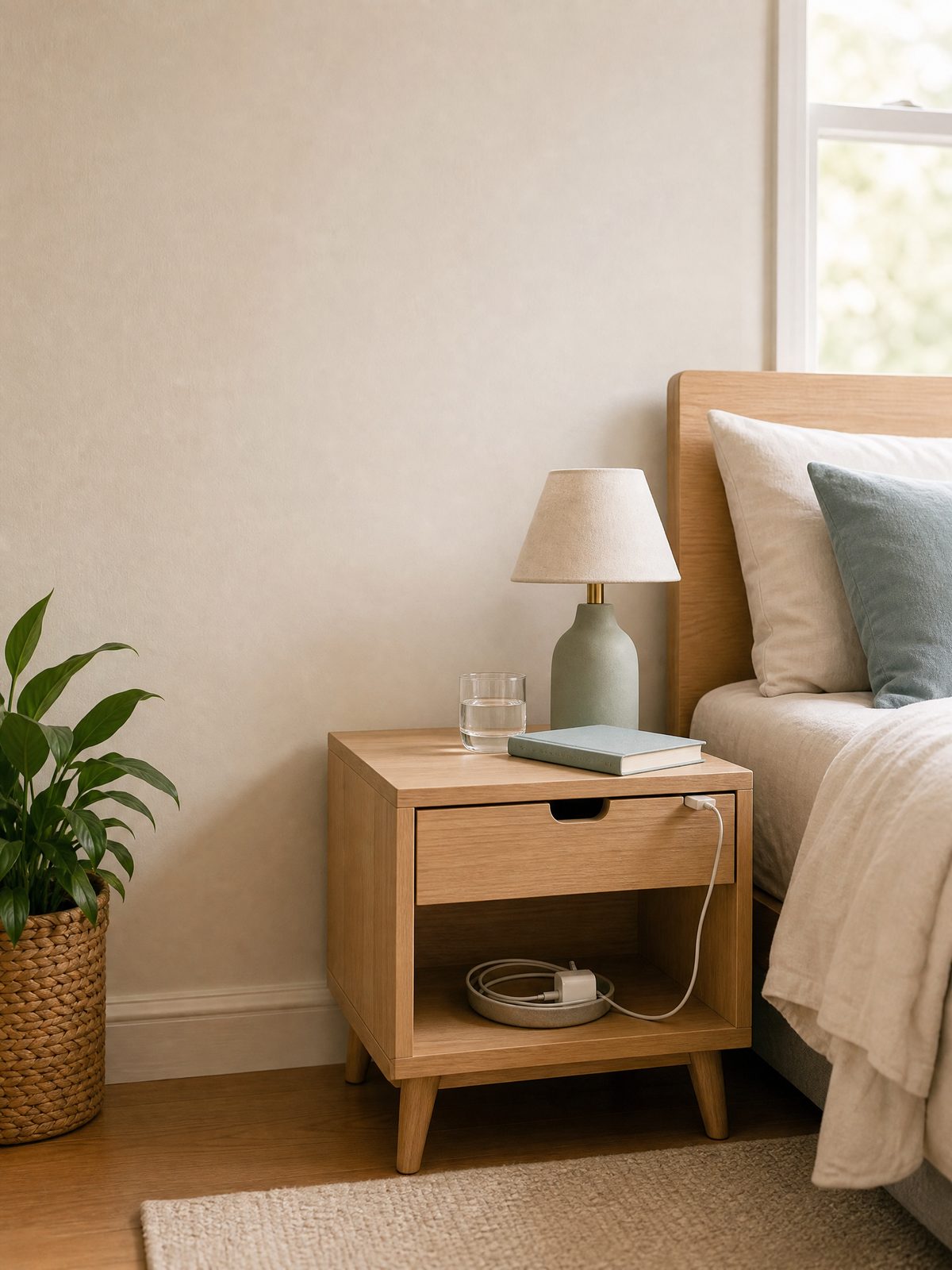
Nightstand organization works best when the bedside table has three clear jobs: hold tonight’s essentials, hide small items that would otherwise spread, and keep everything else out of the sleep zone. In a small bedroom, start with what you actually reach for after getting into bed, then choose a tray, drawer divider, caddy, or shelf only if it solves a specific problem.
The practical goal is not a perfectly styled surface. It is a calm, easy-to-clean setup with enough open space to put down a glass or book without knocking something over. A good system also keeps medicines secured when needed, prevents cords from crossing the walking path, and avoids adding a bulky organizer that makes the room harder to use.
Quick answer: use three bedside zones
Divide the nightstand into a surface zone, a contained zone, and a secure or elsewhere zone. The surface is for a short list of items used most nights, such as a lamp, water glass, current book, or eyeglasses. The contained zone is a drawer, tray, or small caddy for items that are useful but visually messy. The final zone is for things that do not belong in open bedside storage, including backup supplies, important documents, valuables, and medicines that require locked or controlled access.
If the current setup feels crowded, do not buy an organizer first. Empty the nightstand, use only the essentials for three nights, and notice what you genuinely miss. That short test separates a storage problem from an excess-item problem.
Compare nightstand organizer options before buying
| Option | Best for | Main advantage | Trade-off to check |
|---|---|---|---|
| Low tray or valet tray | Glasses, lip balm, watch, small remote | Creates one visual boundary and is easy to lift for cleaning | Does not reduce the number of items; an oversized tray can consume the whole surface |
| Drawer dividers | Cables, tissues, reading accessories, personal items | Keeps categories separate without changing the room’s footprint | Measure interior width, depth, and drawer clearance before ordering |
| Hanging bedside caddy | Very narrow rooms, platform beds, dorm-style setups | Adds storage without a larger table | Confirm that the attachment method fits the bed frame and will not interfere with bedding |
| Floating shelf or wall-mounted nightstand | Rooms where floor clearance matters | Leaves more visible floor area and can simplify cleaning | Installation, wall type, load limits, and lease restrictions must be checked first |
| Small lidded or locking box | Items that should not remain openly accessible | Adds privacy or access control | It may belong in a closet or dresser instead if the nightstand is already crowded |
Build a nightstand organization system step by step
1. Empty the table and measure the usable space
Remove everything from the top, drawer, and open shelf. Wipe the surfaces, then measure the top, drawer interior, and the clearance between the table and bed. Record the narrowest dimension, not just the outside width. This prevents buying a bin that fits the table but blocks the drawer or crowds the mattress.
Also look at the floor around the bed. A charger or basket that extends into the walking path is not a space-saving solution. If cleaning around the bed is already difficult, the guide to cleaning under a bed in a small apartment can help you plan a setup that is easier to maintain.
2. Run a three-night reach test
For three nights, place only the items you expect to use before sleep or immediately after waking. Put everything else in a temporary basket across the room. Each time you retrieve something, note what it was and whether it truly needs bedside access.
At the end of the test, keep the repeat-use items and relocate the rest. This is more useful than following a universal item count because routines differ. Someone who reads with glasses needs a different setup from someone who uses a sleep mask, hearing device, or medical equipment. Follow product and medical instructions where they apply rather than forcing those items into a generic organizing rule.
3. Assign each remaining item to one of three zones
- Surface: items used almost every night that must be visible or immediately reachable.
- Drawer, tray, or caddy: small items used regularly but not needed in view.
- Secure or elsewhere: duplicates, paperwork, loose valuables, old medicine, and anything used only occasionally.
Leave a deliberate open area on the top. That empty space is functional capacity, not wasted space. It gives you somewhere to place a book, set down a glass, or clean the surface without moving a decorative collection first.
4. Control one charging route
Choose one side of the nightstand for the charging cable and keep the cord away from the route between the bed and the door. A simple reusable cable tie, weighted cable holder, or removable clip may be enough. Before attaching anything to furniture or a wall, check the product instructions, the surface finish, and any lease restrictions.
Avoid turning the bedside table into a charging hub for every device in the household. Store backup cables with electronics elsewhere and keep only the cable that supports the nightly routine. For a broader room-by-room check, use the small home safety reset.
5. Decide whether medicine belongs there at all
A nightstand can be convenient, but convenience is not the only concern. Follow the medicine label and advice from a pharmacist or prescriber. If children, visitors, or other household members could gain unwanted access, open nightstand storage is not appropriate. The U.S. Environmental Protection Agency recommends locked storage to prevent unwanted access to household medicines, and the Consumer Product Safety Commission advises locking medicines up and keeping them out of children’s reach.
Remove expired or unneeded medicine from the bedside area and use an appropriate take-back option when available. Do not use the nightstand as a long-term holding area for bottles you no longer need.
How to shop without buying the wrong organizer
Product listings make it easy to compare colors and prices, but the useful checks are physical. Before ordering, write down five things:
- Exact dimensions: measure the organizer and the space it must fit, including drawer height and cable clearance.
- Access style: decide whether you need one-handed access in the dark or a closed container that reduces visibility.
- Cleaning effort: smooth trays and removable dividers are easier to wipe than deep fabric pockets that collect dust.
- Attachment method: confirm whether a caddy, clamp, adhesive, or wall mount works with the bed, wall, and lease.
- Exit plan: reject any product that narrows the path around the bed or blocks a door, window, or frequently used drawer.
Furniture stability matters in a small bedroom
Compact does not automatically mean stable. A narrow cabinet with drawers, doors, or shelves can still tip, especially when drawers are opened or a person pulls on the furniture. The CPSC’s Anchor It campaign recommends anchoring furniture with drawers, doors, and shelves to the wall to help prevent tip-over injuries. Follow the furniture manufacturer’s instructions and use hardware suited to the wall and furniture.
If you rent, ask the landlord or property manager how required anchoring should be handled rather than skipping the question. Keep heavier objects lower, and do not place attractive items where a child may be tempted to climb for them. If the existing nightstand wobbles, repair, anchor, or replace it before adding more storage.
Common nightstand organization mistakes
- Buying containers before decluttering: this packages the clutter without reducing it.
- Using the entire surface: a full top leaves no landing space and makes wiping harder.
- Storing duplicates bedside: one cable, one current book, and one active personal-care item are usually easier to manage than backups.
- Ignoring drawer clearance: tall bins and cable plugs can prevent a drawer from closing smoothly.
- Making the system too private for shared safety: household members should know where emergency essentials are, while medicines and valuables remain appropriately secured.
- Choosing decor over function: a large lamp or decorative object may look balanced in a photo but leave too little room for the items you actually use.
Keep the system working with a five-minute reset
Once a week, remove cups and trash, return stray objects, wipe the top, and put the charging cable back in its route. Open the drawer and move anything that belongs in another room. If the same category returns every week, give it a better home rather than repeatedly clearing it.
Pair this with the small bedroom reset routine so the nightstand is maintained as part of the room, not as a separate organizing project. A useful system should take seconds to use and only a few minutes to restore.
FAQ
What should I keep on top of a nightstand?
Keep only the items you use most nights and need to see or reach quickly. A lamp, water glass, current book, and eyeglasses may qualify, but the exact list should come from your own three-night reach test. Put smaller or less frequent items in a drawer or tray.
Is a tray or drawer organizer better for nightstand organization?
A tray is better for a few visible items that tend to spread across the surface. Drawer organizers are better when several small categories are mixed together out of sight. If the room is extremely narrow, a compatible bedside caddy may save more floor and surface space than either option.
Can I keep medicine in a nightstand drawer?
Follow the label and professional guidance, then consider who can access the drawer. If unwanted access is possible, use locked storage rather than an ordinary nightstand drawer. Keep unneeded medicine out of the bedside area and use a take-back option when available.
How do I organize a nightstand with no drawers?
Use one shallow tray for small essentials, keep the surface list short, and consider a bed-compatible hanging caddy if it will not interfere with bedding or walking space. A wall-mounted shelf can work when installation and lease rules allow it, but measure carefully and follow its load and mounting instructions.
Sources and fact-checking
This article was reviewed against current U.S. official guidance on November 7, 2026. Product instructions, medicine labels, household needs, wall construction, and lease requirements can change what is appropriate in a specific home.
- U.S. Consumer Product Safety Commission, Anchor It — current guidance on anchoring furniture with drawers, doors, and shelves and reducing climbing and tip-over risks.
- U.S. Environmental Protection Agency, Safe Storage of Medicines in the Home — locked storage and take-back guidance for household medicines.
- U.S. Consumer Product Safety Commission, Medication and Cleaner Storage Safety — advice to lock medicines and cleaners and keep them out of children’s reach.