
No Drill Curtain Rod: What Renters Should Measure First
A no drill curtain rod is a good renter option only when the window recess can hold it and the curtain is light enough for the rated span. The label covers several systems, including tension rods, twist-to-lock rods, clamp-on brackets, and adhesive rod holders. They do not share the same surface requirements or load limits.
Measure the mounting surfaces before choosing fabric. A heavy blackout panel on a long span can turn a simple tension rod into a recurring fall problem. This guide focuses on fit, load, window operation, and removal rather than promising that every “damage-free” product works on every rental surface.
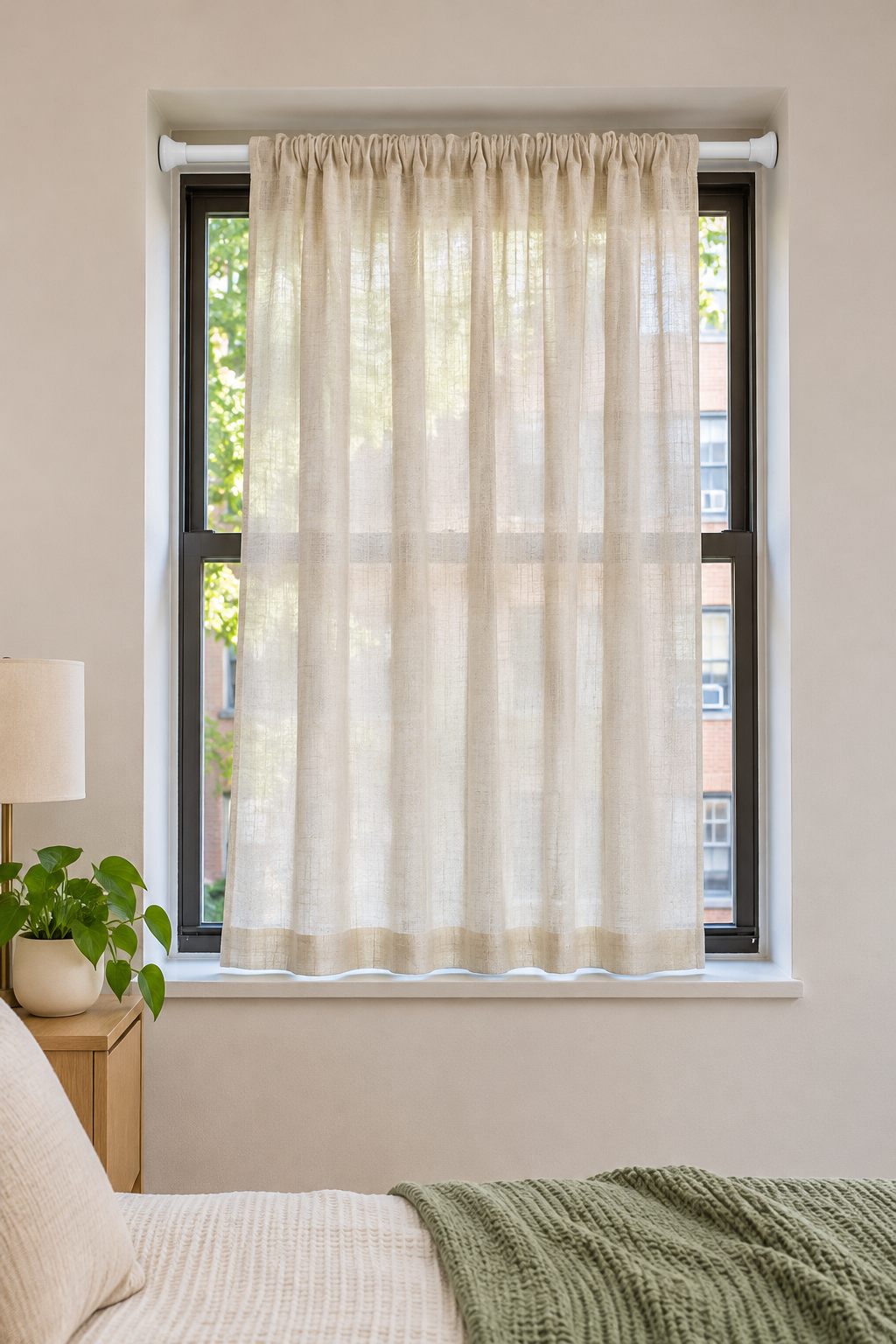
Start by identifying the mounting system
A true tension rod presses between two opposing surfaces inside a recess. It needs solid, reasonably parallel contact points and enough depth for the end caps. Clamp-on systems attach to an existing frame or trim profile. Adhesive holders mount to a flat approved surface and then support a separate rod.
The system determines what you must measure. A product photo may show a finished curtain but hide the end caps, brackets, or frame clearance. Read the installation drawing and the maximum span before buying.
- Tension rod: no holes, but holding force decreases when the span and load exceed the design.
- Clamp-on bracket: depends on a compatible trim edge and enough clamping surface.
- Adhesive holder: avoids holes but creates a surface and removal question.
- Magnetic rod: works only on a compatible ferrous frame and may move when the curtain is pulled.
Compare no-drill mounting options
The best system is the one that fits the physical window, not the one with the most flexible marketing language.
| System | Needs | Good use | Main limit |
|---|---|---|---|
| Tension | Opposing surfaces, adequate recess depth, correct span | Light curtains inside a stable window recess | Can slip on slick paint, tile, or an overextended span |
| Clamp-on | Compatible trim profile and clamp clearance | Windows with sturdy projecting trim | May not fit flush frames or interfere with blinds |
| Adhesive holders | Approved smooth surface and full curing time | A small rod where tension is not possible | Removal and paint risk vary by surface and product |
| Magnetic | Ferrous metal frame and enough magnetic holding force | Light panels on compatible steel surfaces | Not suitable for aluminum, wood, vinyl, or weakly magnetic areas |
If the listing does not state the supported span and weight, treat that information as missing. Do not estimate capacity from tube diameter or product photos.
Measure the recess, trim, and opening path
Record the inside width at the top, middle, and bottom of the intended mounting area. Measure the recess depth available for each end cap, and note handles, locks, screens, blinds, and tilt-in sash movement. A rod that fits the width can still prevent the window from opening or block access to the latch.
If the window is part of a bedroom escape plan, the curtain and hardware must move quickly and should not make the opening difficult to use. Keep the route clear and avoid storing furniture directly against the opening.
Calculate the real curtain load
Use the curtain’s listed weight when available. Add rings, clips, liners, and overlap panels rather than counting only the fabric. Long spans and frequent pulling place more demand on the ends than a short stationary cafe curtain.
Choose a margin below the rod’s stated rating. If the listing gives different capacities at different spans, use the number for your measured width. Do not use the shortest-span rating for an extended installation.
Check the contact surface before ordering
Tension end caps need clean, dry, stable contact areas. Flaking paint, curved trim, loose wallpaper, crumbling plaster, and narrow vinyl lips are poor foundations. Adhesive holders add a separate requirement: the exact finish must be listed as compatible, and the removal method must match your move-out plan.
This is the same decision logic used in the renter adhesive storage checklist. “No drill” describes one kind of damage avoided; it does not promise zero residue, discoloration, compression marks, or coating failure.
Choose the curtain after the rod
A lightweight panel is easier on a no-drill system than a thick lined pair. If you need serious light control, compare the load of a tension-rod setup with a direct-to-glass portable panel before combining a long rod and heavy fabric.
For the rest of the room, the rental bedroom organization guide helps keep storage and furniture away from the window. A curtain solution should improve privacy or light control without making the room harder to move through.
Review cord and child safety
The U.S. Consumer Product Safety Commission recommends cordless window coverings when young children are present because accessible cords can create a strangulation hazard. A simple curtain panel may be cordless, but existing blinds behind it can still have operating cords.
Do not hide a dangling blind cord behind the new curtain and assume the hazard is resolved. Check the complete window treatment, move cribs and furniture away as recommended, and use the current CPSC guidance for existing coverings.
Plan for removal and reuse
Save the instructions and any protective pads. Mark the final rod width with a removable note on the packaging so the setup can be reinstalled after cleaning. Before move-out, remove the curtain first, release tension slowly, and inspect the contact areas instead of letting the rod snap free.
If you are considering a permanent bracket instead, compare it with the renter-friendly wall storage planning process: identify the surface, hardware, permission requirement, and restoration work before making holes.
Test the setup before hanging the full curtain
A staged test reveals poor contact without dropping the complete assembly.
- Install the empty rod at the measured width and confirm both ends sit flat.
- Open and close the window and blinds without fabric attached.
- Hang one panel or an equivalent light test load for several hours.
- Pull the curtain gently in the direction it will be used, without jerking.
- Recheck the end positions and contact marks before adding the remaining fabric.
If the rod shifts during the light test, do not solve it by over-tightening against a delicate surface. Choose a shorter span, lighter panel, larger compatible end pad, or a different mounting system.
Common buying mistakes
- Buying a rod before measuring recess depth and trim shape.
- Using the maximum short-span rating at a longer extension.
- Ignoring the combined weight of curtains, liners, rings, and clips.
- Blocking window locks, screens, handles, or emergency opening.
- Treating “no drill” as proof of zero surface risk.
Frequently asked questions
Can a tension rod hold blackout curtains?
Some can hold certain lightweight blackout panels at shorter spans, but the answer depends on the rod’s stated capacity, the actual extended width, the fabric weight, and the contact surface. Use the exact product ratings.
Why does a no-drill curtain rod keep falling?
Common causes include an overextended span, slick or uneven contact points, too much fabric weight, movement from pulling, or an end cap that does not sit fully inside the recess.
Can I mount the rod on window trim?
Only if the system is designed for that trim shape and the surface is stable. A clamp-on bracket, adhesive holder, and tension rod all require different contact geometry.
Should the curtain cover the window handle?
No. Keep latches and opening controls accessible. Test the window through its normal operating range before deciding the final rod height and fabric length.
Sources and fact-checking
This guide was checked against the following current sources. Product dimensions, load limits, materials, mounting instructions, warranties, and return terms still need to be verified on the exact listing before purchase.
- U.S. Department of Energy — Energy Efficient Window Coverings — explains that window attachments can affect comfort, daylight, glare, privacy, and energy performance
- U.S. Consumer Product Safety Commission — Window Covering Cords — supports cordless choices and specific precautions for accessible window-covering cords





댓글 0
첫 댓글을 남겨보세요.