
How to Keep a Small Home Safer Around Tall Furniture and TVs
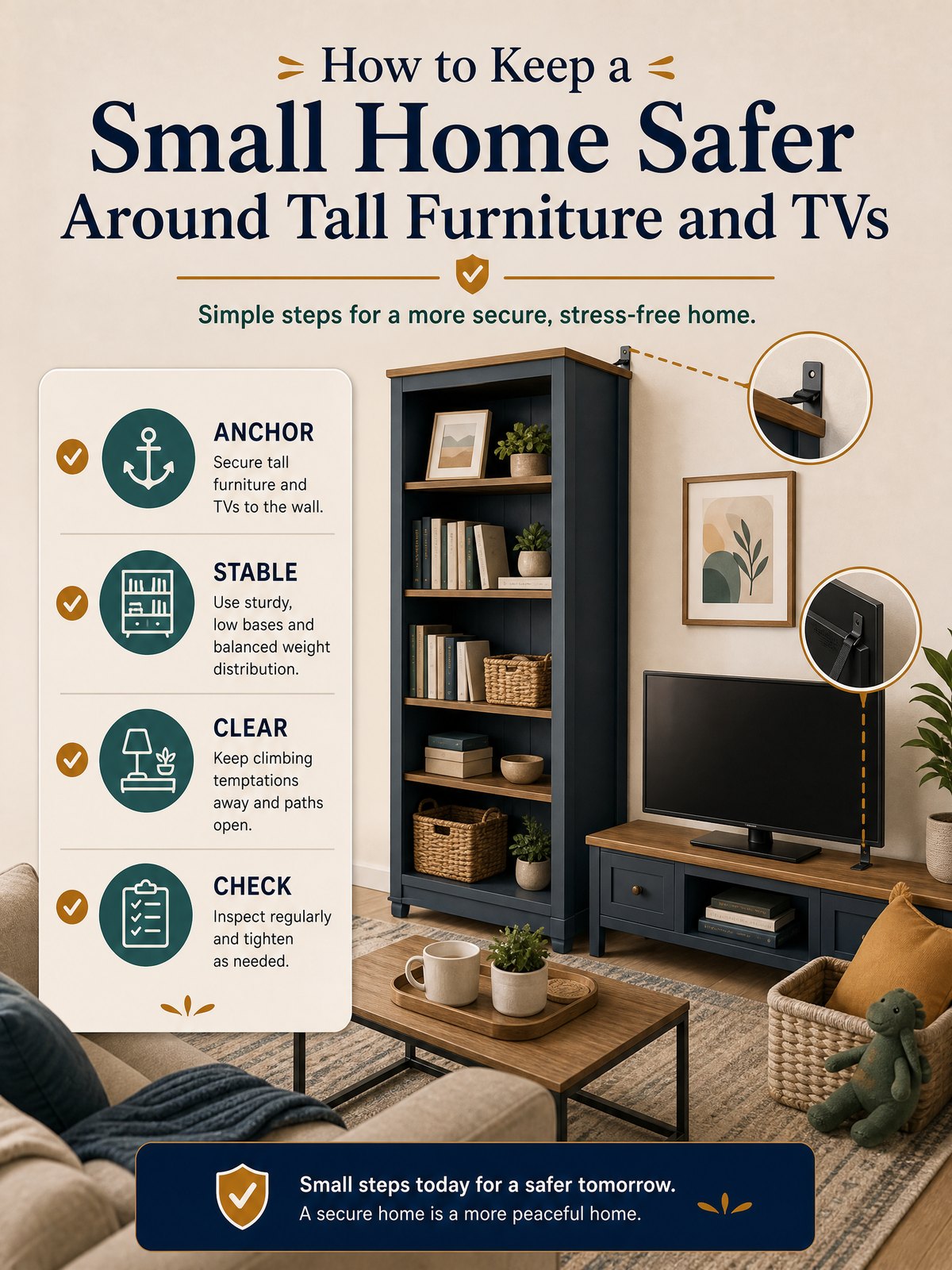
Tall dressers, bookcases, and flat-screen TVs are common in small homes, but they can tip if not placed or secured thoughtfully. Renters and small-space dwellers often need clear, practical steps they can use right away without assuming every piece of furniture must be permanently altered.
This article explains when anchoring is a recommended step, how to decide for your specific setup, and how to make straightforward, lease-friendly adjustments that reduce tip-over risk while following manufacturer and landlord rules.
Start with the real constraint
The most important constraint is that anchoring and wall work can conflict with your lease, your wall type, or the instructions that came with the furniture or TV. Before you pick tools or anchors, confirm whether the manufacturer advises specific fasteners and whether your lease allows drilling into walls. If you rent and your lease forbids permanent holes, discuss approved options with your landlord.
Another constraint is the variety of anchoring products and wall constructions. A solution that works on a wood-stud wall is not automatically appropriate for plaster, cinderblock, or metal-stud walls. Manufacturer instructions and product labels are the authoritative source for which fasteners to use; follow them and any local rules that apply.
At-a-glance plan
| Decision signal | Immediate action | Timing | Notes |
|---|---|---|---|
| Furniture taller than 27 inches or top-heavy | Plan to secure or reposition; remove climb-attracting items from top | Same day | Follow manufacturer instructions for your piece and check lease rules |
| TV on a dresser or unsecured stand | Anchor TV to wall or use a low, dedicated TV stand that resists tipping | Within a few days | CPSC advises securing TVs where appropriate; use the TV maker’s guidance |
| Pets or children in home who climb | Remove toys or attractors from high surfaces and block access | Immediately | This reduces climbing temptations without wall modifications |
| Lease prohibits drilling or you lack proper anchors | Use freestanding, low-profile furniture or ask landlord for approved changes | Before installing hardware | Ask landlord to provide or approve anchors; document permissions in writing |
Build the system step by step
- Survey and prioritize: Walk your rooms and note any tall or top-heavy items and their proximity to where people sleep, play, or walk. Mark which items have manufacturer anchor kits included.
- Remove climb attractors: Take lamps, toys, houseplants, and remote controls off the tops of tall furniture to reduce temptation for children or pets to climb.
- Decide on anchoring method: Check the furniture and TV manuals for recommended anchor types; if you rent, check your lease and talk to the landlord before drilling.
- Choose placement and stability upgrades: If anchoring is not possible, relocate heavy items to lower surfaces, place furniture against a wall, and use nonpermanent stabilizers or anti-slip pads as a practical option.
- Install and test: Install anchors or stabilizers per manufacturer instructions or landlord-approved method, then gently test stability by applying moderate force to the top edge to ensure the piece resists tipping.
Following these steps creates a repeatable system: identify risk, reduce climbing incentives, select the appropriate method for your home and lease, and verify stability. Whenever you install hardware, rely on the product label and the furniture or TV manufacturer’s instructions for the specific fasteners and torque values recommended.
Trade-offs to consider
No single choice is perfect for every small home. Be explicit about what you gain and what you accept when picking a strategy.
- Anchoring to walls reduces tip-over risk but may require landlord permission or wall repairs later.
- Repositioning and removing attractors is immediate and noninvasive but may not be enough for very top-heavy setups.
- Using nonpermanent stabilizers avoids drilling, but some options are less secure than a manufacturer-recommended anchor; treat them as a practical option, not a guaranteed substitute.
Keep it workable
Make a quarterly check part of your routine: confirm anchors are tight, TV mounts are secure, and the tops of tall furniture remain free of tempting items. After any move, rearrangement, or repair, repeat the survey step and re-evaluate your decisions. If you ever change the furniture or TV, revisit the manufacturer’s instructions and adjust anchoring or placement accordingly.
FAQ
Do I have to anchor every tall dresser and bookshelf?
No—anchoring is not a one-size-fits-all rule. CPSC advises securing TVs and top-heavy furniture where appropriate and following manufacturer instructions. Use the decision signals above (height, top weight, household occupants) to determine when anchoring or other measures make sense.
What if my lease forbids drilling into walls?
If drilling is prohibited, discuss options with your landlord: they may permit specific anchors, install anchors themselves, or approve alternative stabilizers. As a practical option, move heavy items to lower furniture or against load-bearing walls and remove items that attract climbing.
How do I choose the right anchor hardware?
Start with the furniture or TV manufacturer’s instructions; they are the authoritative source for recommended fasteners. For walls, match anchors to the wall type (wood stud, plaster, block, metal stud) and verify compatibility. When in doubt, ask the landlord or a local professional and follow the product label and instructions.
Next steps: Walk each room and mark every tall item you own, then remove temptations from their tops right away. Use the table above to prioritize actions for items that need anchors, and check your lease before drilling.
Sources and fact-checking
This guide provides practical editorial guidance. Requirements and safe choices can depend on the product, lease, local rules, and individual situation.
- U.S. Consumer Product Safety Commission — Anchor It! — CPSC advises following manufacturer instructions, securing TVs and top-heavy furniture where appropriate, and keeping climb-attracting items away from the top of furniture.
Fact-checked against the linked official resources on August 27, 2026.