How to Do a Pre-Travel Apartment Reset Before You Leave for a Week
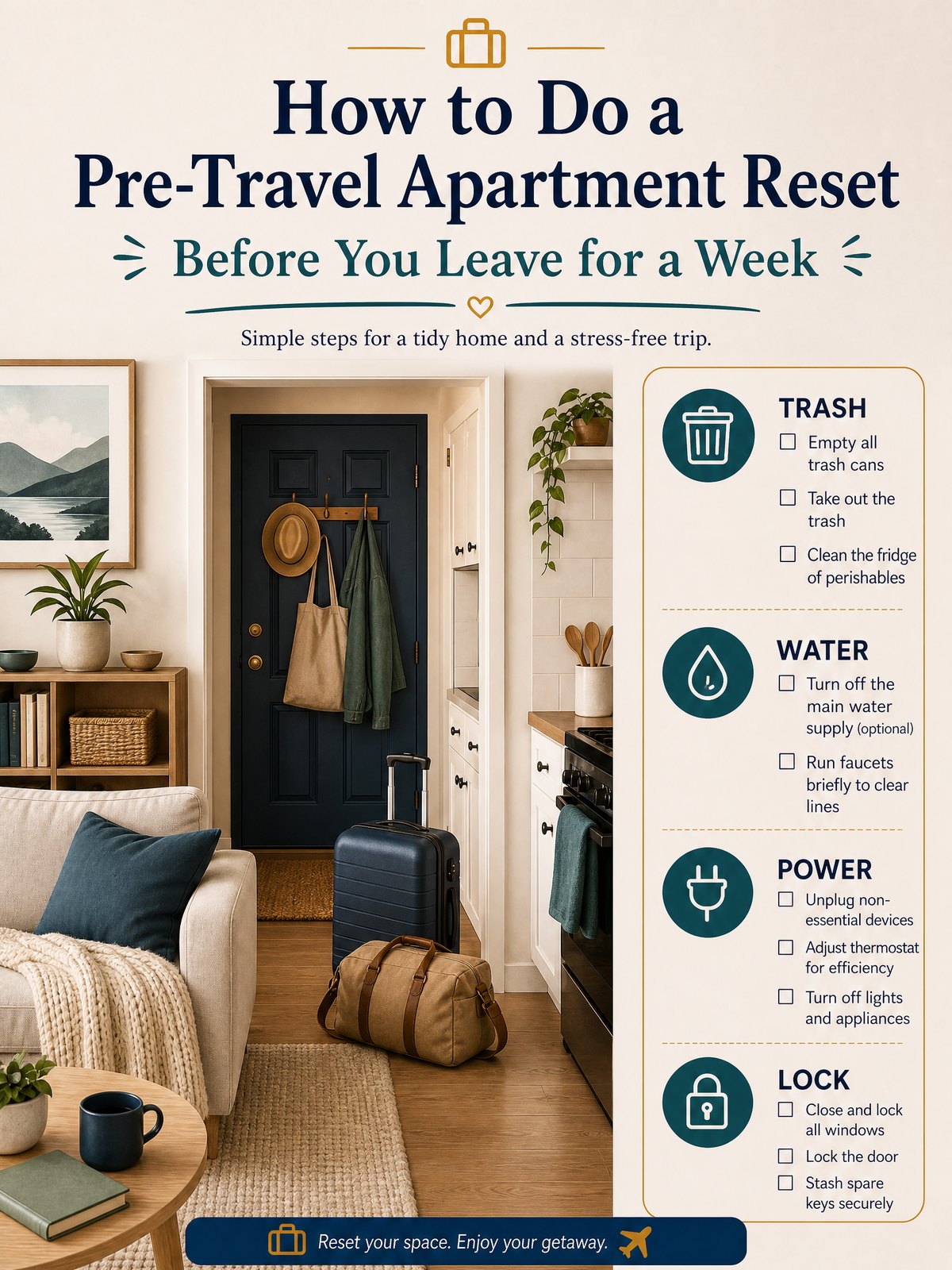
Leaving your apartment for a week should feel like pressing pause, not starting a puzzle when you return. A short pre-travel reset focuses on the things that cause the most mess, cost, or stress on return: perishables, important documents, basic cleaning, and a simple plan for getting back in smoothly.
This guide gives a compact, repeatable checklist and a short step-by-step routine you can complete in 20–40 minutes. It emphasizes decisions you can make now, points you should verify with official sources or your lease, and small habits that prevent a big cleanup later.
Start with the real constraint
The main constraint is time: you likely want to finish prepping quickly without overcommitting before a short trip. That means prioritizing a few actions that stop immediate problems (bad smells, pests, lost documents) and delaying lower-priority tasks you can do after you return.
Another constraint is what you can control as a renter: you can manage food, light cleaning, and what you lock up or archive, but you must follow your lease and building rules for things like garbage disposal, extended absence notice, or neighbor communication. When in doubt about rules, follow your lease or ask building management.
At-a-glance plan
| Task | Time | Decision signal | Quick tip |
|---|---|---|---|
| Check perishables | 8–12 minutes | Foods nearing spoilage or soft texture | Refer to the FoodSafety.gov cold storage chart for item-specific guidance. |
| Gather documents & meds | 3–6 minutes | Anything needed for emergencies or bill access | Follow Ready.gov advice to organize critical records in a secure, accessible place. |
| Quick clean & trash | 6–10 minutes | Exposed leftovers, trash, or damp towels | Empty trash and wipe food-contact surfaces; follow product labels for cleaning chemicals. |
| Return-home plan | 2–5 minutes | Who is checking mail, plants, or pet-sitters | Set a simple checklist for the first 30 minutes after return (ventilate, refrigeration check). |
Build the system step by step
- Open the fridge and remove anything you won’t eat within a week. Check textures and odors; if you’re unsure about safety, consult the FoodSafety.gov cold food storage chart (practical option: freeze portions you plan to keep if space and packaging allow).
- Collect essential documents and quick-access items: wallet, passport, keys, medications you need during travel, and copies of important household records. Store copies in a secure, accessible place and follow the Ready.gov suggestion to organize critical records for emergencies.
- Do a short targeted clean: take out the kitchen trash, scrape and rinse plates, wipe counters and sink, and hang damp towels to dry. Use cleaning products according to the manufacturer’s label and your building’s disposal rules.
- Secure the apartment: set timers for lights if you use them, lock windows and doors, and leave a minimal footprint visible from the hall. If your lease requires you to inform management about absences, follow the lease terms (question to verify locally: whether notification is required).
- Create a 30-minute return-home checklist (personal planning approach): ventilate, check refrigerated foods, run a quick floor tidy, and unpack perishables. Write this checklist where you’ll see it—on a phone note or a sticky near the door.
These steps are designed so each is short and focused. The food step points to FoodSafety.gov for item-specific storage times rather than asserting exact safe periods here. The documents step echoes Ready.gov’s recommendation to organize and safeguard critical records, which helps both routine returns and emergencies. Labeling some choices as practical options or personal approaches helps you adjust based on your apartment, how often you travel, and what your lease allows.
Trade-offs to consider
When you streamline a quick pre-travel reset you’ll choose small trade-offs between convenience and thoroughness. Pick what matters to you and what you can reliably do before every trip.
- Spend 10 extra minutes to deep-clean the fridge now vs. do a more complete clean only if you notice odors after returning (practical option).
- Pack and freeze extra meals before leaving vs. throw away partially used perishables to reduce risk of spoilage (personal planning approach).
- Tell a neighbor or building management you’ll be away for safety vs. avoid extra notices if the lease doesn’t require it (question to verify locally).
Keep it workable
Make the routine reliably short so you do it before most trips: aim for a 20–40 minute window. Keep a reusable grocery bag near the fridge for perishables you plan to remove, a small folder for copies of documents, and a sticky-note template for the 30-minute return checklist. These small physical systems reduce decision fatigue and make the reset repeatable.
FAQ
What exactly should I toss from the fridge?
Use the FoodSafety.gov cold food storage chart for item-specific guidance; for a practical approach, toss foods that smell off, show mold, or are soft and slimy. When you’re unsure, freezing portions is a practical option if properly packaged; otherwise remove them before you go.
How do I protect important papers while I’m away?
Follow Ready.gov’s advice to organize critical household, insurance, financial, and medical records and keep them in a secure, accessible location. Consider photocopies or encrypted digital photos for travel; for additional security, verify any storage choices against your personal risk profile (personal planning approach).
Should I tell my landlord or building management I’ll be gone?
Check your lease first and follow any notification rules it contains. If your lease doesn’t require notification, telling building management or a trusted neighbor is a personal option for added security or if there are building-specific concerns (question to verify locally).
Before you leave, pick one small checklist and follow it this trip so the routine becomes habit. When you return, use your 30-minute plan to spot problems quickly and avoid a longer cleanup.
Sources and fact-checking
This guide provides practical editorial guidance. Requirements and safe choices can depend on the product, lease, local rules, and individual situation.
- FoodSafety.gov — Cold Food Storage Chart — FoodSafety.gov provides food-specific refrigerator and freezer storage guidance and directs readers to use the official chart for details.
- Ready.gov — Financial Preparedness — Ready.gov advises organizing critical household, insurance, financial, and medical records before an emergency and safeguarding them in a secure accessible location.
Fact-checked against the linked official resources on August 27, 2026.