The Renter-Friendly Apartment Reset Before a Landlord Visit
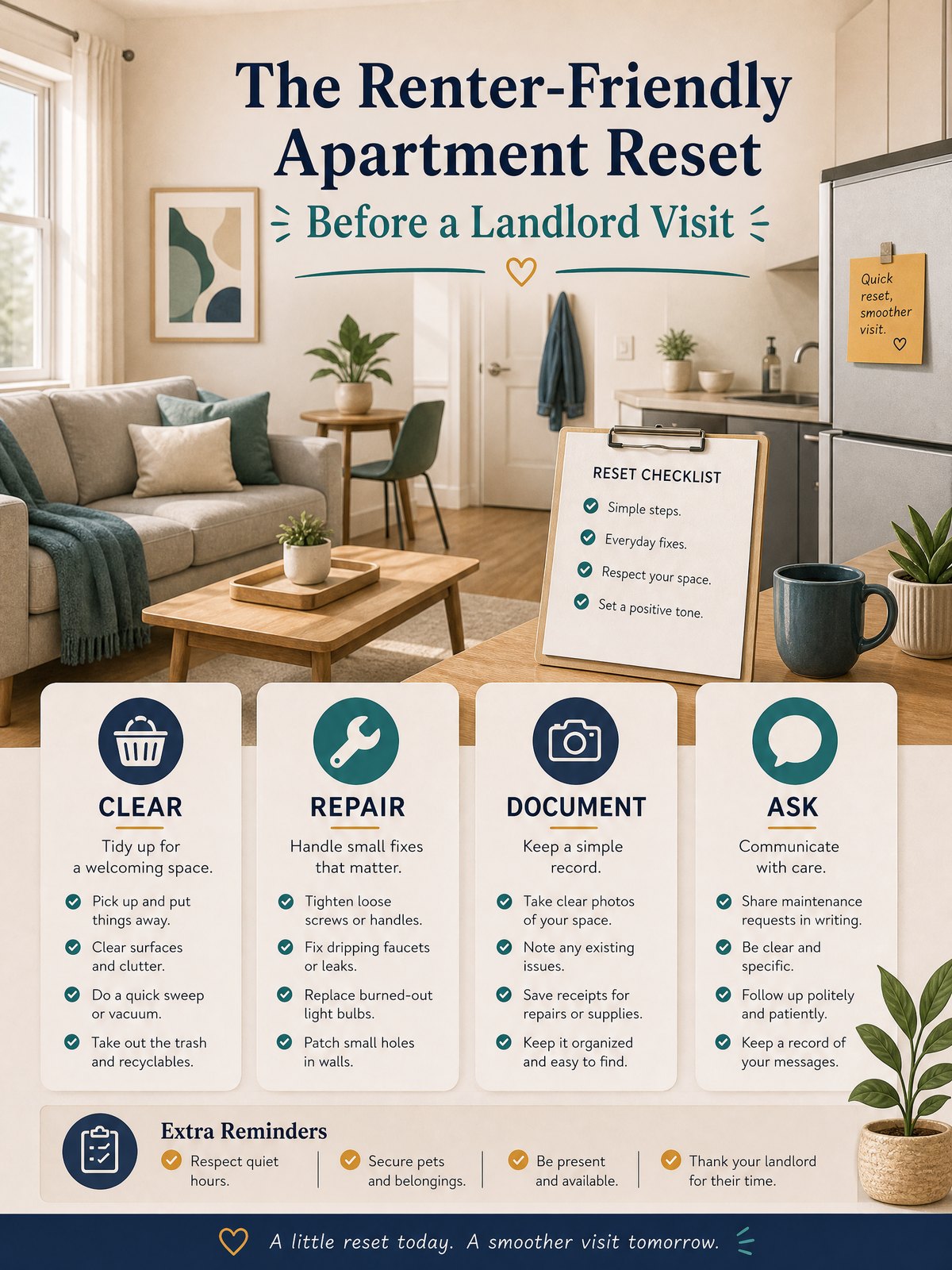
You expect a landlord visit to be quick but mentally heavy: the walk-through, a repair check, or a routine inspection. A focused apartment reset reduces stress, keeps you in good standing with your lease, and makes it easier to handle any immediate requests.
This guide gives a renter-friendly routine you can do in 30–60 minutes to tidy visible surfaces, store potentially hazardous items safely, and leave clear access to the areas a landlord or maintenance team will likely need to see. When the plan touches your lease, product labels, or local rules, follow those sources first.
Start with the real constraint
The main constraint in a landlord visit is time and access: inspections are usually brief, and landlords or contractors need clear, unobstructed access to walls, utility panels, appliances, and HVAC filters. A full deep clean is rarely required for a routine visit; prioritizing visible order and safe placement of items makes the most impact fast.
Also consider liability and safety: some common products need special disposal or handling. The U.S. Environmental Protection Agency notes that items like paints, cleaners, oils, batteries, and pesticides can require special disposal care, and advises following product labels and local collection guidance. Follow those official instructions rather than improvising disposal during a reset.
At-a-glance plan
| Task | Time | Decision signal |
|---|---|---|
| Surface tidy: counters, living-room clutter, quick vacuum | 15–20 minutes | Visible clutter or crumbs; surfaces feel sticky |
| Store or secure chemicals and tools | 5–10 minutes | Any loose paints, spray bottles, batteries, or solvents present |
| Clear access points: utility panels, appliance doors, HVAC filters | 5 minutes | Furniture or boxes blocking access or cords across doorways |
| Finishing touches: wipe visible smudges, empty small trash, lock windows | 5–10 minutes | Fingerprints, overflowing trash, or open windows |
Build the system step by step
- Start with a 5-minute walk-through: open every main door and glance at countertops, entryway, and any storage near HVAC or meters. Mark three priority spots to handle first. This quick scan prevents wasted effort on low-visibility areas.
- Tidy high-impact surfaces: put away dishes, stack magazines, fold one blanket, and clear shoes from the entry. Use a basket to collect small items you can temporarily stow in a closet or under a bed.
- Secure hazardous or messy items: group paints, solvents, batteries, pesticides, and large cleaning chemicals in a box and put them in a locked or high cabinet. If you need to dispose of any, follow the product label and local collection guidance as the EPA advises.
- Create clear access paths: move a chair, untangle cords, and open closets that contain meters or filters. If an appliance panel or HVAC filter is likely to be inspected, make that area instantly reachable—this is a practical option to consider based on your layout.
- Do a quick surface clean as needed: wipe counters and door handles; vacuum or sweep visible crumbs. The U.S. Centers for Disease Control and Prevention distinguishes cleaning with soap and water from disinfecting and notes that cleaning alone is sufficient in most situations unless illness-related circumstances make disinfection appropriate.
These steps create a repeatable mini-routine you can run 30–60 minutes before a scheduled visit. If you live with roommates or family, agree on who handles the entry and utility-access areas as a personal planning approach so nothing gets overlooked.
Trade-offs to consider
A fast reset means prioritizing what a landlord sees and what could cause immediate safety or lease issues; that necessarily leaves lower-priority tasks for another day.
- Speed vs. depth: A 30-minute reset will look tidy but won’t match a full deep clean; schedule deeper cleaning separately.
- Visibility vs. storage: Using a basket to hide clutter is practical, but avoid storing others’ belongings in ways that violate your lease — verify rules if unsure.
- Immediate disposal vs. proper disposal: Don’t rush to throw away hazardous materials; follow labels and local collection guidance per EPA recommendations.
Keep it workable
Make the reset sustainable by keeping one small basket, a pack of multipurpose wipes, and a designated box for hazardous items near your cleaning zone. After each reset, return the basket items to permanent homes within 48–72 hours as a personal planning approach so the temporary solution doesn’t become clutter.
FAQ
How clean does the apartment need to be for a routine inspection?
Prioritize visible surfaces, clear access to utilities and appliances, and safe storage of chemicals; a tidy, unobstructed space addresses most landlord concerns. Follow any specific expectations written in your lease.
Should I disinfect surfaces before a landlord visit?
The CDC distinguishes cleaning with soap and water from disinfecting and says cleaning alone is sufficient in most situations unless illness-related circumstances make disinfection appropriate. Disinfect only when warranted and per product instructions.
What if I need to dispose of paints or batteries quickly?
Do not put such items in regular trash without checking product labels and local rules; the EPA notes many household products need special disposal and advises following labels and local collection guidance.
Next, pick one 30-minute window this week to run the reset once so it feels natural before the next scheduled visit. If you share the unit, let others know the short checklist and which areas you’ll prioritize.
Sources and fact-checking
This guide provides practical editorial guidance. Requirements and safe choices can depend on the product, lease, local rules, and individual situation.
- U.S. Centers for Disease Control and Prevention — Cleaning and Disinfecting — CDC distinguishes cleaning with soap and water from disinfecting, and says cleaning alone is sufficient in most situations unless illness-related circumstances make disinfection appropriate.
- U.S. Environmental Protection Agency — Household Hazardous Waste — EPA notes that products such as paints, cleaners, oils, batteries, and pesticides can need special disposal care, and advises following labels and local collection guidance.
Fact-checked against the linked official resources on August 27, 2026.