
A Renter’s Seasonal Storage Plan for Coats, Linens, and Holiday Items
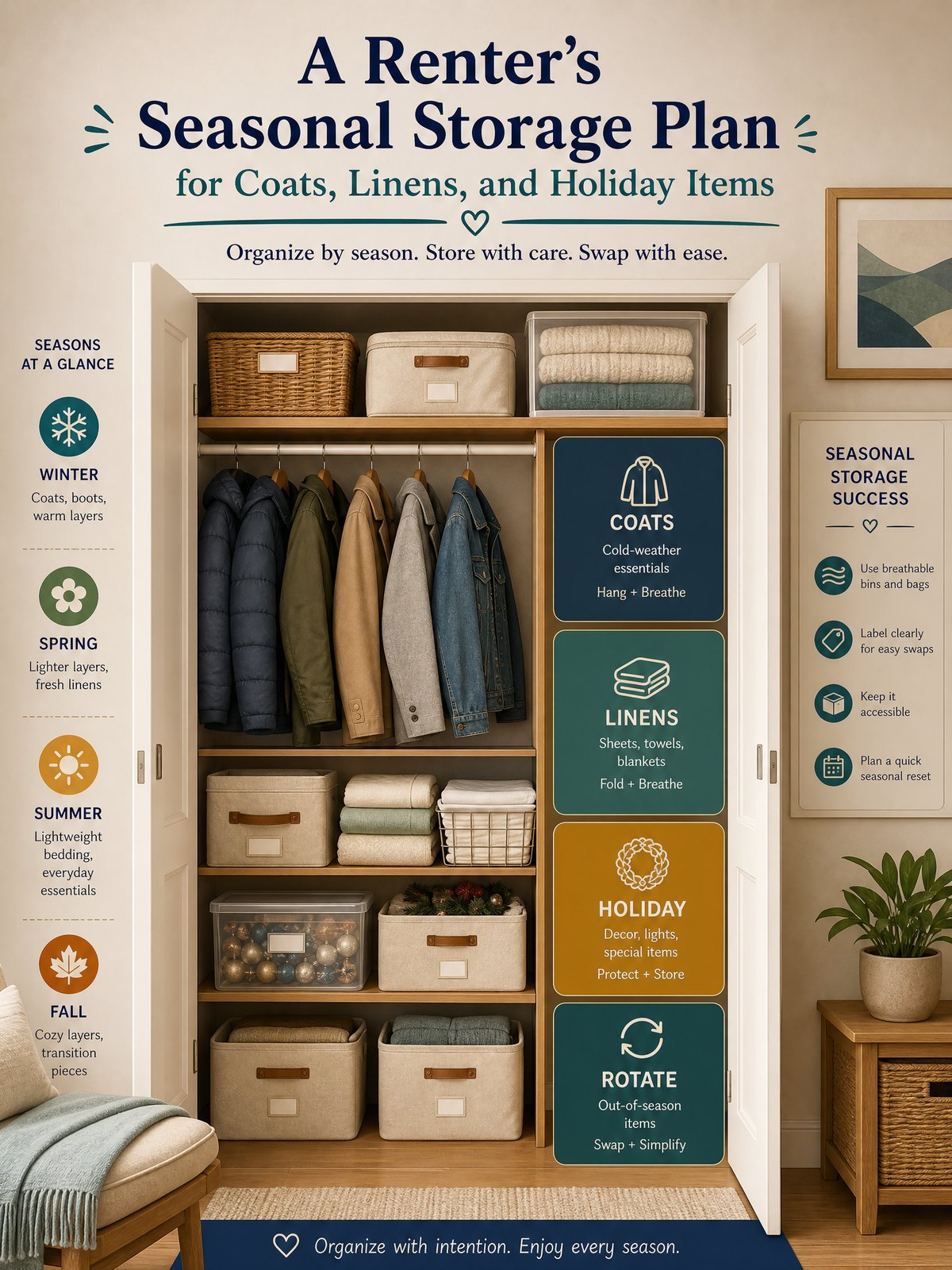
Renters often juggle limited closet depth, a single coat hook, and high shelves that are hard to reach. That makes seasonal swaps for coats, bulk bedding, and holiday boxes feel like a series of awkward compromises.
This guide gives a compact rotation map you can follow in any small rental: where to keep active items, where to hold what’s dormant, and how to move things without overloading high shelves or blocking exits. You’ll get a simple decision routine to keep the front door clear and the heaviest items low.
Start with the real constraint
The physical constraints that shape a renter’s seasonal storage plan are usually vertical reach, clear egress, and limited permanent fixtures. High shelves are tempting because they look like unused space, but they’re often unstable for frequent handling and can make reaching or shifting heavy bags unsafe. As a personal planning approach, prioritize keeping the heaviest boxes within easy reach and save top shelves for items you access rarely.
Another practical constraint is lease language or landlord policy about hardware and alterations. Before adding permanent hooks or anchors, check your lease and the appliance or furniture instructions. For safety measures that touch furniture stability, follow manufacturer instructions and any landlord requirements. The U.S. Consumer Product Safety Commission also advises securing TVs and top-heavy furniture where appropriate and keeping climb-attracting items away from the top of furniture; verify how that applies in your rental.
At-a-glance plan
| Item group | Primary storage location | Swap timing | Decision signal |
|---|---|---|---|
| Coats and outerwear | Low-level hooks or single-row closet rod at shoulder height | Rotate at first sustained temperature change (about 2 weeks) | Consistent daily use drops below three times per week |
| Everyday linens (towels, day sheets) | Accessible linen drawer or front of shelving unit, middle shelf | Swap at season start and mid-season check | Storage drawer becomes crowded or items feel out of season |
| Bulky seasonal bedding (duvet, heavy comforter) | Low stackable bin under bed or narrow wheeled tote at chest height | Store after last use in late spring, retrieve in mid-fall | Nighttime bedroom temperature consistently requires extra layers |
| Holiday decor and ornaments | Clear-lid box on top shelf only if light; otherwise labeled under-bed tote | Bring down two weeks before holiday; pack within one week after | Calendar trigger or storage space pressure in main living area |
Build the system step by step
- Measure and map reachable zones: mark shelves and floor areas you can reach without a step stool, and separately mark areas reachable only with a stool or assistance.
- Assign items by weight and frequency: keep daily-use and heavy items in the low, reachable zone; reserve high shelves for lightweight, rarely touched items.
- Create labeled, uniform containers: use clear or consistently labeled bins so you can see contents quickly; limit top-shelf boxes to one slim dimension to avoid stacks that topple.
- Set a seasonal swap day: pick a weekend or two evening slots each season to rotate; use a short checklist to swap coats, bedding, and holiday boxes in the same session.
- Establish a quick-entry rule for exits: nothing should be stored where it could block or slow your path to the door; check the route when you finish a swap.
Follow the list in sequence: first map what you can safely reach, then move weight down and frequency up. If you cannot add fixtures because of your lease, use freestanding racks or non-permanent hooks designed for renters. When in doubt about securing furniture or performing fastener work, follow the product label, manufacturer instructions, and any building or landlord rules.
Trade-offs to consider
No single plan fits every small rental; the choices below reflect common trade-offs between convenience, space use, and safety.
- Reach vs. space: keeping items low improves safety but can use valuable floor or under-bed area.
- Visibility vs. protection: clear bins make contents obvious but can expose fragile holiday decor to light; opaque boxes protect but hide contents, so label carefully.
- Speed vs. permanence: quick clips and removable hooks are tenant-friendly but may shift more than anchored hardware.
Keep it workable
Make the rotation small and repeatable: a 30–60 minute seasonal session is easier to sustain than a single, all-day overhaul. Keep a short checklist taped inside a cabinet door (coat swap, bedding swap, holiday bin check) and treat the list like an appointment. Reevaluate once per season; if a box is repeatedly unused, consider donating or moving it to long-term offsite storage as a personal planning approach rather than keeping it in your rental.
FAQ
How do I avoid overloading a high shelf?
Limit top shelves to lightweight, infrequently used items and store heavier objects at shoulder height or below. As a safety habit, test a packed shelf with one bin before stacking multiple boxes; follow any landlord or product guidance when installing shelving or anchors.
Where should I keep winter coats if my closet is tiny?
Use a slim freestanding rack in a corner, a low wall-mounted rail at shoulder height, or under-bed hanging organizers for off-season coats. These are practical options that avoid stacking on top shelves and keep jackets accessible without blocking walkways.
How can I make holiday storage easy to pull down without a ladder?
Keep holiday bins either under the bed or on a middle shelf of a closet; use clear containers and attach a short inventory list to the lid so you can decide quickly which box to pull. If you must use a step stool, place it on stable flooring and keep the lightest boxes up top.
Start by mapping reachable zones and setting one seasonal swap day on your calendar. After the first rotation you’ll have a working pattern you can simplify each year.
Sources and fact-checking
This guide provides practical editorial guidance. Requirements and safe choices can depend on the product, lease, local rules, and individual situation.
- U.S. Consumer Product Safety Commission — Anchor It! — CPSC advises following manufacturer instructions, securing TVs and top-heavy furniture where appropriate, and keeping climb-attracting items away from the top of furniture.
Fact-checked against the linked official resources on August 27, 2026.