How to Store Household Batteries Safely in a Small Apartment
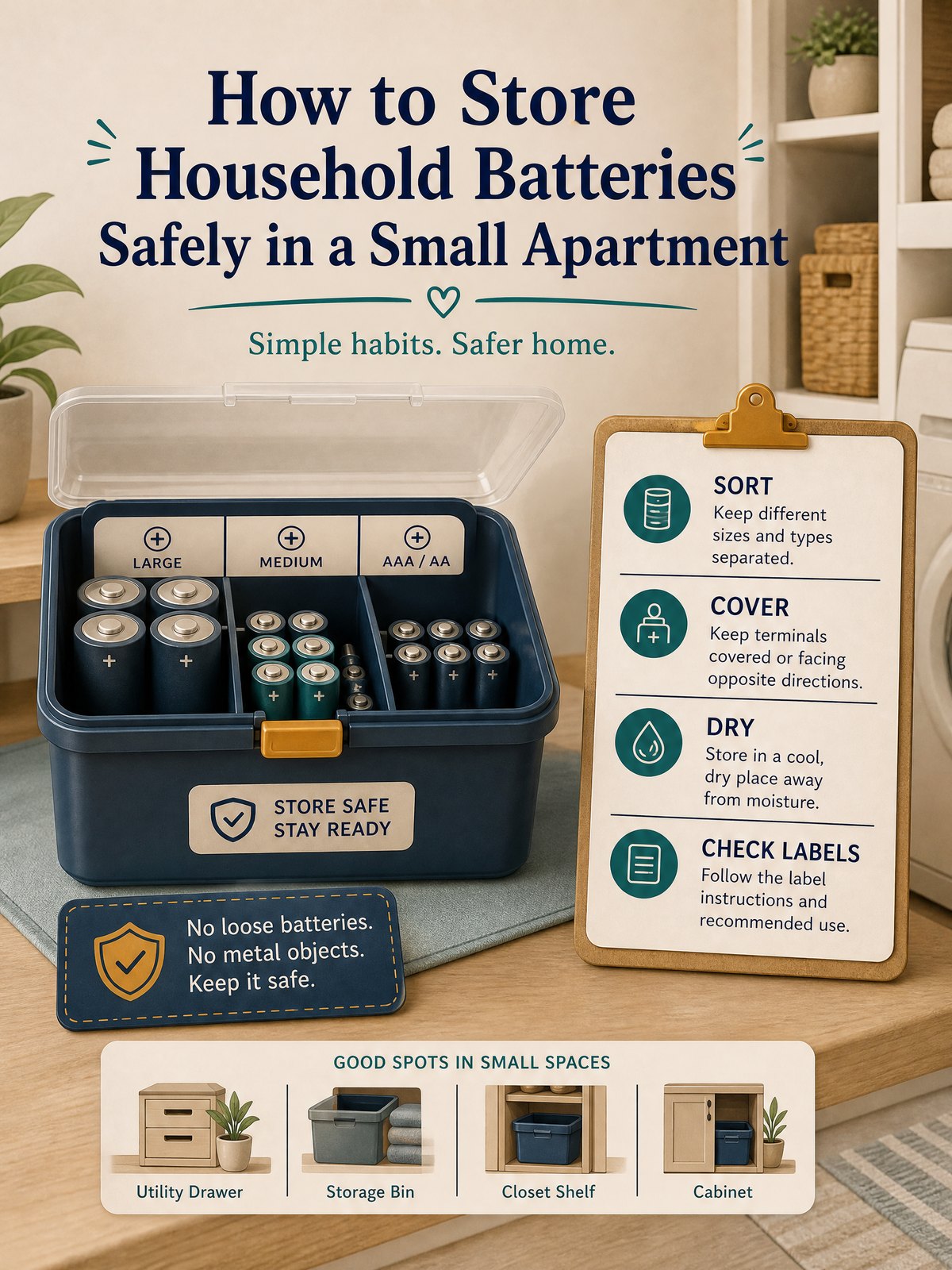
Small apartments mean small storage options — and household batteries quickly accumulate in drawers, junk baskets, or on top of the fridge. Left unorganized, they make finding the right battery harder and can complicate safe handling or disposal when the cells are spent.
This article shows a compact, renter-friendly system: label what you have, keep cells from contacting each other, and use local disposal guidance when batteries are ready to leave your apartment. The steps below are practical options you can adapt to your lease, product labels, and municipal rules.
Start with the real constraint
The real constraint for most renters is threefold: limited square footage, often no dedicated storage room, and rules in leases or building policies that may limit where you can keep potentially hazardous items. Before you design a system, check your lease and any building guidance about storing household products; follow product labels and manufacturer instructions when they exist.
Another constraint is how you’ll remove batteries from the apartment when they’re spent. The U.S. Environmental Protection Agency notes that “products such as paints, cleaners, oils, batteries, and pesticides can need special disposal care, and advises following labels and local collection guidance.” Use that as your starting point for disposal planning and note where your local collection points are.
Finally, living in a small space means your battery system must be compact and visible so it doesn’t become forgotten clutter. That visibility also helps prevent accidental mixing of spent and working batteries — a practical option is to keep active and used batteries separate and clearly marked.
At-a-glance plan
| Step | Action | When / Decision signal |
|---|---|---|
| 1 | Designate one small, fire-safe container for new/working batteries and another for spent batteries. | Now — choose containers that fit in a closet or cabinet and have lids. |
| 2 | Label containers and mark spent batteries (practical option: use tape or a permanent pen on terminals). | Ongoing — label when you set up and mark batteries as you remove them from devices. |
| 3 | Store different battery chemistries separately and avoid loose metal contact points (personal planning approach). | When adding different types — if unsure, keep them separated immediately. |
| 4 | Plan a regular disposal trip or drop-off using local collection guidance and product labels. | Monthly or quarterly — or when the spent-battery container reaches a preset level. |
Build the system step by step
- Choose compact containers: pick two small, lidded boxes or clear bins that fit a shelf or the back of a closet and can be kept away from heat sources. A practical option is to use rigid plastic bins with tight lids.
- Sort and label: keep fresh/unused batteries in one bin and spent batteries in another; label each with a clear sticker or permanent marker so anyone in your household can tell which is which.
- Prevent contact: as a personal planning approach, tape or cover the terminals of loose lithium or other high-capacity cells with nonconductive tape, and keep each chemistry type separated.
- Set a pickup or drop-off habit: identify your municipal or retail collection points and pick a schedule — for example, once a month or when the spent bin is half full — and write that schedule on the bin as a reminder.
- Document exceptions: if you have specialty items like button cells or rechargeable packs with manufacturer return programs, label them separately and include return instructions in a small envelope attached to the bin.
These steps create a simple, compact flow: new batteries go into the working bin; when removed from a device, put them in the spent bin and mark them; once the spent bin reaches the level you set, take the contents to the planned collection point. Always follow product labels, manufacturer instructions, and any building or municipal rules.
Trade-offs to consider
There’s no single perfect solution in small apartments; each choice balances space, convenience, and how strictly you want to separate chemistries.
- Space vs. separation: keeping chemistries strictly separated reduces confusion but takes more shelf space; mixing short-term (AA/AAA) types saves room but is a practical option only if you mark batteries clearly.
- Convenience vs. frequency of trips: making frequent small trips to a drop-off point reduces storage needs but costs more time; scheduling quarterly trips saves time but requires more temporary storage space.
- Visibility vs. aesthetics: placing bins in plain sight reminds you to dispose of batteries promptly but can look untidy; storing them inside a labeled cabinet hides them but requires a visible sign on the cabinet to avoid forgetting.
Keep it workable
Pick a maintenance rhythm that fits your life: add a reminder to your calendar the day after trash day or the first weekend of each month to check the spent-battery bin. When you remove batteries from devices, make marking and depositing them a one-step habit so the system doesn’t require weekly overhauls. Always verify any building-specific storage limits with your lease or property manager before storing quantities that the lease might restrict.
FAQ
How should I mark spent batteries?
A practical option is to mark spent batteries with a strip of nonconductive tape or a quick dot of permanent marker on the battery casing; the main goal is a clear, consistent visual sign so spent cells don’t get returned to device compartments by mistake. Follow manufacturer guidance if it differs.
Can I keep batteries in a kitchen drawer or near heat?
It’s better to avoid storing batteries near heat sources or open flame; consider a cool, dry cabinet away from direct sunlight. Check your lease and product labels for any specific storage warnings and follow those instructions.
How do I find the right place to drop off spent batteries?
Use your city or county waste website, local recycling centers, or retail take-back programs as a starting point, and follow the U.S. Environmental Protection Agency’s guidance that products such as batteries can need special disposal care and to follow local collection guidance and product labels.
Put the next step on your calendar: choose your two containers and label them tonight, then check local battery drop-off options online this week. Keep your system simple and follow product labels and local rules when disposing of batteries.
Sources and fact-checking
This guide provides practical editorial guidance. Requirements and safe choices can depend on the product, lease, local rules, and individual situation.
- U.S. Environmental Protection Agency — Household Hazardous Waste — EPA notes that products such as paints, cleaners, oils, batteries, and pesticides can need special disposal care, and advises following labels and local collection guidance.
Fact-checked against the linked official resources on August 27, 2026.