A Renter-Friendly Home Inventory for Everyday Belongings
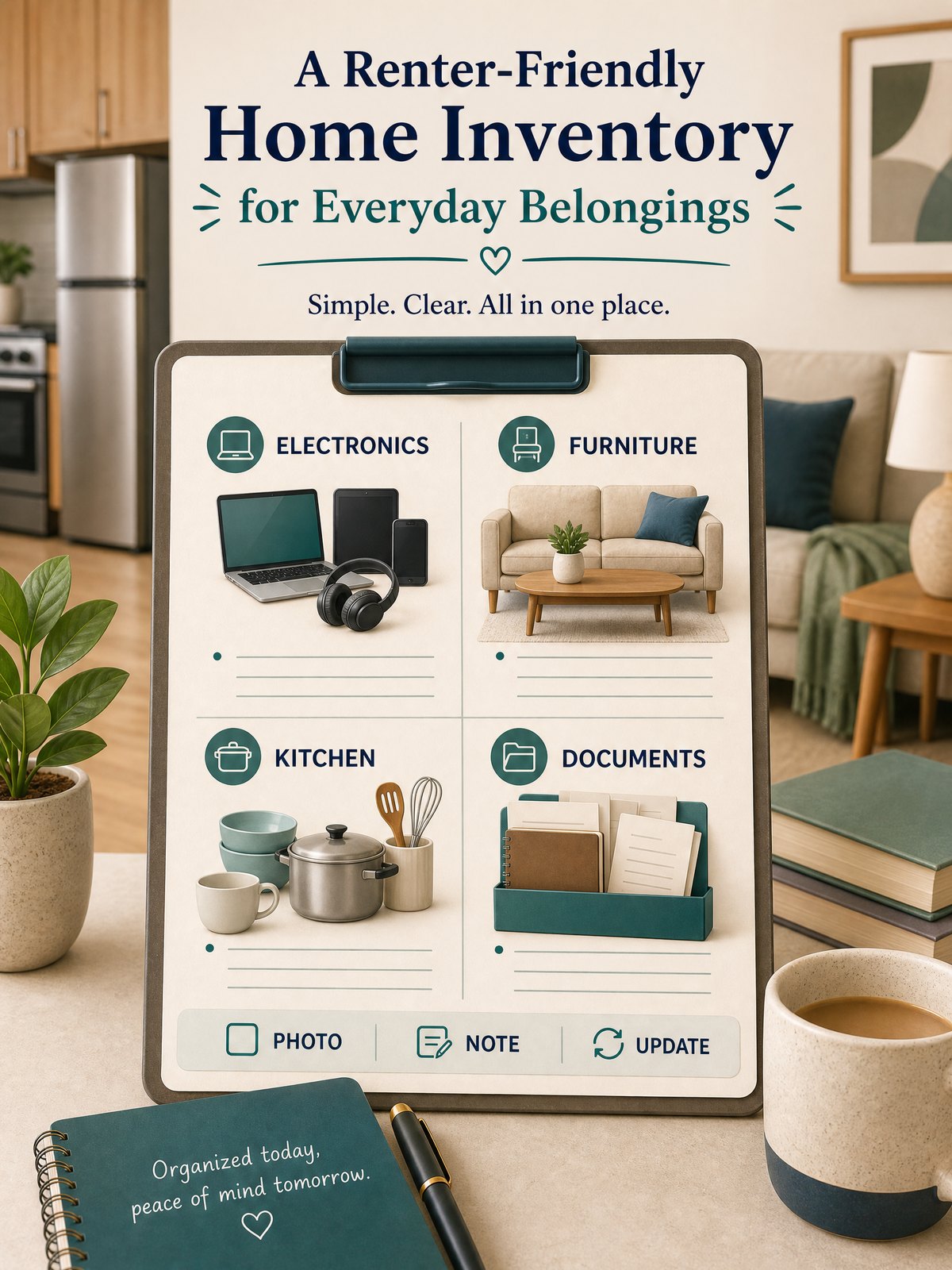
As a renter you probably don’t need a museum-grade inventory, but you do need a simple, flexible record of the things that matter: major purchases, receipts, and the contacts you’ll want if a repair or loss happens. Without a short, updated inventory these items can be hard to value, replace, or access quickly.
This article shows a renter-friendly, low-effort system that balances portability, privacy, and upkeep. You’ll finish with a clear list of what to track, where to keep it, and how to update it in under an hour of initial work and a few minutes each month.
Start with the real constraint
Rented homes often mean limited storage, rules about modifications, and frequent moves. That reality makes a lightweight, portable inventory more useful than a detailed trunk of paper files. Ready.gov advises organizing critical household, insurance, financial, and medical records before an emergency and safeguarding them in a secure accessible location.
The steps below are offered as practical options and personal planning approaches for renters; always check your lease, product labels, manufacturer instructions, and local authority rules before taking actions that could affect your tenancy or safety. Design the inventory so it fits in a small digital folder or one slim physical binder that you can take with you.
At-a-glance plan
| Category | What to record | When to do it | Portable storage options |
|---|---|---|---|
| Major furniture & appliances | Item, photo, condition note, purchase date, proof of purchase (practical option) | On move-in and when you buy or sell big items | Cloud folder + one PDF backup on phone or a slim binder with photos |
| Electronics & serial numbers | Make/model, serial, serial photo, original receipt (personal planning approach) | When you set up the device or on receipt arrival | Password-protected cloud note and a printed page in a fire-safe envelope |
| Important records & paperwork | Lease copy, insurance info, warranties, recent receipts, bank contact (practical option) | At lease start, with major purchases, and annually | Encrypted cloud storage, plus one printed copy stored with a trusted person |
| Emergency and service contacts | Landlord/property manager, utilities, preferred repair people, insurance agent | Upon move-in and update after any change | Phone contacts list, printed list in binder, and a shareable digital contact card |
Build the system step by step
- Do a 20–30 minute sweep: walk each room and photograph the largest and most valuable items (practical option). Keep images simple—one photo per item face and one wide room shot.
- Collect paperwork: gather receipts, warranty cards, the lease, and insurance contact details. Scan or photograph each document so you have a readable digital copy (personal planning approach).
- Create a single index file: in a spreadsheet or note app record item name, location, date, and where the proof lives (cloud folder name, binder page). Use short clear labels for quick search.
- Secure and share selectively: put copies of critical records in encrypted cloud storage or a passworded folder on your phone; give one trusted person access instructions in case you are unavailable (practical option).
- Set a cadence: schedule a five-minute monthly check to add recent receipts and a 15-minute quarterly review to update contacts and major changes (personal planning approach).
These five steps create a minimal system you can complete in one weekend and maintain in minutes. Every element can be adapted: use only digital tools, only paper, or a hybrid—choose what fits your phone, available storage, and comfort with sharing digital files.
Trade-offs to consider
No single approach is perfect; pick the balance that fits your space, privacy concerns, and how likely you are to move.
- Convenience vs. privacy: cloud storage is convenient for access but requires password hygiene and may feel riskier than a locked physical folder (practical option).
- Detail vs. time spent: a quick photo and one-line note saves time but gives less replacement detail than a full serial-number inventory (personal planning approach).
- Portability vs. permanence: a slim binder is easy to hand to an agent, while digital copies are easy to back up; consider both if you want redundancy (practical option).
Keep it workable
Make upkeep feel like a tiny, regular habit. Put a repeating monthly reminder on your phone to add receipts and check contacts. After any move, major purchase, or lease change, spend 15–30 minutes updating the index and backing up the folder. If storing anything in shared cloud accounts, rotate passwords and confirm who has access at least once a year. If a recommendation touches your lease or safety, follow your lease, product label, manufacturer instruction, or local authority as appropriate.
FAQ
How long does the initial inventory take?
Expect one to three hours the first time, depending on how many large items you have and whether you scan receipts; the process can be shortened by focusing only on major items and critical records (practical option).
Should I include serial numbers and receipts?
Including serial numbers and receipts makes replacement or insurance conversations smoother, but if you prefer a lower-effort approach, track only the largest items and high-value purchases as a starting point (personal planning approach).
Do I need landlord permission to photograph inside my rental?
Generally you can photograph your own rented space and possessions, but check your lease for clauses about alterations or shared property and follow any landlord instructions; when in doubt, ask your property manager (question to verify locally).
Next, pick one room and do the 20–30 minute sweep today to create momentum. Keep the system small and portable so it moves with you when leases change.
Sources and fact-checking
This guide provides practical editorial guidance. Requirements and safe choices can depend on the product, lease, local rules, and individual situation.
- Ready.gov — Financial Preparedness — Ready.gov advises organizing critical household, insurance, financial, and medical records before an emergency and safeguarding them in a secure accessible location.
Fact-checked against the linked official resources on August 27, 2026.