Under-Bed Storage: What to Store, What to Avoid, and How to Keep It Useful
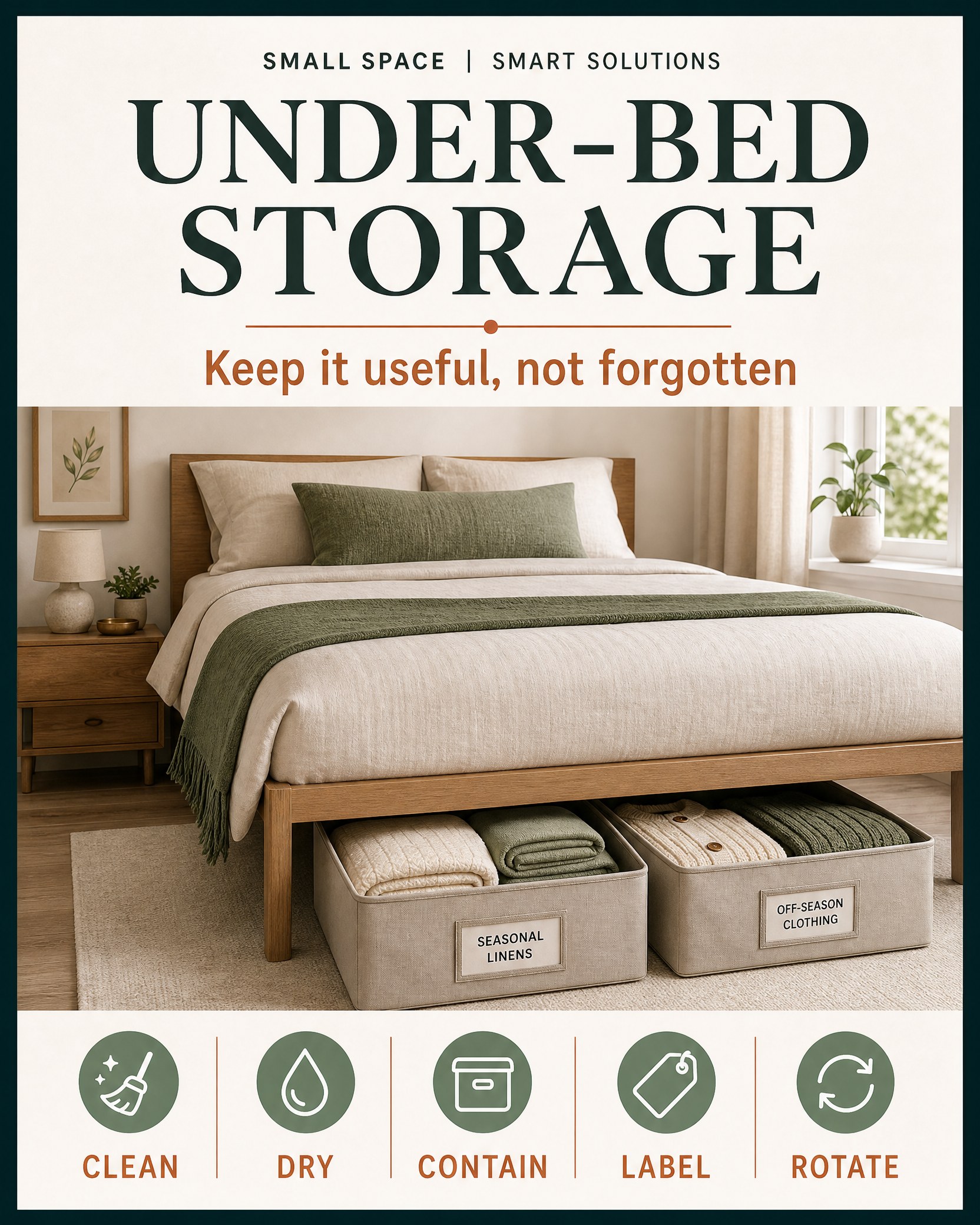
Under-bed space is one of the easiest ways to add storage in a small rental or compact apartment. You want to free up closet and floor space without creating a mess you can’t maintain or access. This guide explains what belongs under your bed, what to leave out, and how to keep that stash useful over time.
Start by deciding how often you need each item. Then apply five practical checks — clean, dry, contain, label, rotate — plus a simple access-frequency test to make sure the items you tuck under your bed actually help, not hinder, daily life.
Do the access-frequency test
Grab a sheet of paper and list items you’re thinking about storing under your bed. For each item, note how often you use it: daily, weekly, monthly, seasonally, or rarely. If you need something more than once a month, it should be easy to reach. If something is seasonal or rarely used, under-bed can be perfect.
Practical rule of thumb: use under-bed for items you use monthly or less unless you plan for a rolling or pull-out solution that makes access simple.
What to store under the bed
- Seasonal clothing and shoes in breathable, sealed containers
- Spare bedding, extra pillows, and blankets if they are clean and dry
- Out-of-season luggage or rarely used travel gear
- Small storage bins with off-season decorations, craft supplies, or paperwork you rarely need
- Flat items like photo boxes, portfolios, and slim storage boxes
What to avoid storing
- Anything that will be damaged by humidity or dust such as certain kinds of electronics, important paper that must remain in perfect condition, or fresh produce
- Items you need weekly or daily unless you have a drawer-style under-bed system
- Heavy, awkwardly shaped items that make retrieval difficult and risk damaging your floor or bed frame
- Anything that poses odor or pest risks if left in fabric bags for months
Containers and containment
Containment keeps under-bed storage tidy and protects contents. Choose containers sized to your clearance and the item. Clear bins help with visibility; opaque bins protect sensitive items from light. Soft-sided bags are fine for bedding, but they must still pass the clean and dry checks.
Quick measurement tip
Measure from floor to underside of mattress, then subtract an inch or two to allow easy sliding. That measurement determines which containers will actually fit.
At-a-glance reference
| Item | Best Container Type | Access Frequency | Notes |
|---|---|---|---|
| Winter coat | Breathable fabric bag or cotton storage box | Seasonal | Clean before storing to avoid odors or pests |
| Extra sheets | Plastic bin with lid or vacuum-seal bag | Monthly to seasonal | Keep dry and folded to save space |
| Luggage | Hard shell or soft duffel stored nested | Rarely | Store empty to prevent odor buildup |
| Sentimental boxes | Shallow archival-style box | Rarely | Label clearly; check for moisture annually |
Keep it clean and dry
Before anything goes under the bed, run the clean and dry checks. Wipe the floor and vacuum under the bed to remove dust. Launder clothes and wash bedding; make sure everything is completely dry. A damp item stored under a bed invites mildew and smells.
If you rent and notice persistent dampness, avoid storing anything sensitive under the bed. A small moisture monitor can help you decide whether under-bed is suitable for long-term storage in your space.
Label, rotate, and maintain
Label every container with contents and the date you stored it. That makes retrieval easier and reduces the temptation to dump and forget. Plan a rotation check: once or twice a year pull out boxes, air clothing and bedding, and inspect for pests or moisture. Rotation keeps stored items usable and prevents unpleasant surprises.
Related guide: How to Organize a Small Closet Without a Custom System
Related guide: How to Store Summer Gear in a Small Apartment
Trade-offs to consider
Under-bed storage buys space but costs accessibility. If you prioritize quick reach, invest time in slide-out organizers or smaller, clearly labeled boxes. If you prioritize maximum capacity, accept that retrieval will be slower and plan to rotate and inspect more often. Balance is key: use the access-frequency test to decide which trade-off fits each item.
Clear next step
Right now, try a 15-minute experiment. Pull everything from one nearby storage spot, run the access-frequency test, and apply the five checks: clean, dry, contain, label, rotate. Put a single category under the bed with a clear label and set a calendar reminder to check it in six months. That quick step will tell you whether your under-bed system helps your day-to-day life.
FAQ: How often should I check under-bed items?
Check seasonal and rarely used items once or twice a year. For anything sensitive to moisture or pests, inspect immediately after storing and then on the same schedule.
FAQ: Can I keep shoes under the bed?
Shoes can work if clean and dry and stored in containers that protect them from dust. Avoid storing dirty or wet shoes under the bed, and rotate them out periodically to prevent odor buildup.
FAQ: Will storing things under the bed attract pests?
Pests are attracted to food, moisture, and clutter. Prevent issues by keeping stored items clean, dry, and sealed when appropriate. Regular inspections and an annual rotation reduce the risk.
Sources and fact-checking
This article provides practical editorial guidance. Safety, cleaning, disposal, rental, and product decisions can depend on the item, its instructions, and local requirements.
- U.S. Consumer Product Safety Commission — Anchor It! — For furniture, TV, or elevated-storage safety, follow product instructions and secure top-heavy furniture where appropriate.
Fact-checked against the linked official resources on August 27, 2026.