How to Organize a Small Living Room With No Built-In Storage
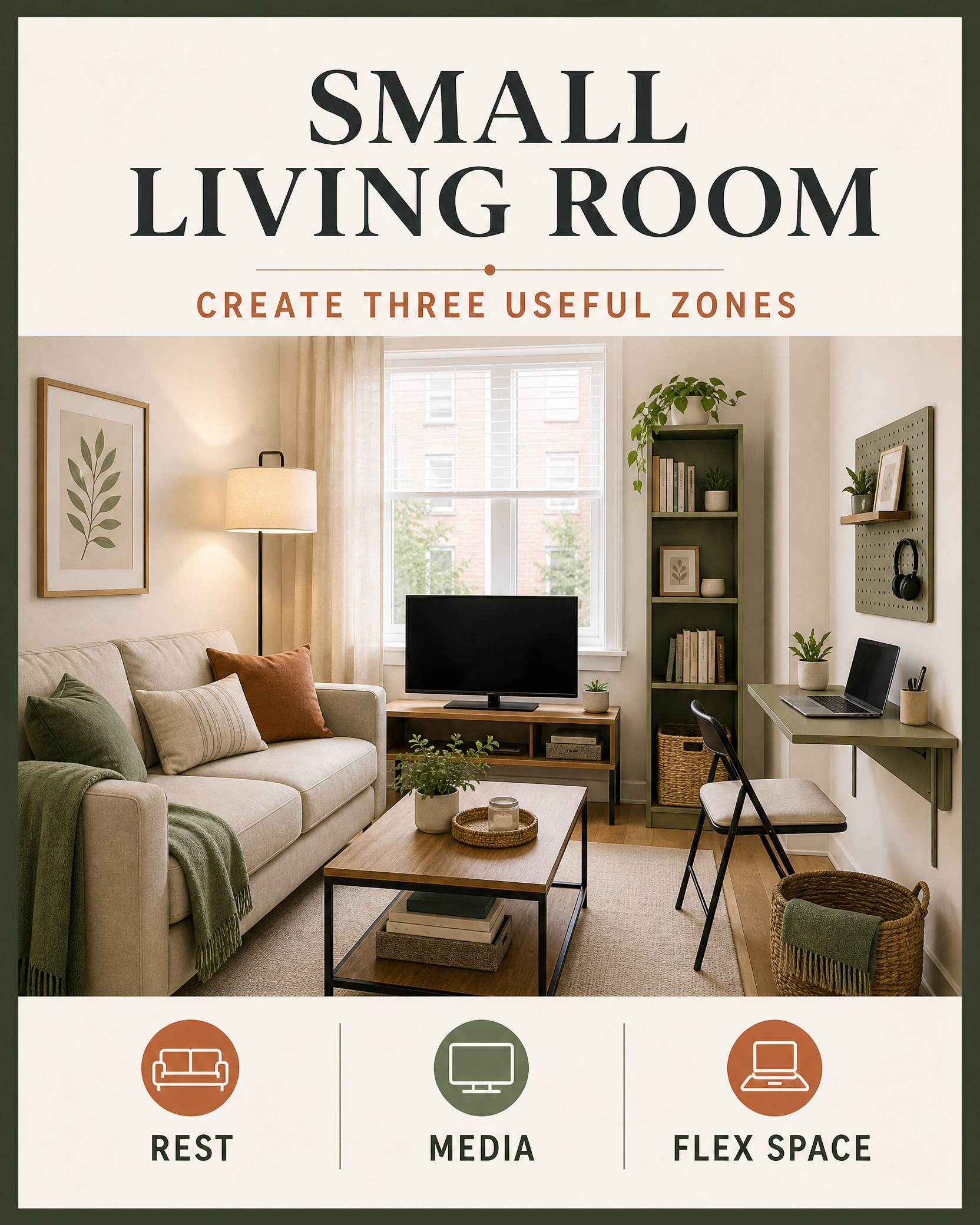
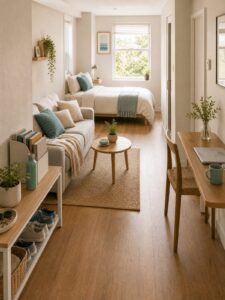
Living rooms without built-in storage often feel like a single open problem: where to sit, where to stash stuff, and where to work or host without losing flow. The fastest way to bring order is to divide the space into three purposeful zones—rest, media, and flexible work/guest—so each activity has a defined footprint and tidy storage solutions.
That division keeps furniture scaled, lines of sight clean, and surfaces clear. Below is a realistic, step-by-step plan that helps you pick furniture, carve out storage without renovations, balance trade-offs, and wrap with a clear next step you can complete this weekend.
1. Start by mapping the room and choosing dominant functions
Measure walls, doorways, and the distance from the main seating area to the TV or natural light. Decide which of the three zones needs priority: do you need a real sleeping spot for guests, or is everyday comfort most important? A quick sketch on graph paper or a notes app keeps decisions practical.
When you assign a dominant function, you accept trade-offs. Giving the most floor space to rest may shrink the work area; prioritizing a workspace can limit seating scale. Those trade-offs are fine if they match how you actually live in the room.
2. Zone 1 — Rest: make seating do double duty
In a small living room, rest equals seating that supports lounging and occasionally sleeping. Choose a compact sofa or a loveseat scaled to the room’s longest wall. If you host overnight guests rarely, prioritize day-to-day comfort over a permanent bed. A sofa with a slender profile, tight back cushions, and removable throws reads lighter while maintaining comfort.
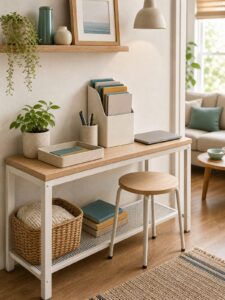
Place the sofa so it defines the living area without blocking walkways. Use a narrow console table or floating shelf behind the sofa for lamps and small storage; it keeps essentials handy without floor loss.
3. Zone 2 — Media: a pared-down entertainment hub
Keep media gear contained in one low-profile unit or a stack of closed storage baskets. Mounting a screen on the wall frees floor space; hide cables with a tidy raceway or cord cover that matches paint colors. If a permanent TV isn’t necessary, a small, movable stand gives flexibility and creates a less TV-centric room when the screen is stowed.
- Anchor the media zone opposite the primary seating for sightlines.
- Use closed storage to cut visual clutter from remotes, consoles, and chargers.
- Consider sound alternatives like compact speakers that tuck into shelving.
4. Zone 3 — Flexible work or guest use: fold and hide
A flexible zone must convert quickly between office and sleeping guest space. A wall-mounted drop-leaf desk or a slim rolling desk stores papers in a single drawer and tucks under a console when guests arrive. For occasional overnight visitors, a compact folding mattress or a trundle stored under a bench works better than a large sleeper sofa, because it keeps daily seating uncluttered.
Related guide: How to Set Up a Small Apartment Home Office That Packs Away at Night
5. Smart storage solutions that fit any wall
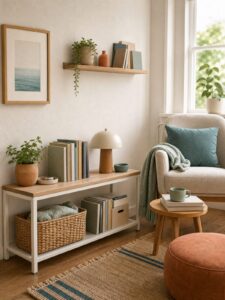
Without built-ins you can mimic their effect: floating shelves, tall narrow bookcases, and multi-function furniture create vertical storage and free floor area. Choose closed-front pieces for bulky items and open shelving for curated displays. Keep frequently used items at eye level and seasonal or overflow items higher up.
Quick-fit storage ideas
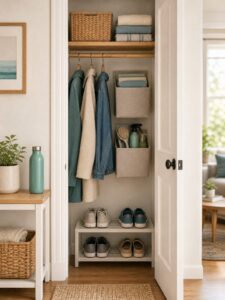
Use baskets, stackable bins, and slim trunks under benches or consoles. A narrow coat rack or peg rail near the entry to the room helps corral bags and jackets without a bulky coat closet.
Related guide: How to Create a Drop Zone in a Small Entryway
At-a-glance reference
| Zone | Typical footprint | Best storage fit |
|---|---|---|
| Rest (sofa area) | 6–8 ft wall; seating depth 30–36 in | Console behind sofa, under-seat storage, narrow side tables |
| Media | 3–6 ft wall or corner | Low cabinet, floating shelf, wall-mount TV |
| Flexible work/guest | 3–5 ft width for desk; extra floor space for guest mattress | Drop-leaf desk, rolling cart, storage bench with lift lid |
| Vertical storage | 2–12 in depth shelves along wall | Tall bookcase, floating shelves, pegboard |
6. Layout examples and simple swaps
Small-space layouts benefit from keeping traffic paths clear. Arrange furniture so there’s at least 2.5–3 feet for main walkways. If that’s tight, angle a chair or swap a bulky coffee table for a pair of nesting tables that can be moved when guests arrive.
When choosing between open shelves and closed storage, remember the trade-off: open shelves look lighter but require regular styling to avoid clutter; closed storage keeps a calm aesthetic but can feel heavier. Match your choice to how much tidying you want to do daily.
7. Trade-offs and the clear next step
Trade-offs are inevitable: maximizing seating reduces dedicated workspace; prioritizing hidden storage changes the room’s visual openness. The guiding principle is to assign the largest footprint to the activity you really use most.
Clear next step: measure your room, sketch the three zones on a sheet of paper, and pick one dual-purpose piece (a slim console that becomes a desk, a storage bench that doubles as a guest bed base) to buy or repurpose. Completing that single swap will make the rest of the plan fall into place.
FAQ
How do I make a couch area feel like a bedroom for guests?
Focus on layered textiles: a supportive mattress topper or fold-out mattress, extra throws, and blackout curtains for privacy. Keep bedding stored in an under-bench trunk or a tall cabinet so it’s ready without crowding daily living space.
Will a TV ruin the feel of a multiuse room?
Not if it’s contained. Mount the TV, tuck components into closed storage, and use decorative elements on shelves to balance the screen. A movable screen or small media cabinet lets you reduce the TV’s dominance when you need the space for another activity.
What’s the easiest way to hide work clutter at the end of the day?
Create a one-drawer or one-bin rule: everything related to work lives in that container. At day’s end put papers and gadgets into the bin, close the lid or slide the drawer shut, and the room reverts to social or sleeping mode quickly.
Sources and fact-checking
This article provides practical editorial guidance. Safety, cleaning, disposal, rental, and product decisions can depend on the item, its instructions, and local requirements.
- U.S. Consumer Product Safety Commission — Anchor It! — For furniture, TV, or elevated-storage safety, follow product instructions and secure top-heavy furniture where appropriate.
Fact-checked against the linked official resources on August 27, 2026.